
 Persly Medical Team
Based on PubMed | Can a persistent skin rash be a symptom of endometrial cancer, and when should I seek medical evaluation?
Persistent skin rash is not a typical symptom of endometrial cancer; abnormal uterine bleeding is the key warning sign. Rashes are more often due to treatments like chemotherapy or immunotherapy, though rare paraneoplastic skin changes or skin metastases can occur in advanced disease. Seek medical evaluation for a rash lasting over 2 weeks, spreading or severe, any new rash during cancer therapy, or any abnormal vaginal bleeding.
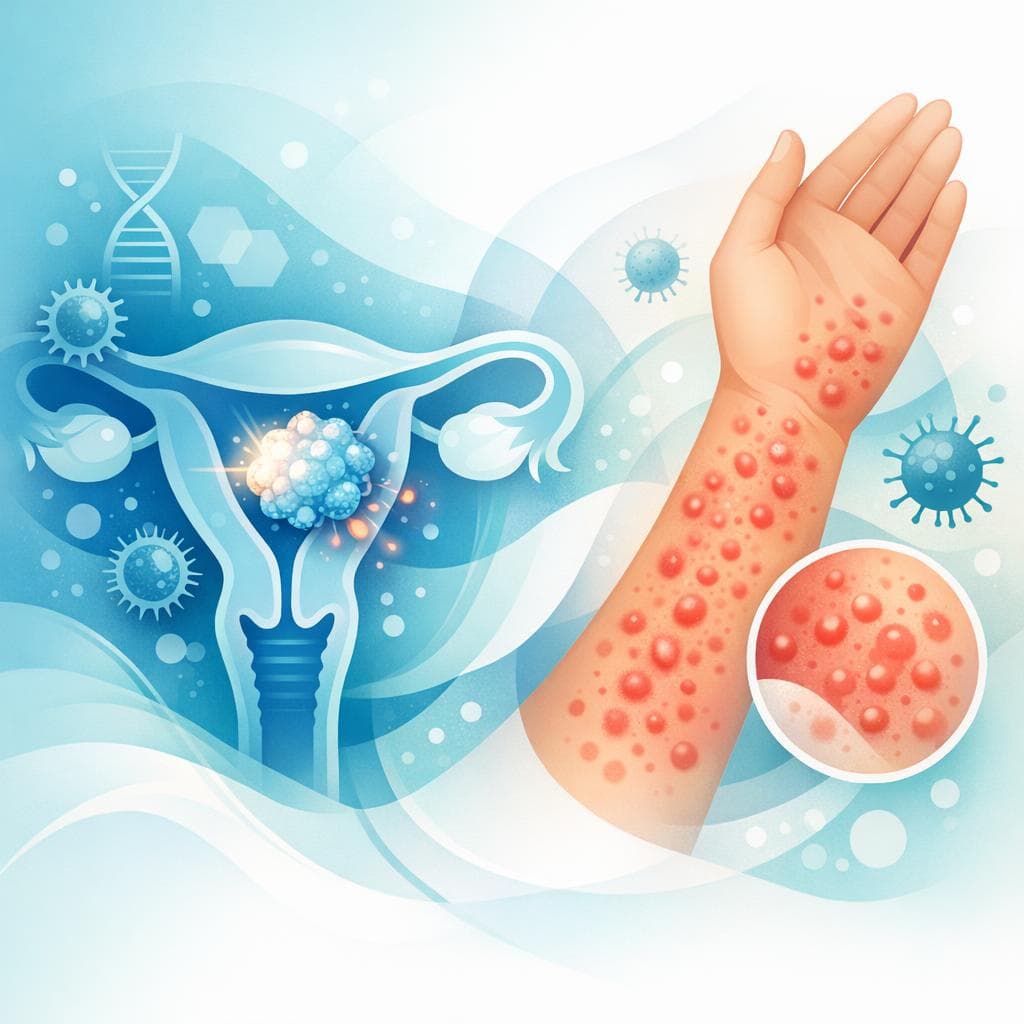
A persistent skin rash is not a typical symptom of endometrial (uterine) cancer, but certain rare skin findings can be linked to advanced or recurrent disease or to cancer treatments. Most people with endometrial cancer present with gynecologic symptoms such as abnormal vaginal bleeding or discharge, pelvic pain, or pain with sex not rash. [1] [2] When a rash occurs in someone undergoing therapy for endometrial cancer, it is much more commonly a side effect of chemotherapy or immunotherapy rather than a direct sign of the cancer itself. That said, new or unusual skin changes should still be evaluated, especially if they are persistent, spreading, or accompanied by other warning signs. [3] [4]
What’s typical versus rare
- Common symptoms of endometrial cancer: abnormal vaginal bleeding (including bleeding after menopause), unusual vaginal discharge, pelvic pain, pain during intercourse, and urinary trouble. These are the symptoms that usually prompt evaluation and lead to diagnosis. [1] [2]
- Rash as a cancer symptom: uncommon. In rare situations, endometrial cancer can be associated with “paraneoplastic” skin conditions (skin changes that occur due to substances released by a tumor) or with cutaneous metastases (cancer spread to the skin). These scenarios are rare and usually occur in advanced or recurrent disease. [5] [6]
Rare skin links to endometrial cancer
- Paraneoplastic dermatoses: Conditions such as acanthosis nigricans (dark, velvety skin in body folds), “tripe palms” (thickened, velvety palms), or acquired hypertrichosis lanuginosa (sudden growth of fine, soft hair) have been reported in association with internal cancers, including endometrial cancer. In isolated case reports, these skin findings appeared around the time of cancer progression and improved after cancer treatment. [7] [8]
- Skin metastases: Endometrial cancer spreading to the skin is very uncommon, with reported prevalence around 0.8% in published reports. When present, skin metastases often indicate advanced disease and are associated with a poorer prognosis. [6]
Rashes from treatment are much more common
If you are receiving treatment for endometrial cancer, skin rashes are relatively common side effects:
- Chemotherapy (e.g., carboplatin and paclitaxel) can cause allergic-type reactions with rash, itching, flushing, or hives during or shortly after infusions. New rash with breathing trouble, dizziness, fever, or chills during infusion needs immediate attention for possible infusion reaction. [9]
- Immunotherapy (e.g., durvalumab or dostarlimab) frequently causes immune-related skin reactions, including red or bumpy rash, dry itchy skin, peeling, or blisters; pruritus (itching) is also common. These can range from mild to severe and should be reported even when mild, because earlier management prevents worsening. [3] [4] [10]
- Radiation recall: A rash can “reappear” in an area previously treated with radiation after starting certain chemotherapies, with redness, peeling, or blistering. This typically arises weeks to months after chemotherapy and needs clinician guidance on care. [11]
When to seek medical evaluation
- You should promptly see a clinician for abnormal uterine bleeding, especially after menopause, or if your periods become heavier, longer, or you have bleeding between periods, because these are the hallmark warning signs for uterine cancer. Early evaluation improves the chance of cure. [1] [12]
- For a persistent rash:
- Seek evaluation if it lasts more than 2 weeks, is spreading, painful, blistering, bleeding, or not healing, or if you notice systemic symptoms such as fever, weight loss, night sweats, or new lumps. Skin changes like non-healing sores, darkening or redness that persists, or changing spots should be assessed. [13] [14]
- If you are on chemotherapy or immunotherapy, report any new rash or itching to your care team, even if mild, and seek urgent care for rash accompanied by shortness of breath, wheezing, dizziness, fever, or chills. These may signal an infusion reaction or a more serious immune-related side effect. [9] [4]
- If you develop unusual skin signs such as suddenly darker/velvety skin in folds, thickened velvety palms, or abrupt fine hair growth on the face and body, this is uncommon but should be evaluated, as rare paraneoplastic conditions can precede or accompany cancer activity. [5] [7]
How clinicians evaluate a persistent rash
- History and exam: timing relative to treatments, medications, exposures, and associated symptoms. The pattern and distribution often suggest allergic reaction, drug eruption, eczema, psoriasis, infection, or other benign causes.
- Targeted tests: If needed, your clinician may order a skin biopsy, blood tests, or review cancer imaging. In suspected treatment-related rash, severity grading guides topical steroids, antihistamines, dose holds, or systemic steroids for more severe immune-related reactions. [3] [4] [10]
Practical self-care tips while you arrange care
- Use gentle, fragrance-free moisturizers and avoid scratching to protect skin and reduce itching. [3]
- Avoid hot showers, harsh soaps, and direct sun exposure, and consider sunscreen and protective clothing if your skin is sensitive or peeling. [15] [11]
- Keep a photo log of the rash to track changes, which can help your clinician decide on next steps.
Key takeaways
- A persistent skin rash is not a common presenting sign of endometrial cancer, whereas abnormal uterine bleeding is the most important warning signal. [1] [2]
- Rashes are more often related to cancer treatments like chemotherapy or immunotherapy and should be reported promptly to your care team. [3] [4]
- Rarely, certain skin conditions or even skin metastases can be linked to endometrial cancer, particularly in advanced or recurrent cases, and unusual skin changes merit evaluation. [5] [6]
If you’re experiencing persistent rash plus any abnormal vaginal bleeding or other gynecologic symptoms, it would be reasonable to arrange a medical visit soon for a focused exam and guidance on next steps. [1] [2]
Related Questions
Related Articles


Sources
- 1.^abcdeSymptoms of Uterine Cancer(cdc.gov)
- 2.^abcdUterine Cancer(medlineplus.gov)
- 3.^abcdePatient information - Endometrial cancer recurrent or metastatic - Carboplatin, paclitaxel and durvalumab(eviq.org.au)
- 4.^abcdePatient information - Endometrial cancer recurrent or metastatic - Carboplatin, paclitaxel and durvalumab(eviq.org.au)
- 5.^abcNeoplastic/paraneoplastic dermatitis, fasciitis, and panniculitis.(pubmed.ncbi.nlm.nih.gov)
- 6.^abcCutaneous metastasis in endometrial cancer: once in a blue moon - case report.(pubmed.ncbi.nlm.nih.gov)
- 7.^ab[A woman with paraneoplastic dermatoses; signs of recurrent malignancy].(pubmed.ncbi.nlm.nih.gov)
- 8.^↑Acquired hypertrichosis lanuginosa associated with endometrial malignancy.(pubmed.ncbi.nlm.nih.gov)
- 9.^abPatient information - Endometrial cancer recurrent or metastatic - Carboplatin and paclitaxel(eviq.org.au)
- 10.^ab4423-Endometrial recurrent or metastatic cARBOplatin PACLitaxel and dostarlimab(eviq.org.au)
- 11.^abPatient information - Endometrial cancer recurrent or metastatic - AP (doxorubicin and cisplatin)(eviq.org.au)
- 12.^↑Uterine (Endometrial) Cancer Signs & Symptoms(mskcc.org)
- 13.^↑Cancer - Symptoms and causes(mayoclinic.org)
- 14.^↑Symptoms of Skin Cancer(cdc.gov)
- 15.^↑Patient information - Endometrial cancer recurrent or metastatic - AP (doxorubicin and cisplatin)(eviq.org.au)
Important Notice: This information is provided for educational purposes only and is not intended to replace professional medical advice, diagnosis, or treatment. Always consult with a qualified healthcare provider before making any medical decisions.