
 Persly Medical Team
Based on CDC | Can persistent fever be a symptom of endometrial cancer, and how can I tell if it’s from the cancer itself versus an infection or treatment-related cause?
Persistent fever can occur with endometrial cancer, but it’s more often due to infection or treatment effects than the tumor itself. During chemotherapy, any fever ≥38°C (100.4°F) is a medical emergency. Tumor-related fever is less common and considered only after infection, drug reactions, clots, or postoperative causes are ruled out; NSAIDs may help more than acetaminophen.
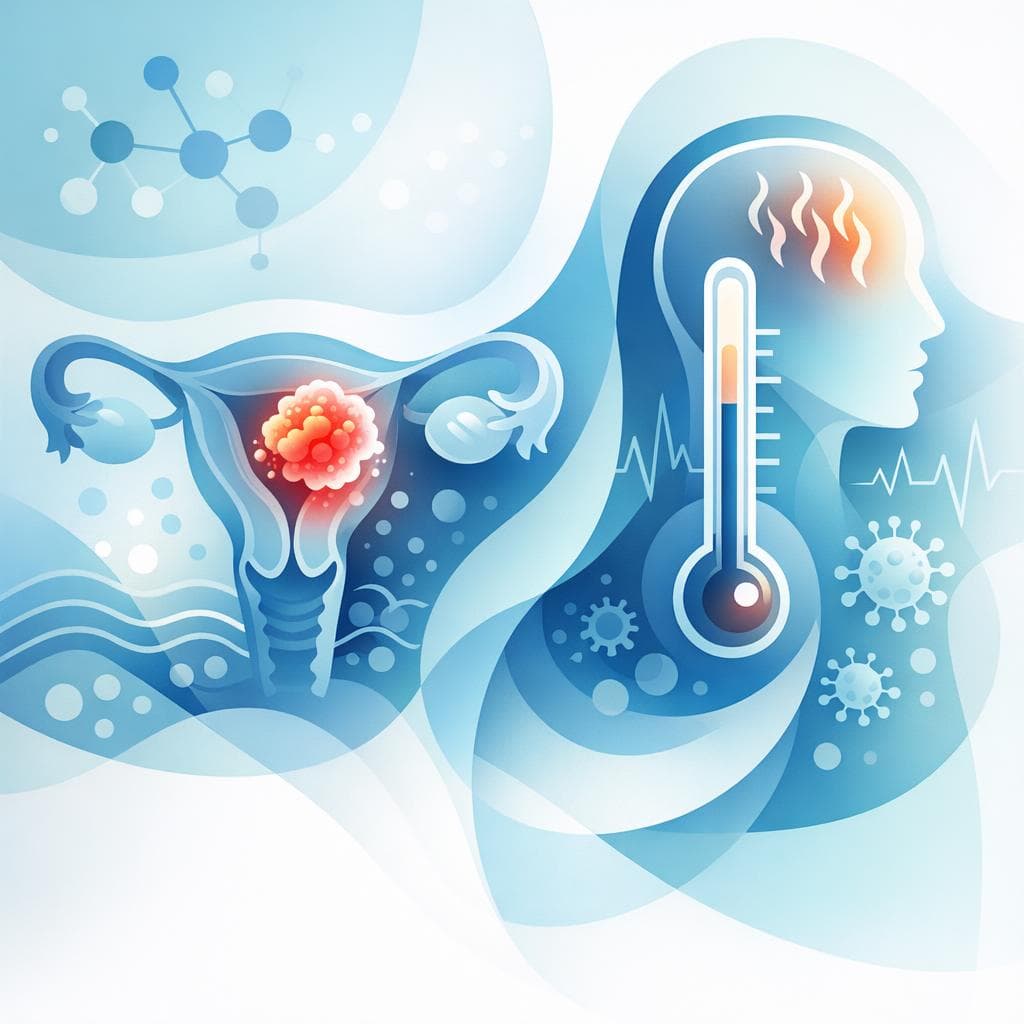
Persistent fever can happen in people with endometrial cancer, but it is more often due to infection or treatment side effects than the tumor itself. In those receiving chemotherapy, a fever of 38°C (100.4°F) or higher should be treated as a medical emergency because it can signal a dangerous infection, especially if white blood cells are low. [1] [2] Fever can also rarely be “tumor fever” (neoplastic fever), caused by cancer‑driven inflammation rather than germs, and it becomes a consideration only after careful testing rules out infection and other causes. In gynecologic oncology patients admitted for fever, the most common identified sources were urinary tract infections and bloodstream infections, while a substantial minority had no source found. [3] [3]
How endometrial cancer relates to fever
- Infection risk from treatment: Chemotherapy and some immunotherapies lower immune defenses, making infections more likely and more serious; fever may be the only early sign. [1] [2] During chemotherapy, any fever ≥38°C requires urgent medical evaluation. Hand hygiene, prompt reporting of fever, and early antibiotics when needed are standard to reduce complications. [4] [1]
- Tumor (neoplastic) fever: Some cancers can cause persistent fever through release of inflammatory cytokines even without infection; this remains a diagnosis of exclusion after tests do not show an infectious or other cause. Standard acetaminophen may only partly reduce this type of fever, while nonsteroidal anti‑inflammatory drugs can be more effective in some cases. [5] [5]
- Other non‑infectious causes: Blood clots, drug reactions, and postoperative issues can also cause fever in people with cancer. Catheter infections and wound infections are important considerations after surgery or in those with central lines. [6] [6] [3]
Red flags that point to infection or treatment‑related fever
- Fever ≥38°C (100.4°F) during or after chemotherapy is an emergency and needs same‑day care, even if you feel “okay.” [2] [7]
- Chills, sweats, new cough or sore throat, burning with urination, redness or drainage around a port or wound, or confusion may indicate infection. Because infections can be rapidly life‑threatening during chemotherapy, calling your care team right away is advised. [4] [8] [7]
When to suspect tumor‑related fever
Tumor fever is considered when fever persists and all evaluations for infection and other causes are negative. Clues can include sustained or recurring fevers, partial response to acetaminophen, and a more robust response to anti‑inflammatory medicines such as naproxen; however, this “naproxen test” is not definitive and tumor fever remains a diagnosis of exclusion. [5] [9] Tumor‑related fever can accompany advanced disease and may improve with anti‑inflammatory drugs or cancer‑directed therapy. Because infection is far more dangerous if missed, clinicians are careful to exclude it first. [10] [6]
Practical diagnostic approach your team may use
- Immediate infection check if on chemo: Blood counts, blood cultures, urine tests, chest imaging if respiratory symptoms, and prompt empiric antibiotics when fever is present, especially before neutrophil results return. All patients with fever after anti‑cancer therapy are typically managed as neutropenic until proven otherwise, with rapid antibiotic administration. [11]
- Focused testing guided by symptoms: In gynecologic oncology, urine and blood cultures frequently find the cause; abdominal/pelvic CT and chest CT help when initial tests are unrevealing; chest X‑ray is often nondiagnostic. After recent surgery, clinicians look closely for wound or catheter infections. [3] [3]
- If no source found: Consider drug reactions, clots, autoimmune issues, and tumor fever; a monitored trial of anti‑inflammatory therapy may be used alongside continued surveillance. Naproxen has shown rapid fever lysis in many suspected neoplastic fever cases, but lack of response prompts renewed infection search. [9] [9]
What you can do now
- If you are receiving chemotherapy or immunotherapy and have a temperature of 38°C (100.4°F) or higher, call your oncology team immediately or seek emergency care the same day do not wait for it to pass. [2] [7]
- Track your temperature, note associated symptoms (cough, burning urination, port/wound changes), and bring this information to your clinicians. Early reporting helps start the right treatment faster. [4] [8]
- Practice infection prevention: frequent handwashing, avoid sick contacts, and follow your team’s advice on vaccines and central line care. These steps help lower the chance of serious infections during treatment. [12] [1]
Quick comparison: likely sources of persistent fever
| Feature | Infection (including chemo‑related neutropenic infection) | Treatment/drug reaction | Tumor (neoplastic) fever |
|---|---|---|---|
| How urgent? | Very urgent; chemo‑era fever is a medical emergency | Urgent if severe or with organ involvement | Important but less emergent once infection excluded |
| Common clues | Chills, sweats, localizing symptoms, port/wound issues; may occur soon after chemo | Starts after a new drug; rash or organ lab changes | Persistent fever without source; partial response to acetaminophen, better response to NSAIDs |
| Initial tests | CBC, cultures, urinalysis, chest imaging as indicated | Review meds, labs for liver/kidney, eosinophils | Diagnosis of exclusion after negative infectious workup |
| First steps | Prompt empiric antibiotics; risk‑stratify | Stop/adjust culprit drug; supportive care | Trial NSAIDs may help; continue surveillance for hidden infection |
In summary, persistent fever can occur in the setting of endometrial cancer, but infection especially during chemotherapy is the most common and most urgent cause to rule out, and any fever ≥38°C during treatment needs immediate evaluation. [7] Once infection and other causes are excluded, tumor‑related fever is possible and may respond to anti‑inflammatory therapy, but this is carefully diagnosed after a thorough workup. [5] [9] [3]
Related Questions
Related Articles


Sources
- 1.^abcdPreventing Infections in Cancer Patients(cdc.gov)
- 2.^abcdPreventing Infections in Cancer Patients(cdc.gov)
- 3.^abcdefEtiology and workup of fevers in gynecologic oncology patients.(pubmed.ncbi.nlm.nih.gov)
- 4.^abcCancer treatment - preventing infection: MedlinePlus Medical Encyclopedia(medlineplus.gov)
- 5.^abcdNeoplastic fever.(pubmed.ncbi.nlm.nih.gov)
- 6.^abc[Fever and cancer: components of diagnosis for optimal management].(pubmed.ncbi.nlm.nih.gov)
- 7.^abcdPreventing Infections in Cancer Patients(cdc.gov)
- 8.^abKnow the Signs and Symptoms of Infection(cdc.gov)
- 9.^abcdThe effect of naproxen on fever in patients with advanced gynecologic malignancies.(pubmed.ncbi.nlm.nih.gov)
- 10.^↑Infections or neoplasm as causes of prolonged fever in cancer patients.(pubmed.ncbi.nlm.nih.gov)
- 11.^↑123-Immediate management of neutropenic fever(eviq.org.au)
- 12.^↑Side Effects of Cancer Treatment(cdc.gov)
Important Notice: This information is provided for educational purposes only and is not intended to replace professional medical advice, diagnosis, or treatment. Always consult with a qualified healthcare provider before making any medical decisions.