
 Persly Medical Team
Based on PubMed | Can blood in the urine be an early symptom of endometrial cancer?
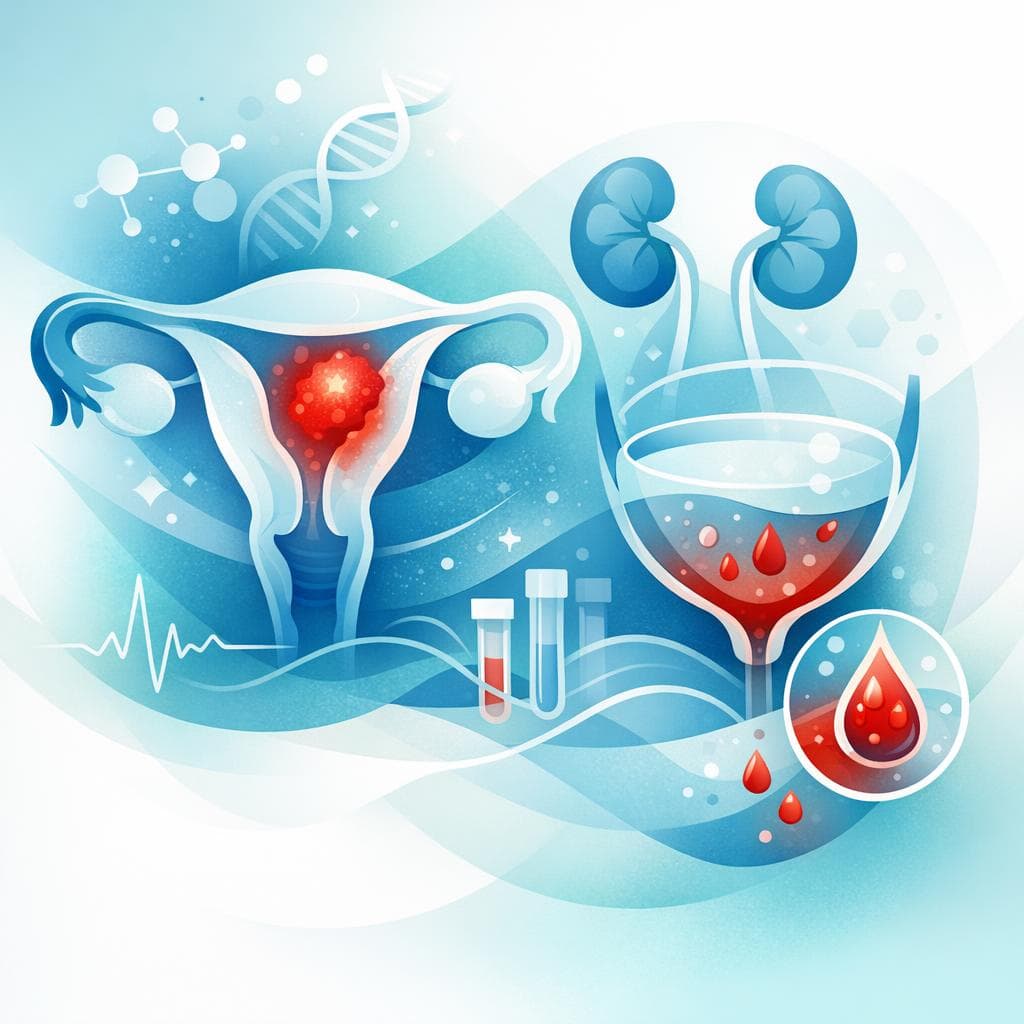
Blood in the urine is not a typical early symptom of endometrial cancer; the hallmark early sign is abnormal uterine/vaginal bleeding, especially after menopause. Hematuria may occur with advanced spread to the bladder and should prompt a urinary evaluation, while suspected vaginal bleeding warrants gynecologic assessment.
Blood in the urine is not a typical early symptom of endometrial (uterine lining) cancer. The most common early warning sign is abnormal vaginal bleeding such as postmenopausal spotting/bleeding, bleeding between periods, or unusually heavy or frequent periods after age 40. [1] [2] In fact, postmenopausal bleeding accounts for the vast majority of initial presentations in endometrial cancer. [3] If you notice blood and are unsure whether it’s coming from the vagina, urine, or rectum, it’s important to get checked promptly so the source can be identified. [4]
What “early” symptoms usually look like
- Abnormal vaginal bleeding or spotting after menopause is the most frequent early symptom. [1] [3]
- Other possible symptoms include new or persistent pelvic pain or cramping and pain with urination or intercourse, though these are less common early findings. [5] [6]
- Many people are diagnosed at an early stage precisely because bleeding prompts evaluation. [7]
Where “blood in the urine” fits in
- Visible blood in the urine (hematuria) is not listed as a common early sign of endometrial cancer in major medical references. [5] [8]
- Hematuria may occur if endometrial cancer spreads to the bladder in more advanced stages, but this is not how most cases first present. [9]
- Urinary symptoms related to endometrial cancer are more often difficulty urinating or pain with urination rather than true hematuria in the early course. [6] [8]
- Rare case reports describe urinary retention or urinary tract symptoms as the presenting issue when bleeding was obstructed by cervical stenosis, but these are uncommon and do not make hematuria a typical early sign. [10] [11]
Distinguishing vaginal bleeding from hematuria
Bleeding can sometimes be confusing, especially after menopause. Blood that appears in the toilet or on tissue may come from the vagina, the urinary tract, or the rectum. [4] A pelvic exam, urinalysis, and sometimes a simple in‑office test can clarify the source. If the source is uterine or vaginal, your clinician may perform a transvaginal ultrasound and/or an endometrial biopsy to evaluate for endometrial causes. [2] [3]
If you truly have hematuria, what to do next
When blood is confirmed to be coming from the urine, it should be evaluated because causes range from benign to serious. Common causes include urinary tract infection, kidney stones, and disorders of the kidneys or bladder; bladder cancer is another consideration, especially in older adults and smokers. [12] A standard evaluation often includes urinalysis and urine culture, and may include urine cytology and imaging depending on risk factors and whether the blood is visible or microscopic. [12] Your clinician will guide next steps based on your history, exam, and test results. [13]
When to seek care
- Any postmenopausal bleeding (even light spotting) warrants prompt evaluation for possible endometrial causes. [3]
- Any persistent or visible blood in the urine also deserves timely assessment to identify a urinary source. [12]
- If you’re unsure where the bleeding is coming from, it’s reasonable to be seen soon for a focused exam and testing. Early assessment improves the chance of finding and treating the true cause quickly. [3]
Summary
- Blood in the urine is not considered an early or common symptom of endometrial cancer. [1] [3]
- Abnormal uterine/vaginal bleeding is the hallmark early sign and should always be evaluated, especially after menopause. [3]
- Hematuria should prompt a standard urinary evaluation, while any suspected vaginal bleeding should prompt gynecologic assessment that may include transvaginal ultrasound and endometrial sampling. [3] [2]
Quick reference table
| Symptom | How common in early endometrial cancer | Typical next step |
|---|---|---|
| Abnormal vaginal bleeding (postmenopausal spotting/bleeding, intermenstrual bleeding, heavy/frequent bleeding after 40) | Very common; most frequent presenting sign | Gynecologic evaluation, often transvaginal ultrasound and endometrial biopsy as indicated [3] [2] |
| Pelvic pain/cramping | Less common early; may occur | Gynecologic evaluation alongside assessment of other causes [5] |
| Pain with urination/intercourse | Possible but not classic early sign | Pelvic exam; consider urinary and gynecologic causes [6] |
| Visible blood in urine (hematuria) | Not typical early sign; may appear with bladder involvement in advanced disease | Urinary evaluation (urinalysis, culture ± cytology/imaging); confirm source of bleeding [9] [12] |
If you’ve noticed bleeding and aren’t sure of the source, the safest approach is to arrange an appointment soon so your clinician can clarify whether it is vaginal or urinary and proceed with the appropriate evaluation. [4]
Related Questions
Related Articles


Sources
- 1.^abcEndometrial cancer.(pubmed.ncbi.nlm.nih.gov)
- 2.^abcdGenital Cancers in Women: Uterine Cancer.(pubmed.ncbi.nlm.nih.gov)
- 3.^abcdefghiPost-Menopausal Bleeding: Role of Imaging.(pubmed.ncbi.nlm.nih.gov)
- 4.^abcFast-track endometrial cancer care at Mayo Clinic(mayoclinic.org)
- 5.^abcEndometrial cancer: MedlinePlus Medical Encyclopedia(medlineplus.gov)
- 6.^abcUterine (Endometrial) Cancer Signs & Symptoms(mskcc.org)
- 7.^↑Carcinoma of the endometrium.(pubmed.ncbi.nlm.nih.gov)
- 8.^abUterine Cancer(medlineplus.gov)
- 9.^ab국가암정보센터(cancer.go.kr)
- 10.^↑Endometrial cancer presenting as acute urinary retention : a case report and review of the literature.(pubmed.ncbi.nlm.nih.gov)
- 11.^↑Endometrial cancer presenting as acute urinary retention: a case report and review of the literature.(pubmed.ncbi.nlm.nih.gov)
- 12.^abcdUrine - bloody : MedlinePlus Medical Encyclopedia(medlineplus.gov)
- 13.^↑Blood in urine (hematuria) - Diagnosis and treatment(mayoclinic.org)
Important Notice: This information is provided for educational purposes only and is not intended to replace professional medical advice, diagnosis, or treatment. Always consult with a qualified healthcare provider before making any medical decisions.