
 Persly Medical Team
Based on NIH | Is back pain a symptom of Crohn’s disease, and what mechanisms or complications can make it occur?
Back pain is not a primary symptom of Crohn's disease; when it occurs, it is usually due to IBD-associated spondyloarthritis such as inflammatory back pain, sacroiliitis, or ankylosing spondylitis. Shared gut-joint immune pathways and genetic factors (e.g., HLA-B27) drive axial inflammation that can run independent of bowel flares. Diagnosis relies on clinical features and MRI of the sacroiliac joints, and treatment includes biologics, cautious NSAID use, and targeted exercise/physical therapy.
Is Back Pain a Symptom of Crohn’s Disease? Mechanisms, Links, and What to Watch
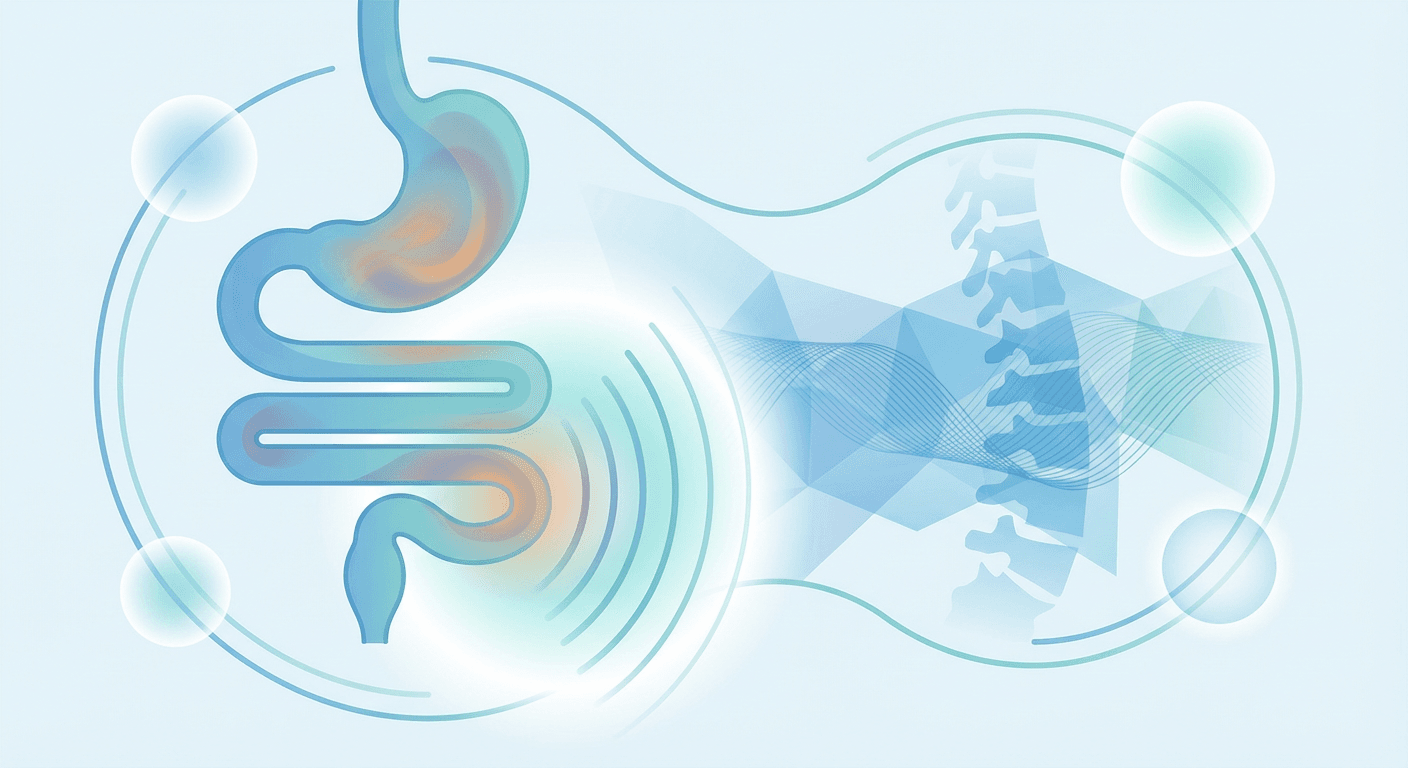
Back pain can occur in people with Crohn’s disease, but it is usually not from the intestines themselves. It most often reflects extraintestinal (outside-the-gut) musculoskeletal involvement a well‑recognized set of complications that includes inflammatory back pain, sacroiliitis (inflammation of the sacroiliac joints), and ankylosing spondylitis (a type of axial spondyloarthritis). [1] These joint and spine problems are common compared to other complications and can run a course independent of bowel flares. [2]
Core Crohn’s Symptoms vs. Back Pain
Crohn’s mainly causes diarrhea, abdominal cramping/pain, and weight loss, with other features like fatigue, fever, and joint pains. [3] Joint pain or soreness can be part of the broader symptom picture, but specific inflammatory back pain is more often tied to spondyloarthritis that coexists with Crohn’s rather than the gut inflammation directly. [4] In other words, back pain is not a classic primary symptom of Crohn’s, yet it can appear due to related inflammatory joint conditions. [5]
How Common Are Musculoskeletal Complications?
Musculoskeletal involvement is the most common extraintestinal issue in inflammatory bowel disease (IBD), occurring in a sizable portion of people. [1] Axial involvement meaning the spine and sacroiliac joints may include inflammatory back pain, sacroiliitis, and ankylosing spondylitis, and it often follows an independent course from gut activity. [2] Peripheral arthritis (arms/legs) may flare alongside active intestinal disease, while axial disease often does not. [1]
Mechanisms: Why Back Pain Happens in Crohn’s
-
Joint–gut immune pathway (“gut–synovial axis”): Immune cells activated in the inflamed intestine can migrate to joints and the spine, driving inflammation in the sacroiliac joints and vertebral structures. [6] Genetic factors (for example, variants in NOD2 and IL‑12/23 pathways) and Th1/Th17 lymphocyte priming contribute to this shared immune process. [6]
-
Spondyloarthritis link: Arthritis in IBD is considered a seronegative spondyloarthropathy, commonly linked to axial disease such as inflammatory back pain, sacroiliitis, and ankylosing spondylitis. [2] This group of diseases has overlapping features and is often associated with HLA‑B27. [1]
-
Independent course of axial disease: Unlike some peripheral joint pain, axial inflammation may not mirror gut flareups and can persist even when the bowel is quiet. [2]
Key Conditions That Cause Back Pain in Crohn’s
-
Inflammatory back pain: Typically worse in the morning, improves with movement, and may wake you at night; it reflects axial inflammation associated with IBD‑related spondyloarthritis. [2]
-
Sacroiliitis (SI joint inflammation): Causes deep buttock or low‑back pain, sometimes alternating sides, and can be triggered by IBD-related immune mechanisms. [1] Inflammatory bowel diseases, including Crohn’s, increase the risk of sacroiliitis. [7]
-
Ankylosing spondylitis (AS): A chronic axial spondyloarthritis that can lead to stiffness and reduced spinal mobility; Crohn’s disease raises the risk of AS. [8] Clinical evaluation often includes markers like HLA‑B27, ESR, and imaging to confirm axial involvement. [9]
Distinguishing Features: Inflammatory vs. Mechanical Back Pain
-
Inflammatory back pain (more likely in Crohn’s-associated axial disease):
-
Mechanical back pain (strain, degenerative changes):
- Worsens with activity, improves with rest.
- Often related to posture, lifting, or disc wear; less likely to show systemic inflammatory signs. [2]
Diagnosis: How Clinicians Evaluate Back Pain in Crohn’s
-
History and exam: Look for inflammatory characteristics and other spondyloarthritis features (enthesitis, peripheral arthritis, uveitis). [1]
-
Lab tests: Inflammatory markers (ESR/CRP) and HLA‑B27 may be checked in suspected axial disease; HLA‑B27 is supportive but not definitive. [9]
-
Imaging:
Treatment: Managing Back Pain Linked to Crohn’s
-
Control intestinal inflammation: Treating Crohn’s can help peripheral arthritis, but axial disease often needs specific rheumatologic therapy. [2]
-
Medications:
-
Rehabilitation and lifestyle:
-
Specialist care:
- Collaboration between gastroenterology and rheumatology is often needed to tailor treatment for both bowel and joint outcomes. [2]
When to Seek Care
Seek medical evaluation if you have persistent low‑back or buttock pain, especially if it improves with movement, is worse overnight or in the morning, or comes with stiffness and alternating buttock pain these are clues to inflammatory back pain. [2] Also report any new eye redness/pain (possible uveitis), fatigue or fever, or worsening joint symptoms, which can accompany IBD‑related arthritis. [3] [4]
Quick Reference Table: Back Pain in Crohn’s
| Topic | What to know |
|---|---|
| Is back pain a primary Crohn’s symptom? | Not typically; more often due to IBD‑related axial spondyloarthritis (inflammatory back pain, sacroiliitis, AS). [2] |
| Mechanism | Gut–joint immune axis with shared inflammatory pathways (Th1/Th17, genetic factors). [6] |
| Risk associations | Crohn’s increases risk of sacroiliitis and ankylosing spondylitis. [7] [8] |
| Pattern of axial disease | Often independent of gut flares; may persist even when intestines are quiet. [2] |
| Diagnosis | Clinical features, MRI SI joints, HLA‑B27 and inflammatory markers. [9] [2] |
| Treatment | Biologics can help axial disease; NSAIDs with caution due to gut effects; exercise/physical therapy recommended. [2] [10] |
Bottom Line
Back pain in Crohn’s disease most commonly arises from IBD‑associated spondyloarthritis, including inflammatory back pain, sacroiliitis, and ankylosing spondylitis, rather than from intestinal inflammation alone. [2] These axial problems can follow their own course, require targeted evaluation (often with MRI of the SI joints), and may benefit from biologic therapy and structured exercise, with careful consideration of NSAIDs due to potential bowel effects. [2] [9] [10]
Related Questions
Related Articles

Sources
- 1.^abcdefThe joint-gut axis in inflammatory bowel diseases.(pubmed.ncbi.nlm.nih.gov)
- 2.^abcdefghijklmnopqrstuvwInflammatory bowel disease associated arthropathy.(pubmed.ncbi.nlm.nih.gov)
- 3.^abCrohn's Disease(medlineplus.gov)
- 4.^abCrohn's Disease(medlineplus.gov)
- 5.^↑Crohn's disease - Symptoms and causes(mayoclinic.org)
- 6.^abcMusculoskeletal manifestations in inflammatory bowel disease: a revisit in search of immunopathophysiological mechanisms.(pubmed.ncbi.nlm.nih.gov)
- 7.^abSacroiliitis - Symptoms and causes(mayoclinic.org)
- 8.^abAnkylosing Spondylitis(medlineplus.gov)
- 9.^abcdAnkylosing spondylitis: MedlinePlus Medical Encyclopedia(medlineplus.gov)
- 10.^abcCrohn's Disease(medlineplus.gov)
Important Notice: This information is provided for educational purposes only and is not intended to replace professional medical advice, diagnosis, or treatment. Always consult with a qualified healthcare provider before making any medical decisions.