
 Persly Medical Team
Based on PubMed | Can COPD or the medications used for it cause blood in the stool, and how should this symptom be evaluated?
Blood in the stool is not a typical COPD symptom, but severe disease can contribute to intestinal ischemia and some treatments increase GI bleeding risk. Systemic corticosteroids modestly raise risk, while inhaled therapies and roflumilast rarely do; anticoagulants and NSAIDs are important contributors. Any overt bleeding warrants prompt evaluation, often with colonoscopy or upper endoscopy depending on the presentation.
Can COPD or COPD Medications Cause Blood in the Stool, and How Should It Be Evaluated?
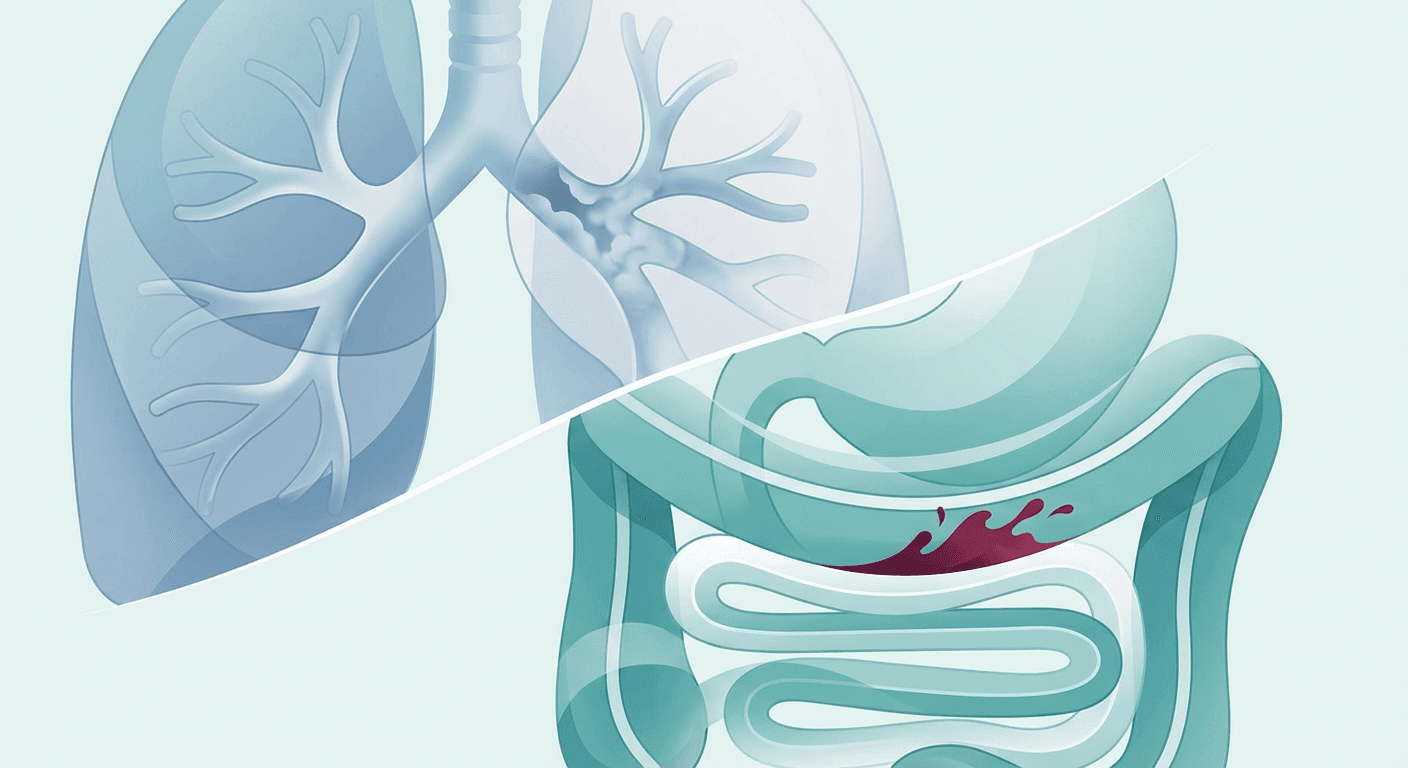
Blood in the stool is not a typical symptom of chronic obstructive pulmonary disease (COPD) itself, but certain COPD-related factors and some treatments can be associated with gastrointestinal (GI) bleeding. This symptom should be taken seriously and evaluated promptly, especially if there are signs of significant blood loss. [1] [2]
How COPD Itself Might Relate to GI Bleeding
- Intestinal ischemia risk: Severe lung disease, such as emphysema (a form of COPD), can worsen the risk of intestinal ischemia reduced blood flow to the intestines which may lead to abdominal pain and bleeding and can sometimes be life‑threatening. [3] In other words, advanced COPD doesn’t directly cause bleeding, but it can contribute to conditions that make GI bleeding more likely. [3]
COPD Medications and GI Bleeding Risk
1) Systemic corticosteroids (oral or IV steroids used for exacerbations)
- Increased GI bleeding/perforation risk: Systemic corticosteroids are linked to a higher risk of GI bleeding or perforation compared with placebo, with the signal most evident in hospitalized patients. [4] The overall risk increase is modest, but clinically relevant, and supports using the lowest effective dose for the shortest time. [5]
- Outpatient risk appears low: In ambulatory settings, the absolute occurrence of bleeding or perforation was very low and the increased risk was not statistically significant in pooled analyses. [4] Still, caution is reasonable, especially if combined with NSAIDs or in those with ulcer history. [4]
2) Inhaled therapies (bronchodilators and inhaled corticosteroids)
- Generally well tolerated: Inhaled bronchodilators and inhaled corticosteroids are widely used and, in general, have few systemic adverse effects compared with oral steroids. [6] These therapies are not commonly associated with GI bleeding. [6]
3) Phosphodiesterase‑4 inhibitor (roflumilast)
- GI side effects typically non‑bleeding: Roflumilast can cause diarrhea and weight loss, but bleeding is not a common adverse effect in routine use; standard safety reviews emphasize tolerability profiles rather than bleeding risks. [7] Most GI issues with roflumilast are irritation‑type, not bleeding. [7]
4) Anticoagulants/antiplatelets used for comorbidities
- Important independent risk: Many people with COPD have cardiovascular comorbidities requiring blood thinners (e.g., apixaban, rivaroxaban, dabigatran), and these drugs can raise GI bleeding risk. [8] Among common agents, rivaroxaban has been observed to have slightly higher GI bleeding rates than apixaban, with dabigatran often showing lower rates than rivaroxaban in comparative analyses. [9] [10] [11]
Red‑Flag Symptoms That Need Urgent Care
Seek emergency care if you notice:
- Black, tarry stools (melena), bright red blood in stool (hematochezia), dizziness, fainting, rapid heartbeat, shortness of breath, or signs of shock (clammy skin, low urine output). [1] [2]
- Vomiting blood or material that looks like coffee grounds. [12] These can indicate significant upper GI bleeding and require immediate evaluation. [1]
How Blood in the Stool Is Evaluated
Initial Approach
- Assess stability first: Clinicians will check blood pressure, heart rate, oxygen level, and signs of shock, and start IV fluids if needed. [13] Prompt stabilization reduces complications while the source of bleeding is investigated. [13]
Determining the Source
- Lower GI bleeding (hematochezia): For most patients with bright red blood in the stool, colonoscopy is typically the initial test to find the source. [14] If hematochezia occurs with hemodynamic instability, an upper GI source is possible, and upper endoscopy may be needed first. [14]
- Upper GI bleeding (melena or vomiting blood): Upper endoscopy (EGD) is used to identify causes like ulcers or esophageal tears. [15] EGD allows both diagnosis and treatment during the procedure. [15]
When the Source Isn’t Found
- Small bowel evaluation: If both EGD and colonoscopy do not reveal a source, clinicians may consider small bowel bleeding and use tests like capsule endoscopy, CT angiography, or deep enteroscopy. [16] Age and comorbidities help guide the likely causes, such as angioectasias or NSAID‑related injury in older adults. [17]
Practical Steps If You Have COPD and Notice Blood in the Stool
- Do not ignore bleeding: Arrange urgent medical assessment, particularly if you feel dizzy, weak, or see black/tarry stools or bright red blood. [1] Early evaluation reduces the risk of serious complications. [1]
- Review your medications: Bring a list of all medicines, including steroids (recent courses for exacerbations), blood thinners, NSAIDs, and supplements, as these may influence bleeding risk and management decisions. [4] [9]
- Steroid stewardship: If you recently completed or are on systemic steroids for an exacerbation, discuss GI protection strategies and the shortest effective duration with your clinician. [5] This helps balance COPD control with minimizing GI risks. [5]
- Consider comorbid risks: Severe emphysema and smoking-related vascular changes can contribute to intestinal blood flow problems, so clinicians may evaluate for ischemic causes when symptoms suggest it. [3] Recognizing this link can shape the diagnostic plan. [3]
Summary Table: Potential Contributors to GI Bleeding in People With COPD
| Factor | Typical Role | GI Bleeding Risk | Notes |
|---|---|---|---|
| COPD itself (emphysema) | Can worsen intestinal ischemia | Indirect risk | Severe lung disease may contribute to reduced intestinal blood flow. [3] |
| Systemic corticosteroids | Used for exacerbations | Modestly increased risk, especially inpatient | Use lowest effective dose, shortest duration; outpatient absolute risk appears low. [4] [5] |
| Inhaled bronchodilators/ICS | Maintenance therapy | Low/rare | Generally few systemic adverse effects; bleeding uncommon. [6] |
| Roflumilast | Exacerbation reduction | Low/rare | GI side effects mainly diarrhea/weight loss rather than bleeding. [7] |
| Anticoagulants (e.g., rivaroxaban, apixaban, dabigatran) | For cardiovascular comorbidities | Notable risk | Rivaroxaban associated with higher GI bleeding rates than apixaban; dabigatran often lower than rivaroxaban. [9] [10] [11] |
| NSAIDs | Pain relief | Notable risk | Can cause ulcers/enteropathy; risk increases with steroids. [4] |
Key Takeaways
- Blood in the stool is not a routine COPD symptom, but certain COPD‑related conditions (like intestinal ischemia) and some treatments especially systemic steroids and blood thinners can increase bleeding risk. [3] [4] [9]
- Urgent evaluation is warranted for any overt GI bleeding, with colonoscopy typically first for lower GI bleeding and upper endoscopy for suspected upper sources. [14] [15]
- Safe medication practices using the lowest effective steroid dose, avoiding NSAID combinations when possible, and choosing anticoagulants thoughtfully can help reduce risk. [5] [4] [11]
Related Questions
Related Articles



Sources
- 1.^abcdeGastrointestinal bleeding - Symptoms and causes(mayoclinic.org)
- 2.^abGastrointestinal bleeding - Symptoms and causes(mayoclinic.org)
- 3.^abcdefSymptoms and causes - Mayo Clinic(mayoclinic.org)
- 4.^abcdefghCorticosteroids and risk of gastrointestinal bleeding: a systematic review and meta-analysis.(pubmed.ncbi.nlm.nih.gov)
- 5.^abcdeSystemic corticosteroids in the treatment of acute exacerbations of chronic obstructive pulmonary disease.(pubmed.ncbi.nlm.nih.gov)
- 6.^abcPharmacological treatment of COPD.(pubmed.ncbi.nlm.nih.gov)
- 7.^abcEvaluating the safety of COPD medications: an evidence-based review.(pubmed.ncbi.nlm.nih.gov)
- 8.^↑COPD and other health problems: MedlinePlus Medical Encyclopedia(medlineplus.gov)
- 9.^abcdDoes Choice of Anticoagulant Influence Risk of Gastrointestinal Bleeding? - American College of Gastroenterology(gi.org)
- 10.^abDoes Choice of Anticoagulant Influence Risk of Gastrointestinal Bleeding? - American College of Gastroenterology(gi.org)
- 11.^abcDoes Choice of Anticoagulant Influence Risk of Gastrointestinal Bleeding? - American College of Gastroenterology(gi.org)
- 12.^↑Vomiting blood When to see a doctor(mayoclinic.org)
- 13.^abNew ACG Lower GI Bleeding Guideline - American College of Gastroenterology(gi.org)
- 14.^abcNew ACG Lower GI Bleeding Guideline - American College of Gastroenterology(gi.org)
- 15.^abcGastrointestinal bleeding: MedlinePlus Medical Encyclopedia(medlineplus.gov)
- 16.^↑Evaluation and management of small bowel bleeding(mayoclinic.org)
- 17.^↑Evaluation and management of small bowel bleeding(mayoclinic.org)
Important Notice: This information is provided for educational purposes only and is not intended to replace professional medical advice, diagnosis, or treatment. Always consult with a qualified healthcare provider before making any medical decisions.