
 Persly Medical Team
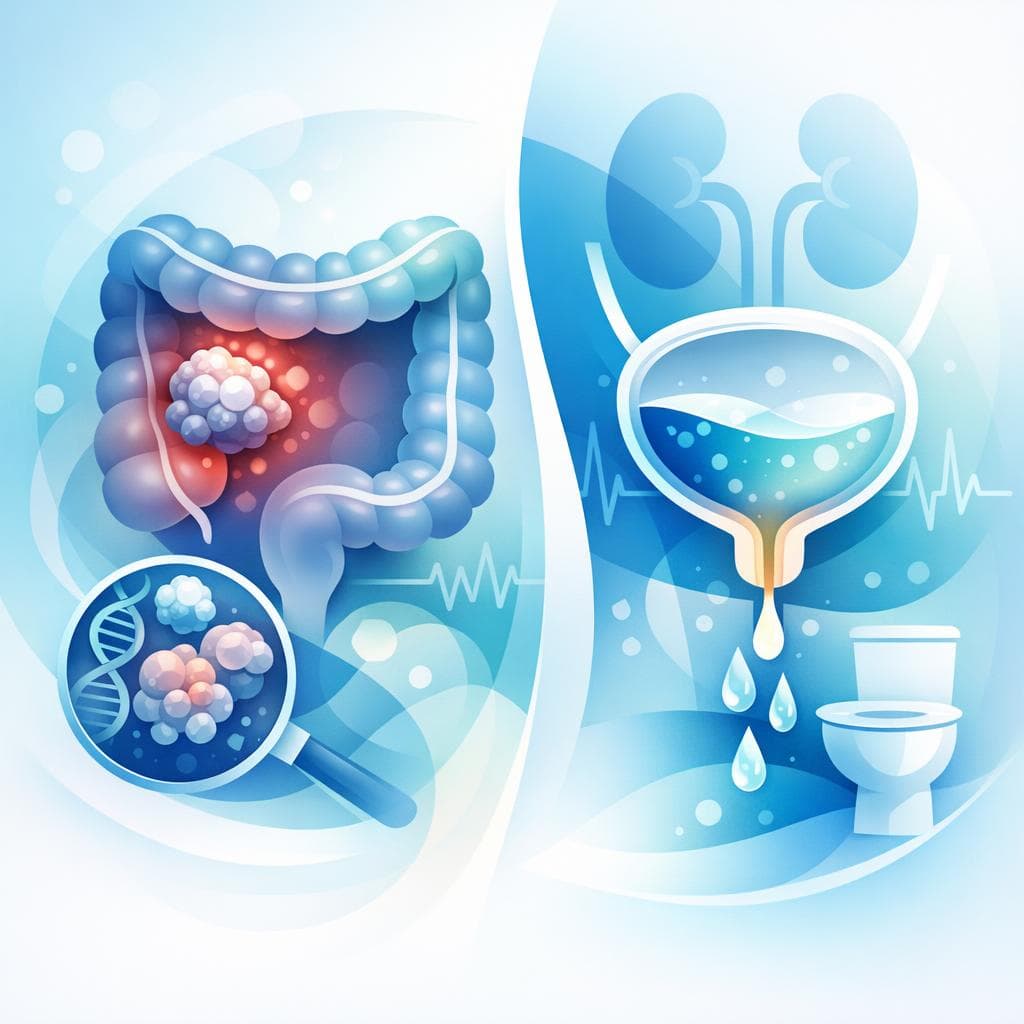
Is Frequent Urination Linked to Colon Cancer?
Is Frequent Urination a Common Symptom of Colon Cancer?
Frequent urination is not considered a typical or common symptom of colon (colorectal) cancer. The usual symptoms relate to bowel changes, rectal bleeding, abdominal discomfort, and unexplained weight loss. [1] These bowel-focused symptoms include diarrhea or constipation lasting more than a few days, feeling that the bowel doesn’t empty completely, narrow stools, and blood in the stool. [1] Similar lists of colon cancer symptoms emphasize bowel habit changes, rectal bleeding, abdominal pain or cramps, fatigue, and weight loss, rather than urinary frequency. [2] Expert cancer centers also highlight persistent bowel changes and rectal bleeding as key warning signs, not urinary issues. [3]
When Can Urinary Frequency Occur in People With Colon/Rectal Cancer?
-
Treatment-related bladder irritation (radiation cystitis): Pelvic radiation can irritate the bladder lining, causing urgency, frequency, and burning during urination; these symptoms in the acute phase are generally reversible after radiotherapy. [4] Patient education for pelvic radiation specifically notes peeing often, burning, and urgent need to urinate during treatment. [5] Chronic radiation cystitis can present later with urgency/frequency and hematuria (blood in urine). [6]
-
Post‑surgical urinary dysfunction (rectal surgery): Rectal cancer operations may lead to temporary urinary issues due to pelvic nerve effects; difficulty passing urine can occur after catheter removal and typically improves with time. [7] Studies comparing surgical approaches show differences in micturition problems after rectal surgery, reflecting bladder function changes post‑operatively. [8]
-
Rare local invasion or mass effect: Advanced pelvic tumors can involve adjacent structures and may necessitate extensive pelvic surgery including urinary diversion; however, urinary frequency as a presenting symptom is uncommon and usually secondary to local effects in advanced cases. [9]
-
Neurogenic bladder from spinal involvement: In cases of spinal metastasis affecting nerve roots, bladder dysfunction patterns can change, leading to altered frequency or retention as part of neurogenic bladder. [10] Rehabilitation programs in such scenarios aim to normalize bladder patterns and reduce frequency. [11] [12]
More Common Causes of Frequent Urination (Non‑Cancer)
In the general population, frequent urination more often results from:
- Urinary tract infection (UTI) or bladder infection. [13]
- Overactive bladder (OAB) causing urgency and frequency. [13]
- Interstitial cystitis (painful bladder syndrome) with urgency and pelvic discomfort. [13]
- Prostate conditions (e.g., benign prostatic hyperplasia) in men, leading to frequency, urgency, and incomplete emptying. [14]
- Kidney issues, stones, or urethral strictures. [13]
- Medications, caffeine, alcohol, and diuretics that increase urine production. [15]
These causes are far more likely explanations for frequent urination than colon cancer, especially if bowel symptoms are absent. [13] [15]
How to Evaluate Frequent Urination
- Look for red flags: Fever, burning pain, visible blood in urine, severe pelvic pain, or inability to pass urine warrant prompt medical evaluation. [16]
- Assess accompanying bowel symptoms: Persistent changes in stool, rectal bleeding, unexplained weight loss, or abdominal pain may suggest colon pathology and should be checked. [1] [2]
- Consider recent treatments: If you’ve received pelvic radiation or rectal surgery, urinary symptoms could be treatment‑related. [5] [7] [4]
Clinicians typically use history, physical exam, urinalysis, urine culture, and sometimes post‑void residual measurement or cystoscopy based on findings. [16]
Management Strategies
If Related to Common Urinary Causes
- UTI: Short course antibiotics after confirmation; hydration and symptom relief. [13]
- Overactive bladder: Bladder training, pelvic floor therapy, limiting bladder irritants (caffeine, alcohol), and medications (antimuscarinics or beta‑3 agonists). [13]
- Prostate enlargement (BPH): Lifestyle changes, timed voiding, and medications (alpha‑blockers, 5‑alpha‑reductase inhibitors) per evaluation. [14]
If Related to Cancer Treatments
- Pelvic radiation (acute irritative symptoms):
- Chronic radiation cystitis:
- Symptomatic management includes bladder irrigation for bleeding and cystoscopic coagulation if required. [4]
- Hyaluronic acid intravesical instillation can help restore bladder lining with low toxicity. [4] Evidence suggests symptom improvements in urgency/frequency and pain after a treatment course. [17]
- Hyperbaric oxygen therapy can reduce chronic cystitis symptoms and hematuria, with response rates around 80% in reports. [4] Longer‑term benefits have been observed in controlled trials. [6]
- Post‑rectal surgery urinary dysfunction:
- Expect gradual improvement; temporary difficulties after catheter removal are common and often resolve. [7]
- Surgical approach may influence early bladder outcomes; minimally invasive techniques have shown fewer micturition problems in some comparisons. [8]
- If retention or neurogenic patterns occur, rehabilitation strategies, voiding diaries, pelvic floor therapy, and medications may be used to reduce frequency and improve emptying. [11] [12]
Practical Tips You Can Try Now
- Hydration balance: Aim for steady fluid intake and avoid excessive evening fluids to reduce nighttime frequency; limit caffeine and alcohol which irritate the bladder. [15] [5]
- Bladder training: Gradually extend time between trips to the bathroom to retrain bladder capacity; pelvic floor exercises can reduce urgency. [13]
- Track symptoms: Keep a simple voiding diary (times, volumes, triggers) and note any bowel symptoms; this helps clinicians pinpoint causes. [16]
- Seek care when needed: If you have pelvic radiation or recent rectal surgery, inform your care team about new urinary symptoms for tailored management. [5] [7]
Bottom Line
- Frequent urination is not a typical symptom of colon cancer. The classic signs center on bowel habit changes, rectal bleeding, and abdominal discomfort. [1] [2]
- Urinary frequency in someone with colon/rectal cancer is more likely due to treatment effects (radiation cystitis, postoperative changes) or common urinary conditions like UTI or overactive bladder. [4] [5] [13]
- Effective management depends on the cause and ranges from lifestyle adjustments and standard urologic therapies to specialized treatments such as intravesical hyaluronic acid or hyperbaric oxygen for radiation‑induced cystitis. [4] [17] [6]
궁금한 점 있으면 언제든 퍼슬리에 물어보세요.
Related Questions
Related Articles


Sources
- 1.^abcdColorectal Cancer(medlineplus.gov)
- 2.^abcColon cancer - Symptoms and causes(mayoclinic.org)
- 3.^↑Colon Cancer: Symptoms, Types, Causes, Prevention and Screening Guidelines(mskcc.org)
- 4.^abcdefgA Practical Approach to the Management of Radiation-Induced Hemorrhagic Cystitis.(pubmed.ncbi.nlm.nih.gov)
- 5.^abcdefgAbout Radiation Therapy to Your Pelvis(mskcc.org)
- 6.^abcRadiation-induced cystitis treated with hyperbaric oxygen therapy (RICH-ART): long-term follow-up of a randomised controlled, phase 2-3 trial.(pubmed.ncbi.nlm.nih.gov)
- 7.^abcd국가암정보센터(cancer.go.kr)
- 8.^abEarly urinary catheter removal in patients undergoing rectal cancer surgery: a randomized controlled trial on silodosin versus no pharmacological treatment on urinary function in the early postoperative period(coloproctol.org)
- 9.^↑Total pelvic exenteration for advanced carcinoma of the lower colon.(pubmed.ncbi.nlm.nih.gov)
- 10.^↑Rehabilitation: A Crucial Factor in Care of Patients with Spinal Metastasis(mskcc.org)
- 11.^abRehabilitation: A Crucial Factor in Care of Patients with Spinal Metastasis(mskcc.org)
- 12.^abRehabilitation: A Crucial Factor in Care of Patients with Spinal Metastasis(mskcc.org)
- 13.^abcdefghiFrequent urination Causes(mayoclinic.org)
- 14.^abBenign prostatic hyperplasia (BPH) - Diagnosis and treatment(mayoclinic.org)
- 15.^abcFrequent urination Causes(mayoclinic.org)
- 16.^abcFrequent urination When to see a doctor(mayoclinic.org)
- 17.^abEfficacy of sodium hyaluronate in the management of chemical and radiation cystitis.(pubmed.ncbi.nlm.nih.gov)
Important Notice: This information is provided for educational purposes only and is not intended to replace professional medical advice, diagnosis, or treatment. Always consult with a qualified healthcare provider before making any medical decisions.