
 Persly Medical Team
Is a skin rash a symptom of cervical cancer?
Is skin rash a symptom of cervical cancer?
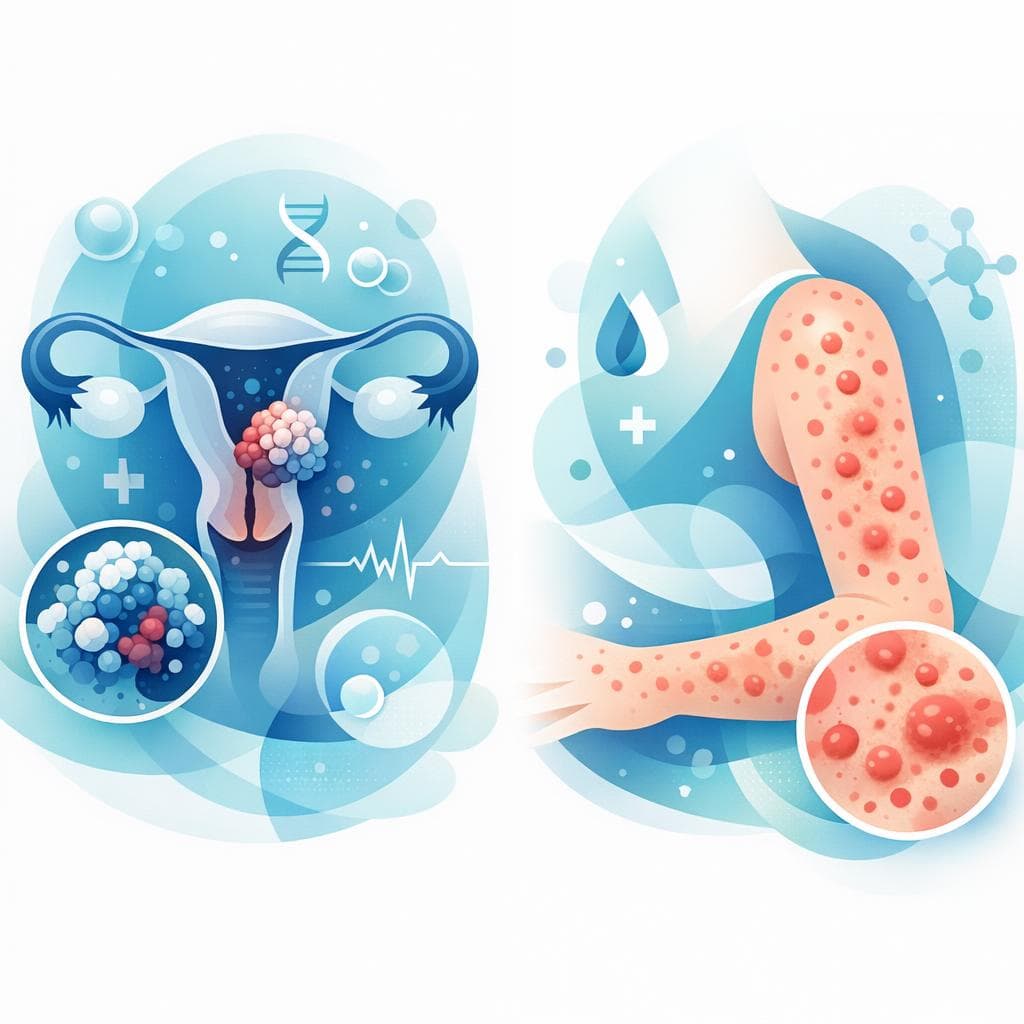
Skin rash is not a common or typical symptom of cervical cancer itself. The most frequent symptoms of cervical cancer are abnormal vaginal bleeding, unusual discharge, pelvic pain, and pain during sex. [1] [2] [3] A visible rash on the external genital skin is more characteristic of vulvar conditions rather than cervical disease. [4]
What symptoms are typical for cervical cancer?
- Abnormal vaginal bleeding (between periods, after sex, or after menopause) and/or unusual vaginal discharge are the most common signs. [2] [3]
- Pelvic pain or pain during sex can also occur. [1] [3]
- With more advanced disease, people may notice urinary or bowel symptoms, dull back pain, swollen legs, abdominal pain, or fatigue. [5]
When can a skin rash be related?
While a rash is not a hallmark symptom of cervical cancer, it can appear in the following contexts:
- Treatment-related skin changes
- Chemotherapy, radiation therapy, and immunotherapy can cause skin reactions such as maculopapular (flat and raised) rashes, dryness, itchiness, peeling, or blisters. [6] [7]
- Some anti-cancer medicines trigger immune-related or hypersensitivity rashes; severe but rare reactions like Stevens–Johnson syndrome (SJS) or toxic epidermal necrolysis (TEN) require urgent care and permanent discontinuation of the causative drug. [7]
- Immunotherapy can lead to dry, itchy rashes that may need moisturizers and sometimes prescription steroid creams. [8]
- Prior radiation can make rashes worse in the treated area (radiation recall or dermatitis). [9] [10]
- Other gynecologic conditions
- Rashes, sores, or warts on the vulvar skin are associated with vulvar disease, not cervical cancer. [4]
- Rare scenarios
- Paraneoplastic skin syndromes are uncommon and more often linked to other cancer types; they are not a typical presentation of cervical cancer. [11]
How to manage a cancer‑related skin rash
Management depends on cause and severity, but these supportive steps are commonly recommended:
- Gentle skin care: Use fragrance-free moisturizers (e.g., thick creams or ointments) multiple times per day to help dryness and itch. [8]
- Bathing habits: Take short, warm (not hot) showers once daily to avoid drying the skin. [12]
- Avoid irritants: Choose mild, fragrance-free soaps and detergents; avoid alcohol-based or exfoliating products that can worsen irritation. [6]
- Sun protection: Protect rash-prone or treated skin from sun with clothing and broad-spectrum sunscreen, as sensitivity may be increased during therapy. [6]
- Topical treatments: Your clinician may prescribe topical corticosteroids or antipruritic agents for inflammatory rashes. [8]
- When to seek care urgently: If you develop widespread rash, blistering, mucosal involvement (eyes, mouth, genitals), fever, or skin pain, seek immediate medical attention due to the risk of severe drug reactions such as SJS/TEN. [7]
Practical tips during cervical cancer treatment
- Report new rashes early: Early evaluation helps tailor treatment and prevent worsening while allowing cancer therapy to continue as safely as possible. [13]
- Coordinate with your oncology team: Dose adjustments, drug holds, or referrals to dermatology may be needed for moderate to severe reactions. [14] [13]
- Keep the skin barrier healthy: Liberal moisturization and gentle care can reduce discomfort and lower the risk of secondary infections while on therapy. [6] [8]
Bottom line
- A skin rash is not a typical symptom of cervical cancer; abnormal bleeding and pelvic symptoms are more suggestive. [1] [2] [3]
- Rashes during the cervical cancer journey are more commonly related to treatments like chemotherapy, radiation, or immunotherapy and are often manageable with supportive skin care and, when needed, medical treatments. [6] [7] [8]
- Any new, persistent, or severe rash should be assessed by your care team to identify the cause and adjust treatment safely. [13]
Related Questions
Related Articles


Sources
- 1.^abcCervical Cancer(medlineplus.gov)
- 2.^abcCervical Cancer(mskcc.org)
- 3.^abcdCervical Cancer Symptoms & Signs(mskcc.org)
- 4.^abSymptoms of Gynecologic Cancers(cdc.gov)
- 5.^↑Cervical Cancer(medlineplus.gov)
- 6.^abcdeDermatologic Health(mskcc.org)
- 7.^abcd1853-Skin rash | eviQ(eviq.org.au)
- 8.^abcdeManaging Your Immunotherapy Side Effects(mskcc.org)
- 9.^↑Patient information - Endometrial cancer recurrent or metastatic - Carboplatin, paclitaxel and dostarlimab(eviq.org.au)
- 10.^↑Patient information - Endometrial cancer recurrent or metastatic - Carboplatin, paclitaxel and durvalumab(eviq.org.au)
- 11.^↑Paraneoplastic syndromes of the nervous system - Symptoms and causes(mayoclinic.org)
- 12.^↑Coping with cancer - looking and feeling your best: MedlinePlus Medical Encyclopedia(medlineplus.gov)
- 13.^abcDermatologic Health(mskcc.org)
- 14.^↑Cervical Cancer Chemotherapy(nyulangone.org)
Important Notice: This information is provided for educational purposes only and is not intended to replace professional medical advice, diagnosis, or treatment. Always consult with a qualified healthcare provider before making any medical decisions.