
 Persly Medical Team
Back pain and cervical cancer: symptoms, causes, care
Is back pain a common symptom of Cervical Cancer?
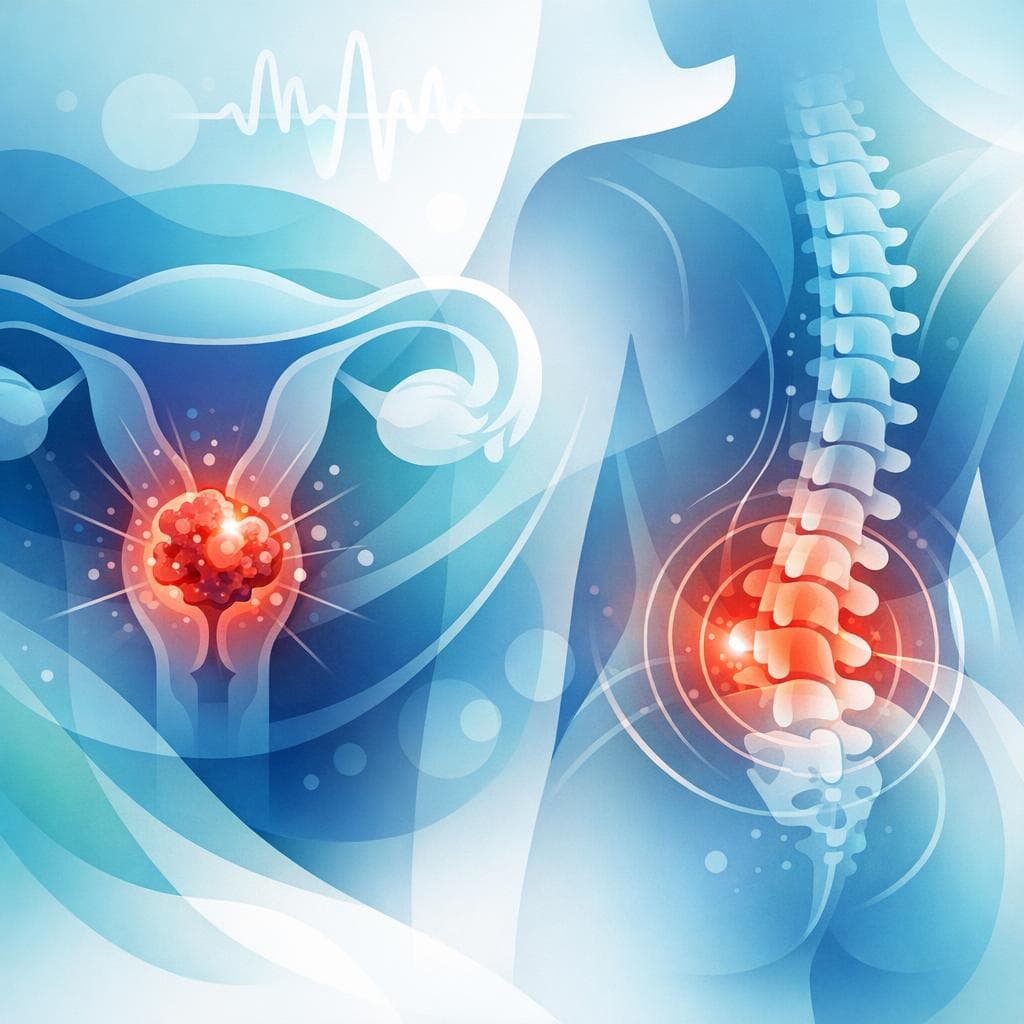
Back pain is not among the earliest or most common symptoms of cervical cancer, but it can appear when the disease is advanced or has spread to nearby tissues or bones. [1] Back pain in this context is often described as a dull backache and may come with other symptoms like pelvic pain, leg swelling, urinary difficulties, or abnormal vaginal bleeding and discharge. [2] In many people, cervical cancer causes few or no symptoms until it has progressed, and back pain tends to be a sign of later-stage involvement rather than early disease. [3]
How cervical cancer can cause back pain
- Local spread in the pelvis: As a cervical tumor grows, it can involve pelvic tissues and nerves, leading to referred pain felt in the lower back. [2]
- Bone metastases (spread to spine or pelvis): Advanced cervical cancer can spread to bones, including the spine and pelvis, causing back pain and sometimes fractures. [3]
- Spinal cord or nerve compression: Tumor growth in or near the spine can press on spinal nerves, leading to back pain that may progress to weakness, numbness, or changes in bladder or bowel function if cord compression occurs. [4]
- Associated pelvic symptoms: Difficult or painful urination or bowel movements, leg swelling, or pelvic pain may accompany a dull backache when disease extends beyond the cervix. [5]
Typical symptom patterns to watch
- Dull backache with pelvic symptoms: A persistent, dull backache together with pelvic pain, pain during sex, urinary or bowel difficulties, or abnormal bleeding may indicate spread beyond the cervix. [2]
- Back pain in advanced disease: Back pain, abdominal pain, bone pain, leg pain, fatigue, weight loss, and single-leg swelling are more typical of advanced cervical cancer. [3]
- Red flags for spinal involvement: Back pain that quickly worsens, wraps like a band around the chest or abdomen, or is accompanied by limb weakness, numbness, or bladder/bowel changes may point to spinal compression and needs urgent evaluation. [4]
Comparison: early vs. advanced symptoms
| Stage/context | More typical symptoms | Back pain likelihood |
|---|---|---|
| Early/localized cervical changes | Often no symptoms; may have abnormal bleeding or discharge, pelvic pain, pain during sex | Less common; usually absent |
| Advanced/spread beyond cervix | Abdominal pain, pelvic pain, back pain, bone pain/fractures, leg pain/swelling, fatigue, weight loss | More common; often a dull backache |
How back pain is evaluated
- Clinical assessment: A clinician will review symptoms such as bleeding, discharge, pelvic pain, urinary/bowel changes, and neurological signs to determine if the pain may be cancer-related. [6]
- Imaging when needed: PET/CT and other imaging tests help locate cancer, check for spread to bones or the spine, and guide staging and treatment. [7]
- Biopsy for diagnosis: If tests suggest cervical cancer, biopsy confirms the diagnosis and helps plan care. [7]
Evidence-based pain management
- Multimodal approach: Effective pain care includes regular screening, careful characterization of pain (acute, chronic, breakthrough), and combining medications with non-drug strategies and ongoing follow-up to adjust treatment. [8]
- Medications: Options may include acetaminophen, NSAIDs, adjuvant agents (like certain antidepressants or anticonvulsants for nerve pain), and opioids when appropriate, guided by cancer pain guidelines from oncology societies. [9]
- Non-pharmacologic therapies: Physical therapy, gentle exercise, heat/cold therapy, cognitive-behavioral techniques, and integrative approaches can help reduce cancer-related back pain. [10]
- Address cause-specific pain: If imaging reveals bone metastases or nerve compression, targeted treatments such as radiation therapy to painful bone lesions, steroids for swelling, or surgical/radiation decompression for cord compression may be considered. [4]
- Palliative/supportive care: Specialized teams focus on relieving pain and symptoms alongside cancer treatments, improving quality of life and supporting you and your family. [11] [12]
When to seek urgent care
- Neurologic warning signs: Sudden or rapidly worsening back pain with leg weakness, numbness, difficulty walking, or changes in bladder or bowel control can indicate spinal cord compression and needs urgent evaluation. [4]
- New or persistent symptoms: Ongoing back pain with pelvic pain, abnormal bleeding, or urinary/bowel difficulties should be assessed promptly to rule out progression or complications. [2]
Key takeaways
- Back pain can occur with cervical cancer, most often when the disease is advanced or has spread, and is usually described as a dull backache. [2] [1]
- Pain may result from local pelvic spread, bone metastases, or nerve/spinal cord compression. [3] [4]
- Management is individualized, combining medications, non-drug therapies, and supportive/palliative care, with urgent evaluation for any neurologic red flags. [8] [11] [12]
Related Questions
Related Articles


Sources
- 1.^abcdCervical cancer: MedlinePlus Medical Encyclopedia(medlineplus.gov)
- 2.^abcdeCervical Cancer(medlineplus.gov)
- 3.^abcdeCervical cancer: MedlinePlus Medical Encyclopedia(medlineplus.gov)
- 4.^abcdeSymptoms and causes - Mayo Clinic(mayoclinic.org)
- 5.^↑Cervical Cancer(medlineplus.gov)
- 6.^abCervical Cancer Symptoms & Signs(mskcc.org)
- 7.^abCervical Cancer(stanfordhealthcare.org)
- 8.^abPain Among Cancer Survivors(cdc.gov)
- 9.^↑Pain Among Cancer Survivors(cdc.gov)
- 10.^↑Pain Among Cancer Survivors(cdc.gov)
- 11.^abCervical cancer - Diagnosis and treatment(mayoclinic.org)
- 12.^abCervical cancer - Diagnosis and treatment(mayoclinic.org)
Important Notice: This information is provided for educational purposes only and is not intended to replace professional medical advice, diagnosis, or treatment. Always consult with a qualified healthcare provider before making any medical decisions.