
 Persly Medical Team
Based on PubMed | Does eating cheese interfere with warfarin and affect my INR?
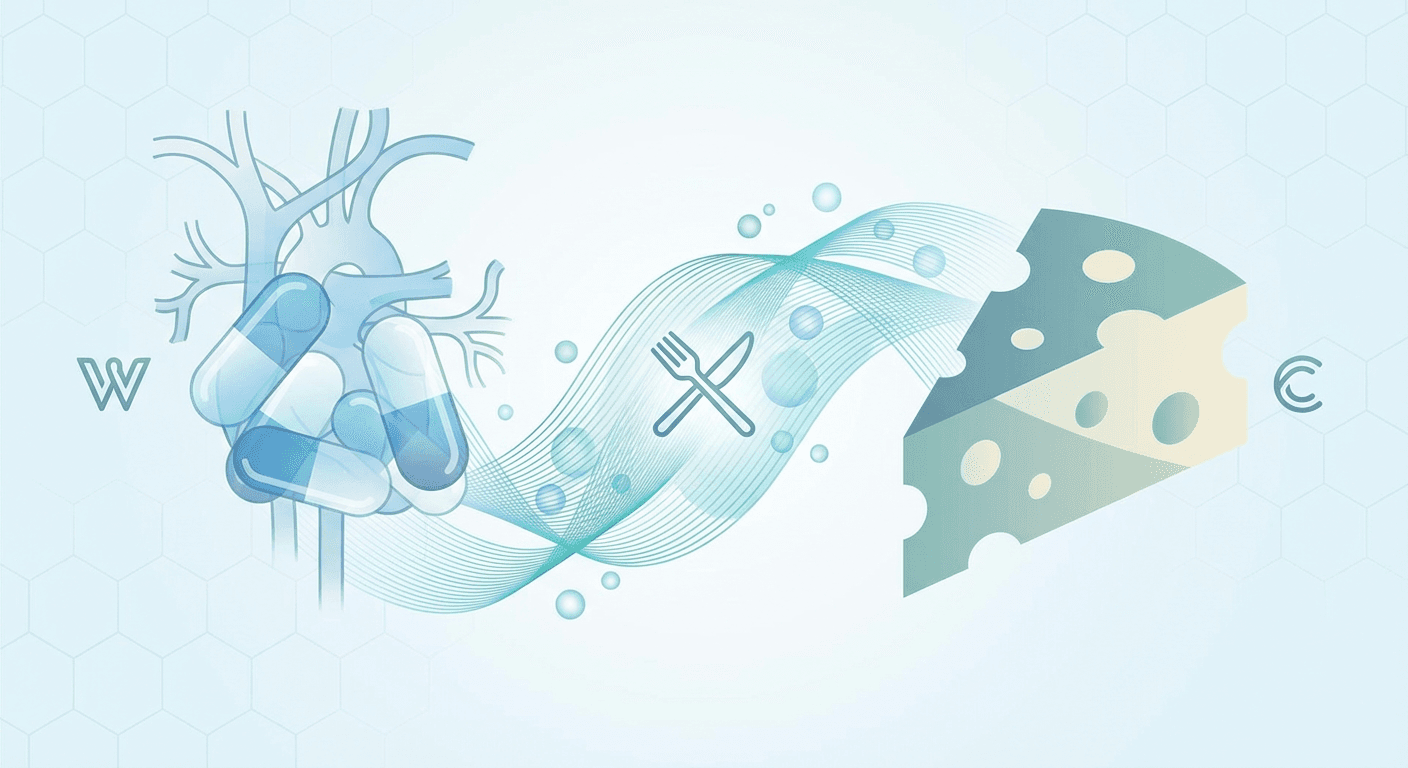
Cheese generally doesn’t interfere with warfarin like leafy greens do, but some aged or fermented cheeses contain vitamin K2 that can lower INR if intake increases suddenly. Keep your diet consistent and let your care team know if you plan major changes so your INR can be monitored.
Eating cheese does not usually interfere with warfarin the way leafy green vegetables do, but some cheeses can contain vitamin K (especially vitamin K2, called menaquinones), so large or sudden changes in cheese intake could potentially lower your INR. [1] [2] The safest approach with warfarin is not to avoid specific foods entirely, but to keep your diet consistent from week to week so your warfarin dose can be matched to your usual intake. [1] [3]
How warfarin and food interact
Warfarin works by blocking vitamin K recycling in the body, so sudden increases in vitamin K from your diet can reduce warfarin’s effect and lower your INR. [2] Official guidance emphasizes a normal, balanced diet while avoiding big swings in vitamin K intake, because too much vitamin K can lower the effect of warfarin. [3] Controlled studies have shown that high, short-term vitamin K intake can push INR below the therapeutic range, illustrating why consistency matters. [4] In short, INR stability depends more on consistent intake than on cutting out entire food groups. [1] [3]
Where cheese fits in
Most “warfarin food lists” highlight leafy greens and certain vegetable oils as the main vitamin K sources, not dairy products like cheese. [5] However, some cheeses especially aged or fermented types can contain vitamin K2 (menaquinones), and higher vitamin K exposure from diet can blunt warfarin’s effect. [6] If someone suddenly increases portions of vitamin‑K‑containing foods, INR may drop (blood becomes “thicker”). [2]
Practical guidance for cheese lovers
- Keep it consistent: It’s generally fine to keep eating the cheeses you enjoy if your portions are steady week to week. [1] [3]
- Avoid sudden large changes: Don’t abruptly start eating large amounts of vitamin‑K‑rich foods, because that can lower INR. [3] [5]
- Monitor when changing diet: If you plan to change your diet (for example, adding more aged cheeses or fermented foods), talk with your anticoagulation clinic; they may check your INR a bit sooner. [3] [5]
- Watch the big players: Leafy green vegetables (like kale, spinach, collards) and some oils (soybean, canola) are the most significant vitamin K sources to keep consistent. [5] These foods have a clearer, stronger impact on INR than cheese in most cases. [3] [5]
Evidence highlights
- Guidance for people on warfarin advises a balanced diet and to avoid large amounts of vitamin‑K‑rich foods because too much vitamin K lowers warfarin’s effect. [3] This is why consistency in diet is emphasized. [1]
- Experimental work shows that high vitamin K intake over a few days can move INR below the target range. [4] Even short bursts of vitamin K can matter if your usual intake is low. [4]
- Reviews on diet–warfarin interactions support counseling patients on which foods are vitamin K sources and focusing on steady intake patterns. [6]
Bottom line
Cheese is not a top-tier vitamin K source like leafy greens, and most people can continue eating cheese while on warfarin if they keep their portions consistent. [5] Sudden increases in vitamin‑K‑containing foods of any type including certain cheeses can lower INR, so aim for a steady pattern and alert your care team if you change your diet. [3] [1]
Related Questions
Related Articles


Sources
- 1.^abcdefWarfarin: MedlinePlus Drug Information(medlineplus.gov)
- 2.^abcDailyMed - WARFARIN SODIUM tablet(dailymed.nlm.nih.gov)
- 3.^abcdefghiDailyMed - WARFARIN SODIUM tablet(dailymed.nlm.nih.gov)
- 4.^abcThe effect of dietary vitamin K on warfarin-induced anticoagulation.(pubmed.ncbi.nlm.nih.gov)
- 5.^abcdefWARFARIN SODIUM(dailymed.nlm.nih.gov)
- 6.^abInteraction of dietary factors with oral anticoagulants: review and applications.(pubmed.ncbi.nlm.nih.gov)
Important Notice: This information is provided for educational purposes only and is not intended to replace professional medical advice, diagnosis, or treatment. Always consult with a qualified healthcare provider before making any medical decisions.