
 Persly Medical Team
Based on NIH | Should prednisone be taken on an empty stomach, and is there any reason to avoid red meat while using it?
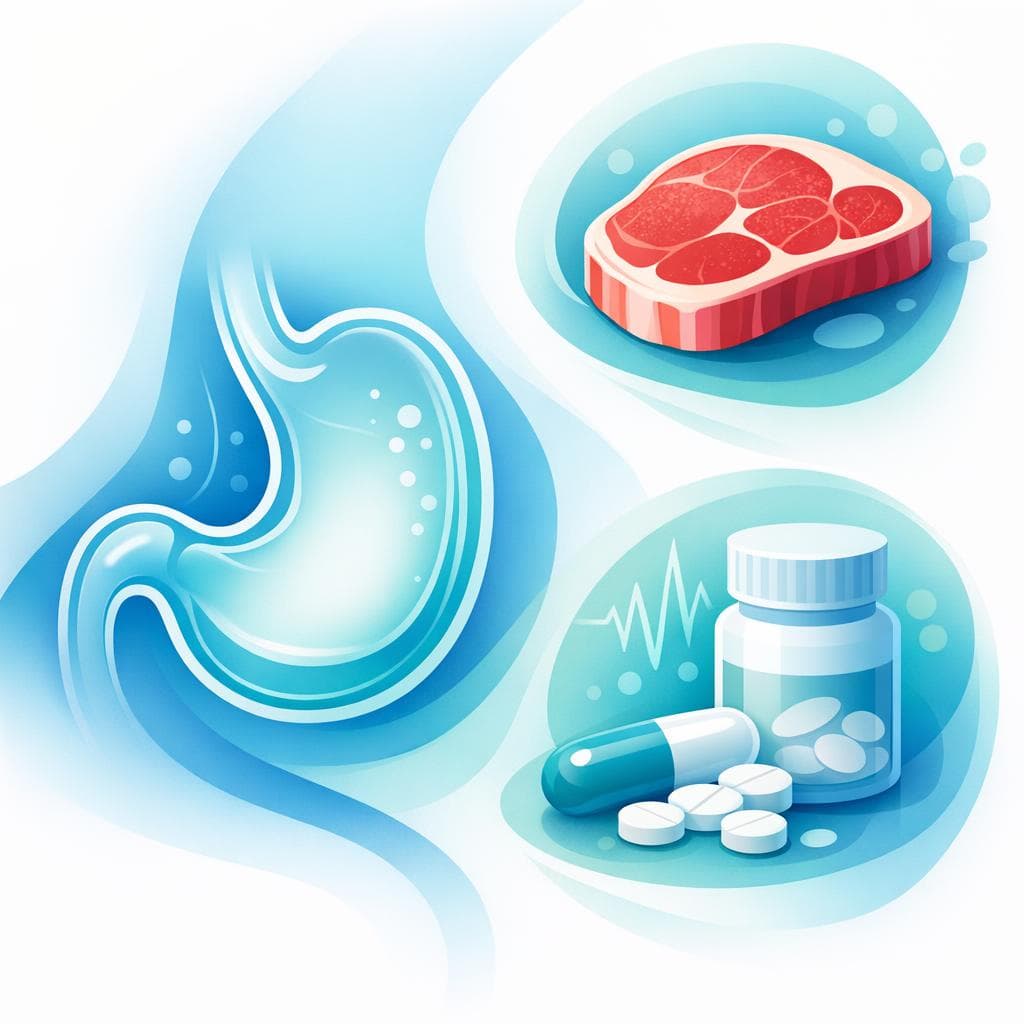
Take prednisone with food to minimize stomach irritation; this does not meaningfully reduce its effectiveness for most people. There’s no need to avoid red meat specifically, but favor lean, unprocessed options and a heart-healthy diet, and be cautious with NSAIDs.
Prednisone: how to take it and what to eat Prednisone is generally recommended to be taken with food to reduce stomach upset, unless your prescriber has told you otherwise. [1] Many people find taking it with breakfast or a meal helps prevent nausea and irritation. [1] If you use a liquid concentrate, it can be mixed with juice or soft foods like applesauce, and delayed‑release tablets should be swallowed whole. [2] [2]
Empty stomach vs with food
- Taking prednisone with food is commonly advised because steroids can irritate the stomach lining and may increase the risk of gastrointestinal side effects, especially when combined with aspirin or other NSAIDs (non‑steroidal anti‑inflammatory drugs). [1] [3]
- For related corticosteroids, official guidance explicitly advises taking doses with food or milk to limit stomach upset, reinforcing this general practice across the steroid class. [4]
- Food can slightly delay peak blood levels for some steroid forms, but standard prednisone tablets taken with a meal do not show meaningful changes in overall metabolism or exposure; the main difference is that the peak occurs a bit later. [5] This delay is usually not clinically important for most conditions being treated. [5]
- A special note on enteric‑coated steroids: if you are prescribed an enteric‑coated prednisolone product (not typical prednisone), food can significantly delay and variably affect absorption; those products are usually taken at least 2 hours away from meals. [6] This does not apply to most standard prednisone tablets. [6]
Bottom line: taking prednisone with food is generally preferred to protect your stomach, and it does not meaningfully reduce its benefit for most users. [1] [5]
Red meat and prednisone
- There is no standard restriction that requires avoiding red meat specifically while taking prednisone. Prednisone does not have a direct drug–food interaction with red meat.
- However, prednisone can raise blood sugar, blood pressure, and blood lipids over time, and it can promote fluid retention and bone thinning, especially with longer use. It is often suggested to follow a heart‑healthy, lower‑salt, and bone‑supportive eating pattern while on steroids. [7] [8] [9]
- Practical nutrition tips during steroid therapy commonly include limiting excess sugars, moderating sodium, and ensuring adequate calcium and vitamin D to protect bone health. [7] [9] [10]
What this means for red meat:
- Lean, unprocessed red meat in moderate portions can fit into a balanced diet for many people on prednisone.
- Consider limiting processed and high‑fat cuts (which can worsen cholesterol and triglycerides) and focusing on lean proteins such as fish, skinless poultry, legumes, and plant proteins to support cardiovascular and metabolic health while on steroids. [7]
- If you have existing conditions like high cholesterol, hypertension, diabetes, gout, or kidney disease, your clinician or dietitian may recommend stricter limits on red meat and overall saturated fat and sodium. [7]
Additional stomach protection tips
- Avoid or limit NSAIDs such as ibuprofen and naproxen while on prednisone unless your prescriber approves, because the combination increases the risk of gastrointestinal side effects. [3]
- If you must use both, your clinician may consider stomach protection (for example, a proton‑pump inhibitor), based on your risk profile. [3]
- Limiting alcohol can also help reduce stomach irritation and bleeding risks when using corticosteroids. [4]
Bone and metabolic health while on steroids
- Long‑term prednisone can weaken bones (steroid‑induced osteoporosis). Your clinician may suggest calcium and vitamin D supplements and weight‑bearing exercise to protect bone strength. [9] [8]
- Steroids may also increase appetite and promote weight gain; emphasizing high‑fiber vegetables, fruits, lean proteins, and whole grains while moderating calories can help manage weight and blood sugar. [7]
How to take your dose
- Take prednisone at the same time each day, often in the morning, to align with your body’s natural cortisol rhythm and to reduce sleep disturbance. [1]
- Take your dose with food to minimize stomach upset; mixing liquid concentrate with juice or soft foods is acceptable, and delayed‑release tablets should be swallowed whole. [1] [2]
- If your prescriber adjusts your dose or plans a taper, follow the schedule closely and do not stop abruptly unless advised. [2]
Summary
- Take prednisone with food to reduce stomach irritation; the overall effectiveness is not meaningfully reduced by doing so. [1] [5]
- There is no direct reason to avoid red meat solely because you are taking prednisone, but emphasizing lean proteins and limiting processed/high‑fat red meats supports heart and metabolic health during steroid therapy. [7]
- Be mindful of NSAID use with prednisone due to increased GI risk, and consider bone protection measures if you will be on steroids for a longer time. [3] [9]
Related Questions
Related Articles


Sources
- 1.^abcdefgPrednisone: MedlinePlus Drug Information(medlineplus.gov)
- 2.^abcdPrednisone: MedlinePlus Drug Information(medlineplus.gov)
- 3.^abcd(dailymed.nlm.nih.gov)
- 4.^abMethylprednisolone: MedlinePlus Drug Information(medlineplus.gov)
- 5.^abcdEffect of liquid diet on serum protein binding and prednisolone concentrations after oral prednisone.(pubmed.ncbi.nlm.nih.gov)
- 6.^abEffect of food on the absorption and pharmacokinetics of prednisolone from enteric-coated tablets.(pubmed.ncbi.nlm.nih.gov)
- 7.^abcdefNutrition Guidelines(stanfordhealthcare.org)
- 8.^abPrednisone and other corticosteroids: Balance the risks and benefits(mayoclinic.org)
- 9.^abcdPrednisone and other corticosteroids: Balance the risks and benefits(mayoclinic.org)
- 10.^↑Vitamin D(mayoclinic.org)
Important Notice: This information is provided for educational purposes only and is not intended to replace professional medical advice, diagnosis, or treatment. Always consult with a qualified healthcare provider before making any medical decisions.