
 Persly Medical Team
Based on FDA | Does eating avocado affect the absorption or effectiveness of pantoprazole?
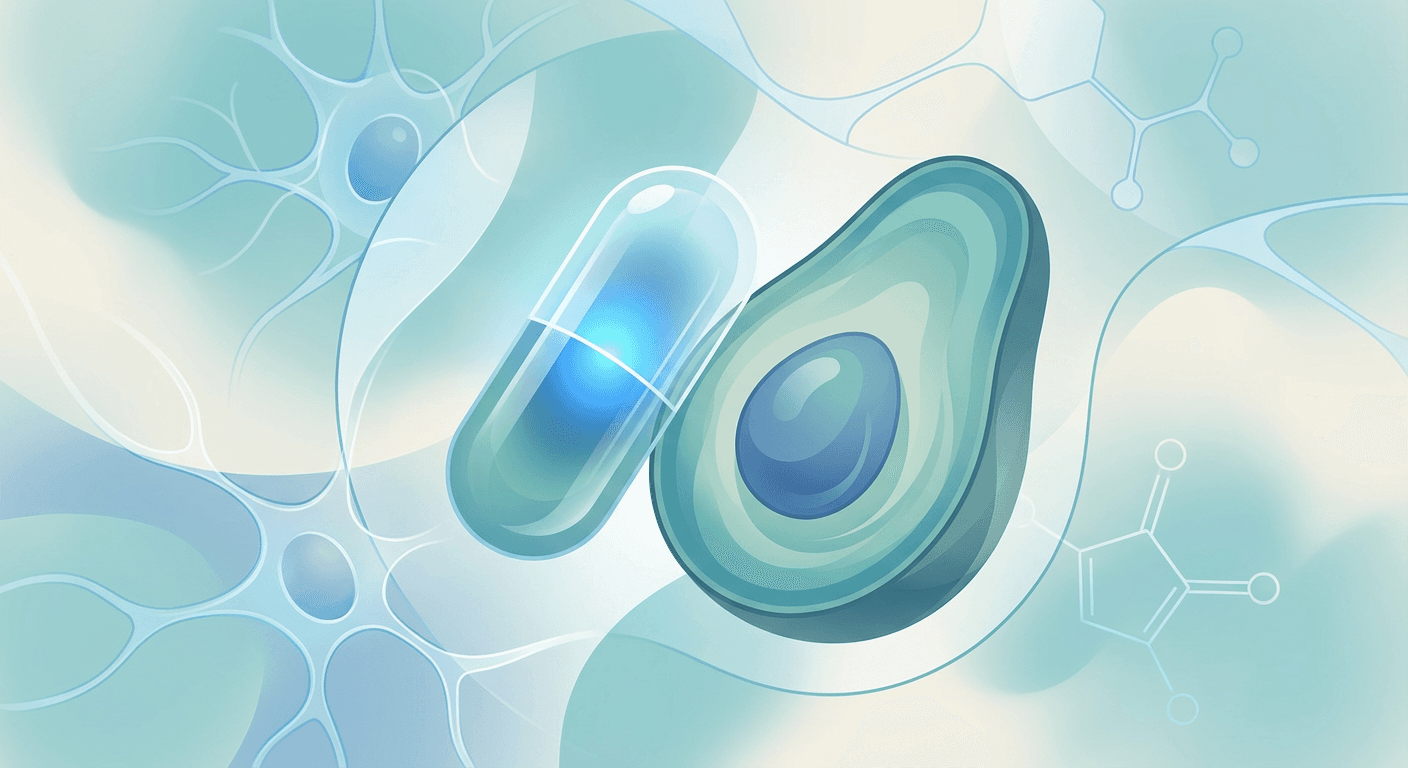
Eating avocado does not meaningfully affect pantoprazole absorption or effectiveness. Pantoprazole tablets can be taken with or without food, while granules should be taken 30 minutes before a meal as directed. There is no known avocado–pantoprazole interaction.
Pantoprazole and avocado: no known interaction Based on available evidence, eating avocado does not appear to meaningfully affect the absorption or effectiveness of pantoprazole. Pantoprazole (a proton pump inhibitor, PPI) is formulated as an enteric‑coated tablet or delayed‑release granules, and its absorption is generally robust with typical meals; there is no specific clinical data showing that avocado alters its pharmacokinetics or clinical effect. Standard guidance allows pantoprazole tablets to be taken with or without food, and granules are typically taken 30 minutes before a meal for best effect. [1] Avocado is not listed among clinically important food interactions for pantoprazole in major consumer medication guides. [2] [3]
How pantoprazole is absorbed
- Pantoprazole tablets use an enteric coating so the drug bypasses stomach acid and dissolves in the small intestine, where it is absorbed. This design reduces sensitivity to normal food components compared with non–enteric‑coated medicines. [4]
- For the granule formulation, instructions specify administration 30 minutes before a meal and mixing only with applesauce or apple juice to ensure proper delivery of the delayed‑release granules. These administration details are about ensuring the granules reach the intestine intact, not because specific foods like avocado interfere with the drug. [5] [6] [1] [7]
What we know about food effects with PPIs
- Food can influence some PPIs, but the effects vary by agent and formulation. For pantoprazole, tablet bioavailability is considered minimally affected by meals in routine use, and tablets may be taken with or without food. [1]
- With other PPIs, food can delay or reduce peak levels (for example, lansoprazole shows decreased peak concentration with food), illustrating that any food effect is formulation‑ and drug‑specific rather than tied to a particular ingredient like avocado. These findings do not translate to a clinically meaningful avocado–pantoprazole interaction. [8]
Avocado and drug metabolism: why it’s unlikely to matter here
- Some fruits (notably grapefruit) can change levels of drugs by inhibiting intestinal enzymes or transporters. While reviews discuss that various fruits and vegetables may affect drug‑metabolizing enzymes (like CYP3A4/CYP2C19) in theory, avocado is not a documented cause of clinically significant interactions with PPIs, and pantoprazole in particular has a lower interaction potential than some other PPIs. [9] [10] [11]
- Pantoprazole has a relatively low propensity for clinically significant drug interactions compared with omeprazole, largely due to its metabolic profile. This lower interaction potential supports the absence of known food-related issues with avocado. [11]
Practical guidance for taking pantoprazole
- Tablets: May be taken with or without food; take consistently at the same time each day. Consistency helps maintain steady acid suppression and symptom control. [1]
- Granules (packets): Take 30 minutes before a meal; mix only with applesauce or apple juice as directed; do not crush or chew the granules. Following the specific mixing instructions ensures proper release and absorption. [5] [6] [1]
- General diet: There is no need to avoid avocado while using pantoprazole. If you notice heartburn triggered by high‑fat meals (including large portions of avocado), spacing the drug appropriately and moderating portion size may help symptoms, but this relates to reflux triggers rather than drug absorption.
When to seek advice
- If you continue to have reflux symptoms despite correct use (for example, after 2–4 weeks), or you have alarm signs such as trouble swallowing, unintentional weight loss, vomiting, or black stools, you should seek medical evaluation. Your clinician may adjust timing, dose, or consider alternative therapies if symptoms persist.
- If you take medications known to interact with stomach acid suppression or with CYP enzymes (for example, certain antifungals or antivirals), confirm with your clinician or pharmacist, although pantoprazole generally has a lower interaction risk than some PPIs. Individual medication reviews are always wise when multiple drugs are involved. [11]
Summary
- There is no evidence that avocado reduces the absorption or effectiveness of pantoprazole. Pantoprazole tablets can be taken with or without food, and the granule packets should be taken 30 minutes before a meal following the labeled mixing instructions. [1] [5] [6]
- Avocado is not listed among clinically relevant interactions for pantoprazole, and pantoprazole has a low overall interaction potential compared with other PPIs. You can generally continue eating avocado while taking pantoprazole. [2] [3] [11]
Would you like tips on the best time to take your specific pantoprazole formulation to match your meal routine?
Related Questions
Related Articles


Sources
- 1.^abcdefPantoprazole: MedlinePlus Drug Information(medlineplus.gov)
- 2.^abPantoprazole: MedlinePlus Drug Information(medlineplus.gov)
- 3.^abPantoprazole: MedlinePlus Drug Information(medlineplus.gov)
- 4.^↑Pantoprazole: a proton pump inhibitor.(pubmed.ncbi.nlm.nih.gov)
- 5.^abcPantoprazole: MedlinePlus Drug Information(medlineplus.gov)
- 6.^abcPantoprazole: MedlinePlus Drug Information(medlineplus.gov)
- 7.^↑Bioequivalence among three methods of administering pantoprazole granules in healthy subjects.(pubmed.ncbi.nlm.nih.gov)
- 8.^↑The effect of food and antacids on lansoprazole absorption and disposition.(pubmed.ncbi.nlm.nih.gov)
- 9.^↑Potential risks resulting from fruit/vegetable-drug interactions: effects on drug-metabolizing enzymes and drug transporters.(pubmed.ncbi.nlm.nih.gov)
- 10.^↑Pharmacokinetic herb-drug interactions (part 1): origins, mechanisms, and the impact of botanical dietary supplements.(pubmed.ncbi.nlm.nih.gov)
- 11.^abcdPharmacokinetic drug interaction profiles of proton pump inhibitors: an update.(pubmed.ncbi.nlm.nih.gov)
Important Notice: This information is provided for educational purposes only and is not intended to replace professional medical advice, diagnosis, or treatment. Always consult with a qualified healthcare provider before making any medical decisions.