
 Persly Medical Team
Based on NIH | Does eating spicy food while taking naproxen increase the risk of gastrointestinal side effects such as heartburn or ulcers?
Spicy foods do not increase naproxen’s risk of ulcers or bleeding, but they can aggravate heartburn or stomach irritation. Naproxen and other NSAIDs can cause GI injury on their own, so use the lowest effective dose, take with food if you have upset, consider a PPI if high risk, avoid alcohol, and seek care for bleeding signs.
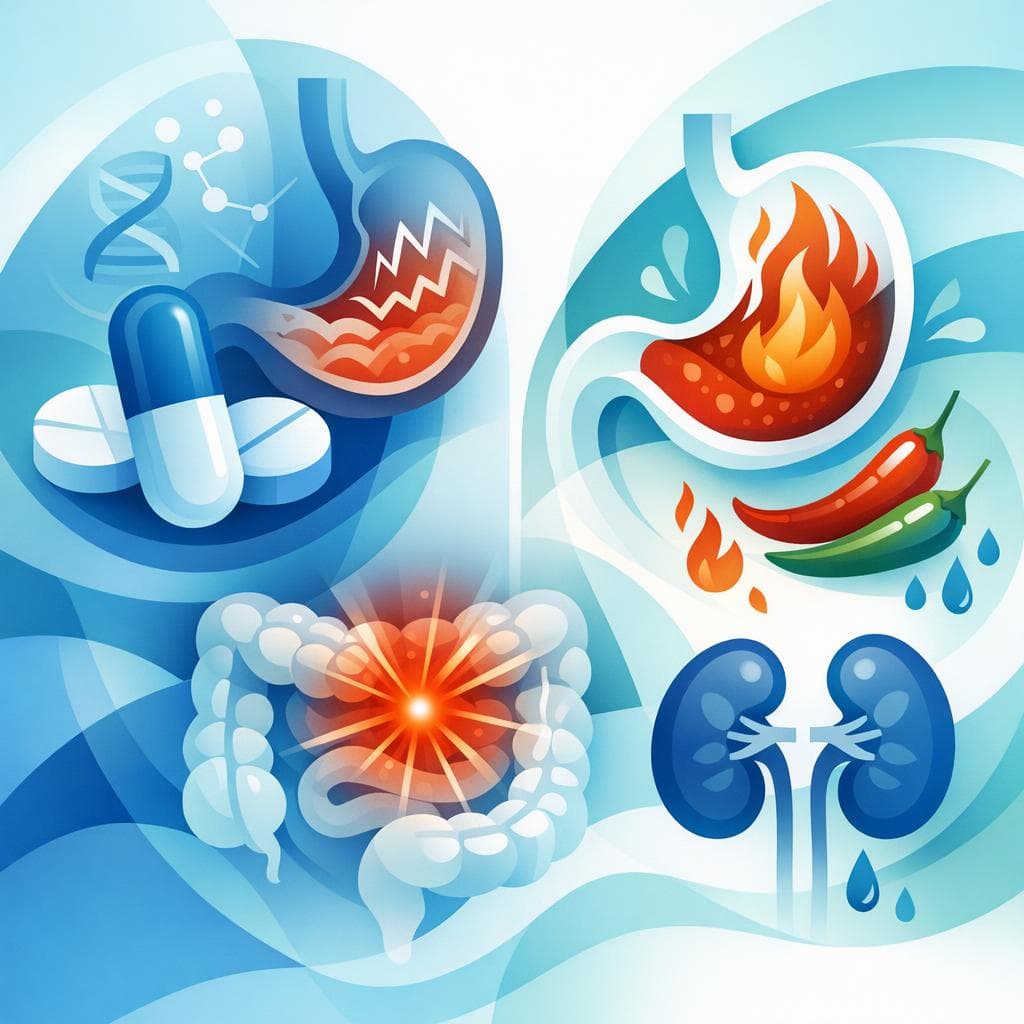
Eating spicy food does not by itself increase the medical risk of ulcers or GI bleeding from naproxen, but it can aggravate stomach irritation and heartburn symptoms while you are on the drug. Naproxen and other NSAIDs can cause gastritis, ulcers, and even bleeding on their own, and spicy foods may make discomfort feel worse even if they don’t cause damage by themselves. [1] [2] [3] [4]
What naproxen does to your stomach
- NSAIDs such as naproxen increase the risk of serious gastrointestinal (GI) side effects, including bleeding, ulceration, and perforation of the stomach or intestines; these events can occur without warning and at any time during use. [1]
- The risk is higher with factors like older age, a history of ulcers or GI bleeding, longer duration of therapy, smoking, alcohol use, and use of steroids or blood thinners. Even short-term use is not risk‑free. [5] [2]
- Common naproxen GI side effects include stomach pain, heartburn, nausea, dyspepsia (indigestion), and ulcers. [6]
Where spicy food fits in
- Large medical references note that spicy foods do not cause peptic ulcers; the main causes are Helicobacter pylori infection and long-term NSAID use. However, spicy foods can worsen ulcer symptoms and heartburn in some people. [3] [4]
- From a symptom standpoint, spicy meals can increase burning or reflux sensations, which may make NSAID‑related irritation feel worse even if spice isn’t increasing tissue injury risk. [3] [4]
Is there any protective or harmful interaction?
- Human and animal research on capsaicin (the compound that makes chili peppers hot) suggests capsaicin may have gastroprotective effects in some circumstances, and small studies have shown reduced aspirin‑induced mucosal injury after chili ingestion; however, these findings are not sufficient to recommend spicy food as protection against NSAID injury in everyday practice. [7] [8]
- Consumer and professional guidance still emphasizes reducing known risk factors and managing symptoms rather than relying on spicy foods to protect the stomach. [9] [6]
Practical guidance if you take naproxen
- Use the lowest effective naproxen dose for the shortest possible time, and avoid combining with other NSAIDs or heavy alcohol use. [9]
- If you notice stomach upset, taking naproxen with food or milk may help symptoms; some newer evidence suggests fasting dosing does not necessarily raise serious risk, but labels still allow food if you have upset. [10] [11] [12]
- Consider limiting spicy meals if they trigger heartburn or stomach pain for you personally; while they do not cause ulcers, they can exacerbate discomfort. [3] [4]
- If you are at higher GI risk (age ≥60, prior ulcer/GI bleed, on anticoagulants/steroids, heavy alcohol), ask your clinician about gastroprotection such as a proton pump inhibitor (PPI) or whether a COX‑2–selective NSAID would be more appropriate; combining a COX‑2 agent with a PPI offers the strongest protection in high‑risk settings. [13] [5] [14]
- Stop naproxen and seek medical care urgently if you develop warning signs of bleeding: fainting, vomiting blood, black/tarry stools, or persistent stomach pain. [10] [11]
Quick reference: Risk and symptom table
| Topic | What the evidence says | What this means for you |
|---|---|---|
| Naproxen ulcer/bleed risk | NSAIDs increase the risk of ulcers, bleeding, perforation; can occur without warning; risk rises with age, prior ulcer, anticoagulants/steroids, alcohol, duration. [1] [5] [2] | Keep dose minimal and duration short; discuss protective strategies if you have risk factors. |
| Spicy food and ulcers | Spicy foods do not cause peptic ulcers; they can worsen symptoms. [3] [4] | Avoid or limit spicy meals if they aggravate your heartburn or pain. |
| Spicy food and NSAID interaction | Limited human studies suggest capsaicin may reduce aspirin-induced injury, but not enough to guide routine practice. [7] [8] | Don’t rely on spicy foods for protection; focus on proven risk‑reduction steps. |
| Managing symptoms | Naproxen can be taken with food or milk if stomach upset occurs; watch for bleeding warning signs. [10] [11] | Use food/milk to ease discomfort; seek care for red‑flag symptoms. |
Bottom line
- Spicy foods do not appear to increase the medical risk of naproxen‑related ulcers or bleeding, but they can worsen heartburn or stomach pain in many people, especially while the stomach lining is irritated by an NSAID. [3] [4]
- Your best protection is to minimize NSAID exposure, avoid alcohol and other NSAIDs, consider gastroprotection if you have risk factors, and monitor for warning signs of bleeding. [1] [5] [9] [14]
Related Questions
Related Articles
Sources
- 1.^abcd(dailymed.nlm.nih.gov)
- 2.^abc(dailymed.nlm.nih.gov)
- 3.^abcdefPeptic Ulcer(medlineplus.gov)
- 4.^abcdefSymptoms and causes - Mayo Clinic(mayoclinic.org)
- 5.^abcd(dailymed.nlm.nih.gov)
- 6.^ab(dailymed.nlm.nih.gov)
- 7.^abChili protects against aspirin-induced gastroduodenal mucosal injury in humans.(pubmed.ncbi.nlm.nih.gov)
- 8.^abChili protects against aspirin-induced gastroduodenal mucosal injury in humans.(pubmed.ncbi.nlm.nih.gov)
- 9.^abc(dailymed.nlm.nih.gov)
- 10.^abcCARE ONE NAPROXEN SODIUM- naproxen sodium tablet, film coated(dailymed.nlm.nih.gov)
- 11.^abcALL DAY RELIEF- naproxen sodium tablet, film coated(dailymed.nlm.nih.gov)
- 12.^↑Gastrointestinal safety of NSAIDs and over-the-counter analgesics.(pubmed.ncbi.nlm.nih.gov)
- 13.^↑ALL DAY RELIEF- naproxen sodium tablet(dailymed.nlm.nih.gov)
- 14.^abNonsteroid anti-inflammatory drug-induced gastroduodenal injury.(pubmed.ncbi.nlm.nih.gov)
Important Notice: This information is provided for educational purposes only and is not intended to replace professional medical advice, diagnosis, or treatment. Always consult with a qualified healthcare provider before making any medical decisions.