
 Persly Medical Team
Based on NIH | Does taking naproxen while fasting increase the risk of gastrointestinal side effects like stomach pain, ulceration, or bleeding?
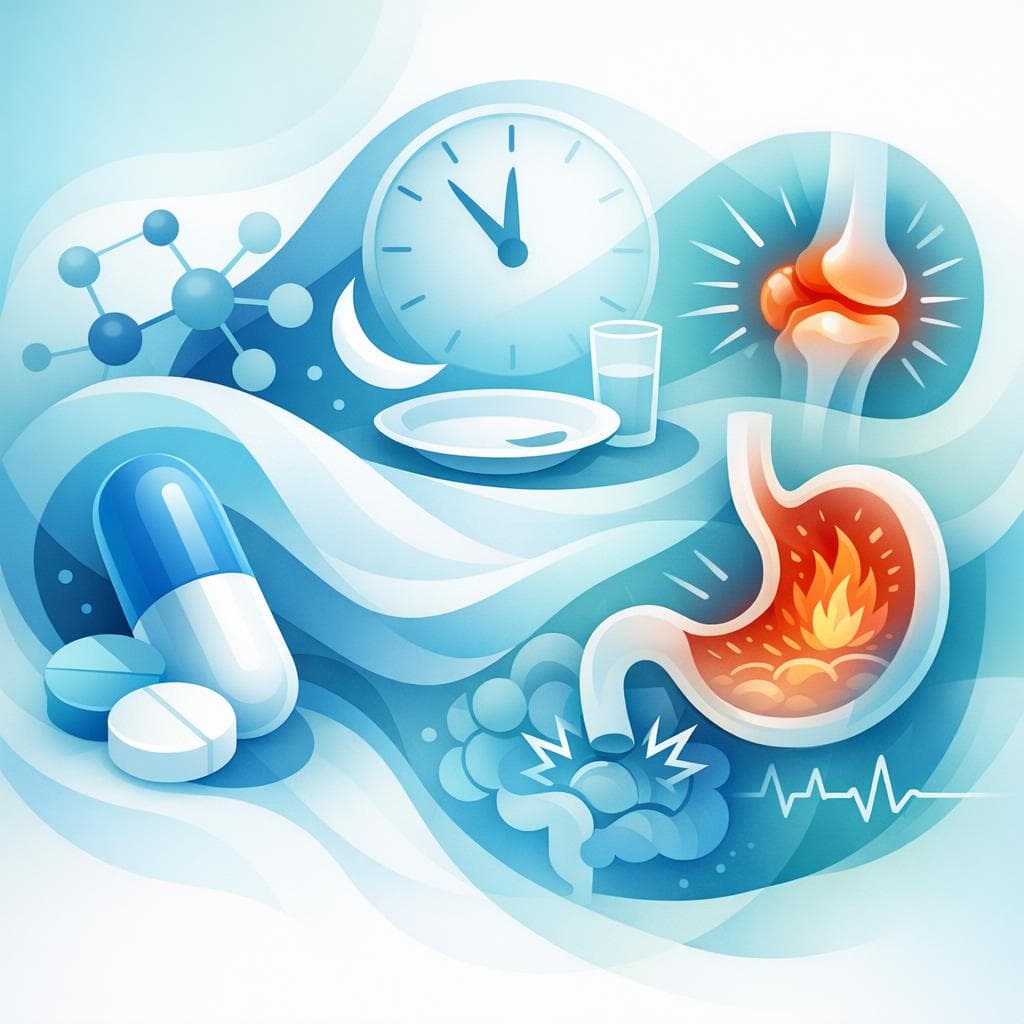
Fasting may increase stomach irritation from naproxen based on animal data, though direct human evidence is limited. Taking it with food or milk can lessen dyspepsia but does not reduce the underlying risks of ulcers and GI bleeding, which are higher in vulnerable groups. Use the lowest effective dose, avoid alcohol and smoking, and consider gastroprotection if at high risk.
Naproxen and Fasting: Does It Raise GI Risk?
Naproxen (a nonsteroidal anti‑inflammatory drug, or NSAID) can cause gastrointestinal (GI) side effects such as stomach pain, ulcers, and bleeding, and these risks are well‑recognized regardless of whether you eat. [1] In general, NSAIDs increase the risk of serious GI events, including bleeding and ulceration, and this can occur without warning. [1] Over‑the‑counter guidance commonly advises taking NSAIDs with food or milk if stomach upset occurs, reflecting practical steps to reduce dyspepsia (stomach discomfort). [2]
What Happens When You Take Naproxen While Fasting?
- Potential for more stomach irritation: Experimental animal data suggest that fasting can increase stomach (gastric) side effects from NSAIDs, whereas food may shift injury toward the small intestine; however, this specific effect has not been tested in humans. [3] Because human evidence is limited, it’s reasonable to consider that an empty stomach may make naproxen feel harsher and more irritating for some people. [3]
- Onset of action vs. tolerability: Food typically delays the peak level and onset of action of NSAIDs without reducing overall absorption, which can make them feel gentler but slower to work. [3] When fast pain relief is desired, taking naproxen without food may produce quicker relief, but it may also come with more stomach discomfort for some individuals. [3]
Baseline GI Risks with Naproxen (Regardless of Fasting)
- Ulcers and bleeding risk: Chronic NSAID use raises the risk of ulcer bleeding or perforation several‑fold due to local irritation and systemic prostaglandin inhibition. [4] Serious GI events can occur at any time during NSAID use, sometimes without prior symptoms. [1]
- Higher‑risk groups: Older age, prior ulcer or GI bleed, use of oral corticosteroids or anticoagulants, smoking, alcohol use, longer NSAID duration, and poor general health increase GI bleeding risk. [5] People with a history of peptic ulcer disease or GI bleeding face more than a ten‑fold higher risk when using NSAIDs. [6]
Practical Guidance: Fasting vs. Food
- If your stomach is sensitive: Many people find naproxen easier to tolerate with a small meal or milk to reduce immediate stomach upset. [2] This approach doesn’t eliminate serious risks but can lower bothersome dyspepsia. [2]
- If you need rapid pain relief: Taking naproxen on an empty stomach may bring faster relief because food can delay peak levels, though overall exposure is similar. [3] Balance the need for speed with how your stomach typically reacts to NSAIDs. [3]
- Hydration matters: Taking naproxen with a full glass of water is a simple step that is commonly advised and may help with tolerability. [2]
Who Should Avoid Fasting with Naproxen
- History of ulcers or GI bleeding: Because baseline risk is substantially higher, added irritation from fasting may not be worth it; protective strategies should be used. [6] If you’ve ever had an ulcer or GI bleed, extreme caution is advised with any NSAID. [6]
- On blood thinners or steroids: These medications significantly increase GI risk when combined with NSAIDs; adding fasting may further reduce tolerability. [5] Consult a clinician about whether naproxen is appropriate and whether you need a protective agent. [5]
- Older adults or those in poor health: Age and general health are recognized risk enhancers for NSAID‑related GI events. [5] Using food and the lowest effective dose for the shortest time is usually preferred. [5]
Risk‑Reduction Strategies
- Use the lowest effective dose for the shortest duration: This approach reduces cumulative GI exposure. [1] Avoid exceeding the recommended dose or duration to limit both GI and cardiovascular risks. [1]
- Consider gastroprotection if you’re high‑risk: Medicines like proton pump inhibitors (PPIs) can lower ulcer risk when NSAIDs are necessary. [4] Ask your clinician whether gastroprotection is appropriate based on your risk profile. [4]
- Avoid alcohol and smoking while taking naproxen: These behaviors raise GI bleeding risk and can compound NSAID effects. [5] Lifestyle measures meaningfully reduce overall GI risk. [5]
- Monitor for warning signs: Faintness, vomiting blood, black or tarry stools, or persistent stomach pain can signal stomach bleeding and require immediate medical attention. [2] Stop naproxen and seek care promptly if these occur. [2]
Bottom Line
- Fasting may increase the likelihood of stomach irritation with naproxen based on animal data, but direct human evidence is limited. [3] Taking naproxen with food or milk often helps with immediate stomach discomfort, though it can delay pain relief onset. [3] [2]
- Regardless of fasting, naproxen carries a known risk of ulcers and GI bleeding, especially in high‑risk individuals, and serious events can occur without warning. [1] [6] Using the lowest effective dose for the shortest period, avoiding alcohol and smoking, and considering gastroprotection when appropriate are sensible steps. [1] [5] [4]
Quick Reference: Fasting vs. Food
| Scenario | Pros | Cons | Recommendation |
|---|---|---|---|
| Taking naproxen while fasting | Faster onset of pain relief. [3] | Potentially more stomach irritation; human data are limited. [3] | Consider only if you typically tolerate NSAIDs well and need rapid relief; take with plenty of water and monitor symptoms. [3] [2] |
| Taking naproxen with food/milk | Better immediate stomach comfort for many users. [2] | Slower onset of action; no reduction in overall exposure. [3] | Preferable if you have a sensitive stomach or any GI risk factors; combine with lifestyle risk reduction. [2] [3] |
When to Seek Medical Advice
- If you have a history of ulcers, GI bleeding, are older, or take blood thinners/steroids, discuss naproxen use and possible protective measures before taking it. [5] [6] Individual risk assessment can substantially reduce complications. [5] [6]
- If you develop signs of bleeding (black stools, vomiting blood, faintness) or persistent/worsening stomach pain, stop naproxen and seek care immediately. [2] Prompt action is critical because serious GI events can be life‑threatening. [2]
Related Questions
Related Articles
Sources
- 1.^abcdefg(dailymed.nlm.nih.gov)
- 2.^abcdefghijklALL DAY RELIEF- naproxen sodium tablet(dailymed.nlm.nih.gov)
- 3.^abcdefghijklmNSAIDs: take with food or after fasting?(pubmed.ncbi.nlm.nih.gov)
- 4.^abcdNonsteroidal anti-inflammatory drugs and gastrointestinal disease: pathophysiology, treatment and prevention.(pubmed.ncbi.nlm.nih.gov)
- 5.^abcdefghij(dailymed.nlm.nih.gov)
- 6.^abcdef(dailymed.nlm.nih.gov)
Important Notice: This information is provided for educational purposes only and is not intended to replace professional medical advice, diagnosis, or treatment. Always consult with a qualified healthcare provider before making any medical decisions.