
 Persly Medical Team
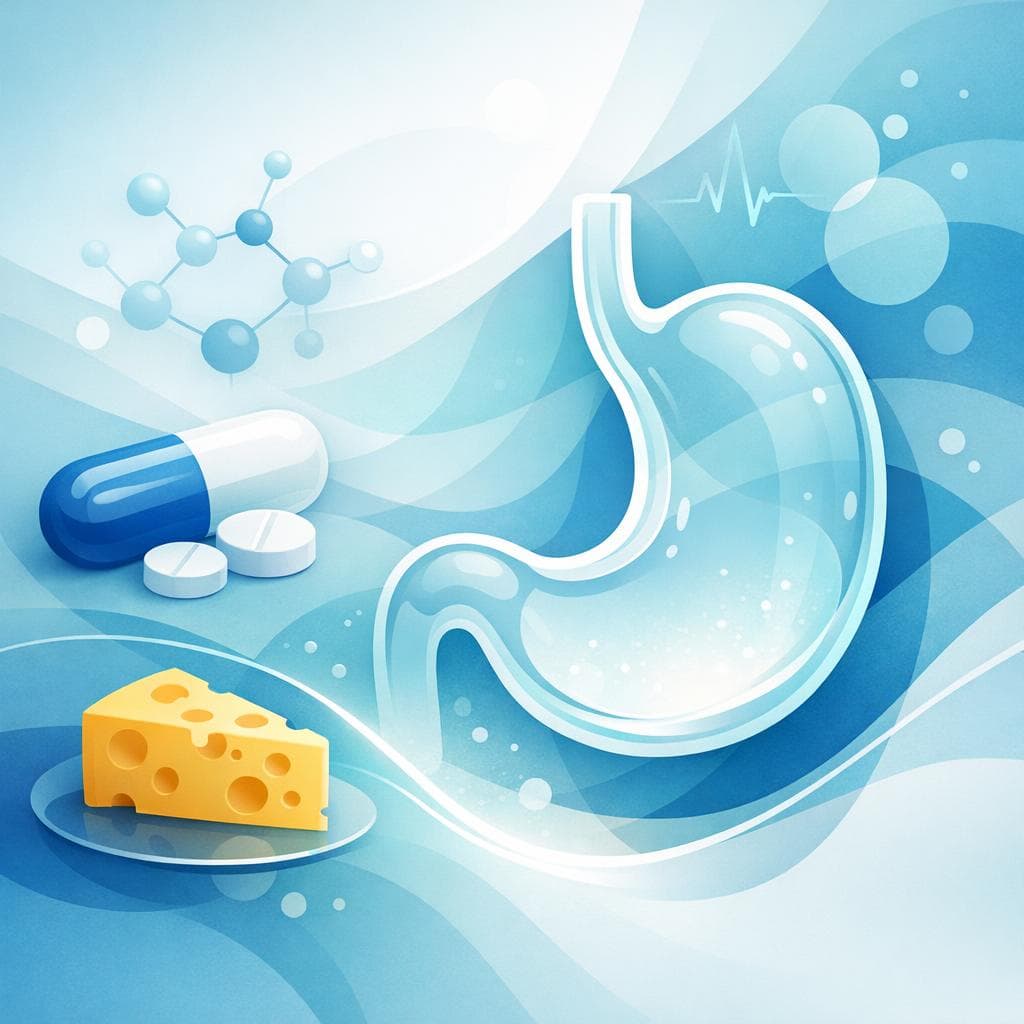
Based on PubMed | Is it true that naproxen should not be taken on an empty stomach, and does eating cheese or other dairy with the dose help reduce stomach upset or affect absorption?
Naproxen can irritate the stomach; taking it with food or milk is commonly recommended if you experience stomach upset. Food and dairy may delay the drug’s peak effect but generally do not reduce total absorption, so overall efficacy is maintained. Choose based on your stomach sensitivity and consider GI protection if you’re at higher risk.
Naproxen, Food, and Dairy: What You Should Know
Naproxen (including naproxen sodium) can irritate the stomach lining, so many people wonder whether they should avoid taking it on an empty stomach and whether dairy foods help. Most over‑the‑counter labels advise taking naproxen with food or milk if you experience stomach upset, which is a practical way to reduce nausea or irritation for many users. [1] [2] [3]
That said, food typically delays the time to peak effect without meaningfully changing the total amount absorbed, so effectiveness over the full dosing interval is generally preserved. [4] Food can slow the onset of action (you may feel relief a little later), but overall exposure to the drug is similar. [4]
Should You Avoid an Empty Stomach?
- Common advice is to take NSAIDs with food or milk if your stomach is sensitive or if you’ve had prior gastritis or ulcers. This approach is widely reflected on consumer drug labels for naproxen. [1] [2]
- Research suggests food can delay peak levels without reducing total absorption, meaning the medicine still works over time, though onset may be slower. [4]
- For quick pain relief, some individuals may prefer taking naproxen on an empty stomach to reach peak levels faster, but this should be balanced against your personal risk of stomach upset. [5]
- If you have a history of ulcers, gastrointestinal bleeding, or significant stomach symptoms, taking naproxen with meals and discussing protective strategies (like acid‑reducing therapy) with a clinician is prudent. [6]
Does Cheese or Milk Help?
- Dairy (milk or cheese) can buffer the stomach and may reduce nausea or irritation for some people, which is why labels suggest “with food or milk if stomach upset occurs.” [1] [2] [3]
- There’s no evidence that ordinary dairy meaningfully reduces naproxen’s overall absorption, though it can slow how quickly the drug is absorbed (delayed peak). [4]
- Practical takeaway: milk can be a helpful option to ease discomfort, but expect a potentially slower onset of pain relief when taken with meals or dairy. [4]
Absorption and Onset: What Food Changes
- Immediate‑release naproxen sodium is rapidly and completely absorbed, and food has little impact on total bioavailability. [4]
- Food generally delays peak effect, so pain relief may start later, even though the amount absorbed over time is similar. [4]
- For certain formulations (like enteric‑coated or controlled‑release), food can alter timing but typically not the total exposure, and the onset can be delayed further compared with plain tablets. [7] [8]
Practical Tips to Reduce Stomach Upset
- Use the lowest effective dose for the shortest time, and consider taking with food or milk if you notice discomfort. [1] [2]
- Avoid alcohol when using NSAIDs, as it can increase stomach irritation and bleeding risk. [6]
- If you’re at higher risk (age over 60, prior ulcer or GI bleed, concurrent anticoagulants, steroids, or heavy alcohol use), ask about stomach protection (such as proton pump inhibitors or H2 blockers) while using NSAIDs. [6]
- Watch for warning signs of stomach bleeding feeling faint, vomiting blood, black or bloody stools, or stomach pain that doesn’t improve and stop the medicine and seek medical advice if these occur. [1] [2] [3]
Bottom Line
- You don’t have to strictly avoid taking naproxen on an empty stomach, but if you tend to get stomach upset, taking it with food or milk is reasonable and commonly recommended. [1] [2] [3]
- Dairy does not significantly reduce how much naproxen your body absorbs, though it can slow onset; its main benefit is comfort. [4]
- Choose your approach based on your stomach sensitivity and how quickly you need relief, and consider preventive strategies if you’re at higher GI risk. [5] [6]
Related Questions
Related Articles
Sources
- 1.^abcdefALL DAY PAIN RELIEF- naproxen sodium tablet(dailymed.nlm.nih.gov)
- 2.^abcdefALL DAY PAIN RELIEF- naproxen sodium tablets, 220 mg tablet(dailymed.nlm.nih.gov)
- 3.^abcdALEVE GELCAPS- naproxen sodium tablet, coated(dailymed.nlm.nih.gov)
- 4.^abcdefghPharmacokinetics of naproxen sodium.(pubmed.ncbi.nlm.nih.gov)
- 5.^abNSAIDs: take with food or after fasting?(pubmed.ncbi.nlm.nih.gov)
- 6.^abcdSymptoms and causes - Mayo Clinic(mayoclinic.org)
- 7.^↑Enteric coated naproxen tablets.(pubmed.ncbi.nlm.nih.gov)
- 8.^↑Absorption of naproxen controlled-release tablets in fasting and postprandial volunteers.(pubmed.ncbi.nlm.nih.gov)
Important Notice: This information is provided for educational purposes only and is not intended to replace professional medical advice, diagnosis, or treatment. Always consult with a qualified healthcare provider before making any medical decisions.