
 Persly Medical Team
Based on NIH | Is it safe to drink alcohol while taking naproxen, or does it increase the risk of stomach bleeding and other side effects?
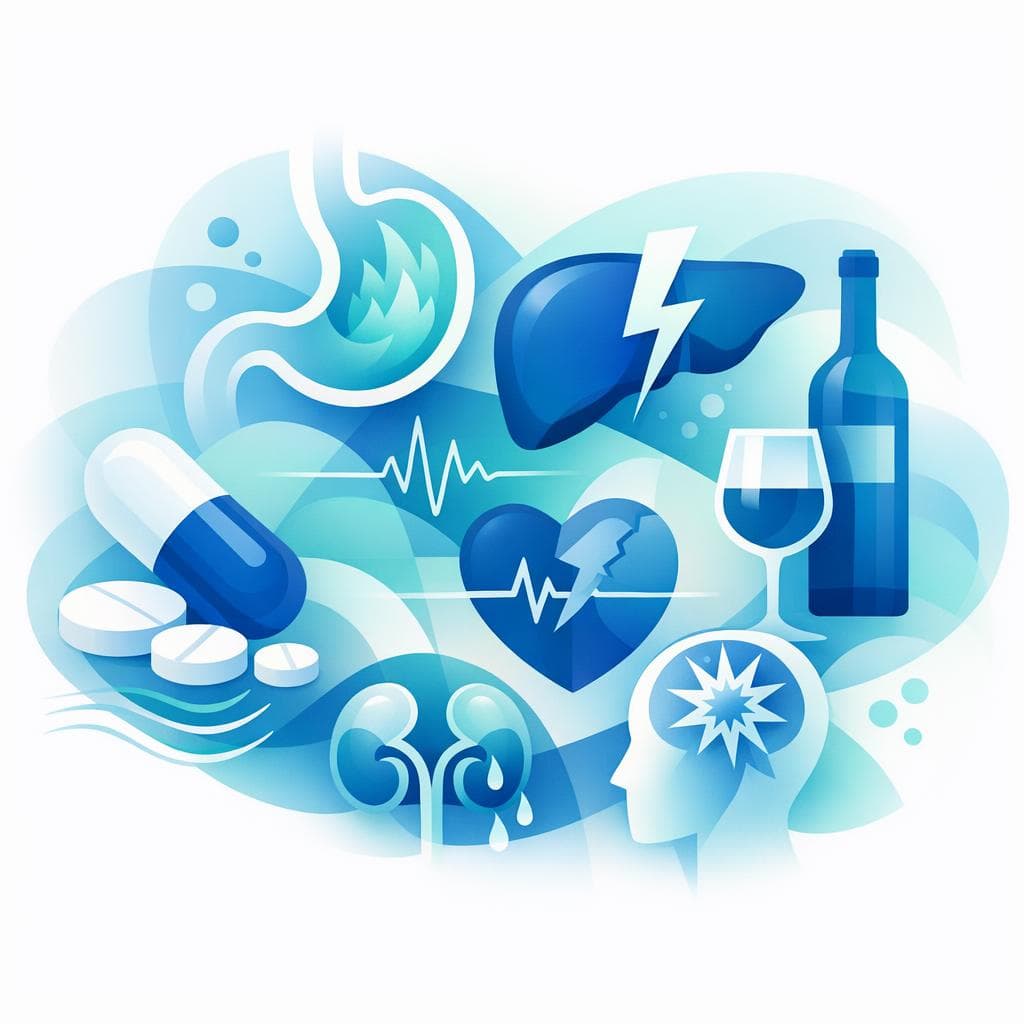
Alcohol and naproxen are not a safe mix for many people. Drinking especially three or more drinks a day raises the risk of stomach irritation, ulcers, and gastrointestinal bleeding, and may worsen dizziness or drowsiness. Avoid alcohol or keep intake minimal, use the lowest effective naproxen dose for the shortest time, and watch for bleeding symptoms.
Alcohol and naproxen are not a safe mix for many people. While an occasional small drink may not cause problems for everyone, combining alcohol with naproxen (an NSAID pain reliever) can meaningfully increase the risk of stomach irritation, ulcers, and gastrointestinal bleeding, and it may also worsen other side effects like drowsiness and dizziness. [1] [2]
Why the Combination Is Risky
- Higher stomach bleeding risk: Naproxen can cause serious stomach bleeding; the risk rises with certain factors, including drinking alcohol. Labels for naproxen specifically warn that the chance of severe stomach bleeding is higher if you have three or more alcoholic drinks while using the product. [1] [2]
- Dose and duration matter: Using more than directed or for longer than directed further increases the risk of stomach bleeding and other complications. [3] [4]
- Individual NSAIDs differ, and naproxen is on the higher end: Among traditional NSAIDs, naproxen is associated with a relatively higher risk of upper GI bleeding compared with some others (e.g., ibuprofen), in pooled observational data. [5]
- Alcohol can interact with NSAIDs: Observational cohort analyses have found alcohol–drug interactions that increase upper GI bleeding with NSAID use, underscoring the additive risk when alcohol is involved. [6] [7]
Who Is at Greater Risk
- Age 60 or older: Older adults have a higher baseline risk of NSAID-related stomach bleeding. [1] [2]
- History of ulcers or GI bleeding: Prior ulcers or bleeding make new episodes more likely when taking naproxen. [1] [2]
- Blood thinners or steroids: Using anticoagulants, antiplatelets, or corticosteroids alongside naproxen raises bleeding risk. [1] [2]
- Multiple NSAIDs at once: Combining naproxen with other NSAIDs (including aspirin or ibuprofen) increases risk. [1] [2]
- Frequent alcohol use: Regularly having three or more drinks while using naproxen notably increases the chance of severe stomach bleeding. [1] [2]
Heart and Blood Pressure Considerations
- Cardiovascular warnings: NSAIDs (except aspirin) can increase the risk of heart attack, heart failure, and stroke, particularly when used at higher doses or longer than directed. Alcohol can complicate cardiovascular health and may worsen blood pressure control, so the combination requires caution. [8] [9] [10]
Practical Guidance If You Choose to Drink
- Limit or avoid alcohol: The safest approach is to avoid alcohol while taking naproxen, especially during regular or high-dose use. If you choose to drink, keeping intake to a minimal level (for example, one standard drink or less on an occasional basis) lowers risk compared with heavier drinking. [1] [2]
- Follow label dosing strictly: Do not take more naproxen than directed, and do not extend use beyond recommended duration without medical advice. This reduces bleeding risk. [3] [4]
- Take with food and consider a stomach protector: Taking naproxen with food may lessen irritation, though it doesn’t eliminate bleeding risk; in higher-risk individuals, clinicians sometimes use acid-suppressing medications (like PPIs) to reduce ulcer risk. The need for a protector should be discussed with a clinician, particularly if alcohol is involved or risk factors are present. [1] [2]
- Avoid additional NSAIDs: Do not combine naproxen with other NSAIDs (including over-the-counter cold/flu or pain products that may secretly contain NSAIDs). [1] [2]
- Know warning signs: Seek urgent care for black, tarry stools; vomiting blood or material that looks like coffee grounds; severe stomach pain; dizziness or fainting these can be signs of GI bleeding. [1] [2]
What the Evidence Shows
- Regulatory labeling: Naproxen products carry explicit stomach bleeding warnings and advise against having three or more alcoholic drinks daily while using the product. [1] [2] [3] [4]
- Population data: Systematic reviews of observational studies show naproxen has a higher relative risk of upper GI bleeding/perforation compared with some other NSAIDs commonly used by the public. Longer half-life and stronger COX inhibition correlate with higher risk. [5]
- Cohort studies: Large Medicaid cohort analyses found NSAID use associated with upper GI bleeding, with evidence of alcohol–NSAID interaction increasing bleeding risk. [11] [7]
- Variability by drinking pattern: Some case–control re-analyses suggest complex patterns (e.g., ex-drinkers may carry hidden ulcer risk), but overall, drinking while using NSAIDs remains a concern for GI bleeding. [12] [13]
Bottom Line
- Alcohol increases the GI bleeding risk associated with naproxen, especially at three or more drinks per day. It is generally safer to avoid alcohol during naproxen therapy, use the lowest effective dose for the shortest time, and be vigilant for bleeding symptoms. [1] [2] [3] [4]
- If you have any bleeding risk factors (age ≥60, prior ulcer, blood thinners, steroids, multiple NSAIDs, or regular alcohol use), you should avoid alcohol while taking naproxen and consider discussing protective strategies with your clinician. [1] [2]
Quick Safety Checklist
- Use naproxen exactly as directed; do not exceed dose or duration. [3] [4]
- Avoid three or more alcoholic drinks while using naproxen; consider abstaining entirely. [1] [2]
- Do not combine with other NSAIDs or take it right before/after heart surgery. [3] [14]
- Seek medical help immediately if you notice signs of bleeding. [1] [2]
If you would like personalized guidance, sharing your typical alcohol intake, naproxen dose and duration, and any history of ulcers or blood thinners can help tailor safer recommendations.
Related Questions
Related Articles
Sources
- 1.^abcdefghijklmnopDailyMed - ALEVE- naproxen sodium tablet(dailymed.nlm.nih.gov)
- 2.^abcdefghijklmnopALEVE CAPLETS- naproxen sodium tablet(dailymed.nlm.nih.gov)
- 3.^abcdefALL DAY RELIEF- naproxen sodium tablet(dailymed.nlm.nih.gov)
- 4.^abcdeALL DAY PAIN RELIEF- naproxen sodium tablet, coated(dailymed.nlm.nih.gov)
- 5.^abVariability among nonsteroidal antiinflammatory drugs in risk of upper gastrointestinal bleeding.(pubmed.ncbi.nlm.nih.gov)
- 6.^↑The relative gastrointestinal toxicity of the nonsteroidal anti-inflammatory drugs.(pubmed.ncbi.nlm.nih.gov)
- 7.^abThe relative gastrointestinal toxicity of the nonsteroidal anti-inflammatory drugs.(pubmed.ncbi.nlm.nih.gov)
- 8.^↑DailyMed - ALEVE CAPLETS - EASY OPEN ARTHRITIS CAP- naproxen sodium tablet(dailymed.nlm.nih.gov)
- 9.^↑Aleve ® Gelcaps(dailymed.nlm.nih.gov)
- 10.^↑BAYER ALEVE- naproxen sodium tablet(dailymed.nlm.nih.gov)
- 11.^↑The association of nonsteroidal anti-inflammatory drugs with upper gastrointestinal tract bleeding.(pubmed.ncbi.nlm.nih.gov)
- 12.^↑Ex-drinking may be a surrogate for unmeasured risk factors for upper gastrointestinal bleeding: reappraisal and an additional survey of subjects from a case-control study in Japan.(pubmed.ncbi.nlm.nih.gov)
- 13.^↑Ex-drinking may be a surrogate for unmeasured risk factors for upper gastrointestinal bleeding: reappraisal and an additional survey of subjects from a case-control study in Japan.(pubmed.ncbi.nlm.nih.gov)
- 14.^↑ALEVE CAPLETS- naproxen sodium tablet(dailymed.nlm.nih.gov)
Important Notice: This information is provided for educational purposes only and is not intended to replace professional medical advice, diagnosis, or treatment. Always consult with a qualified healthcare provider before making any medical decisions.