
 Persly Medical Team
Is it safe to drink alcohol while taking naproxen?
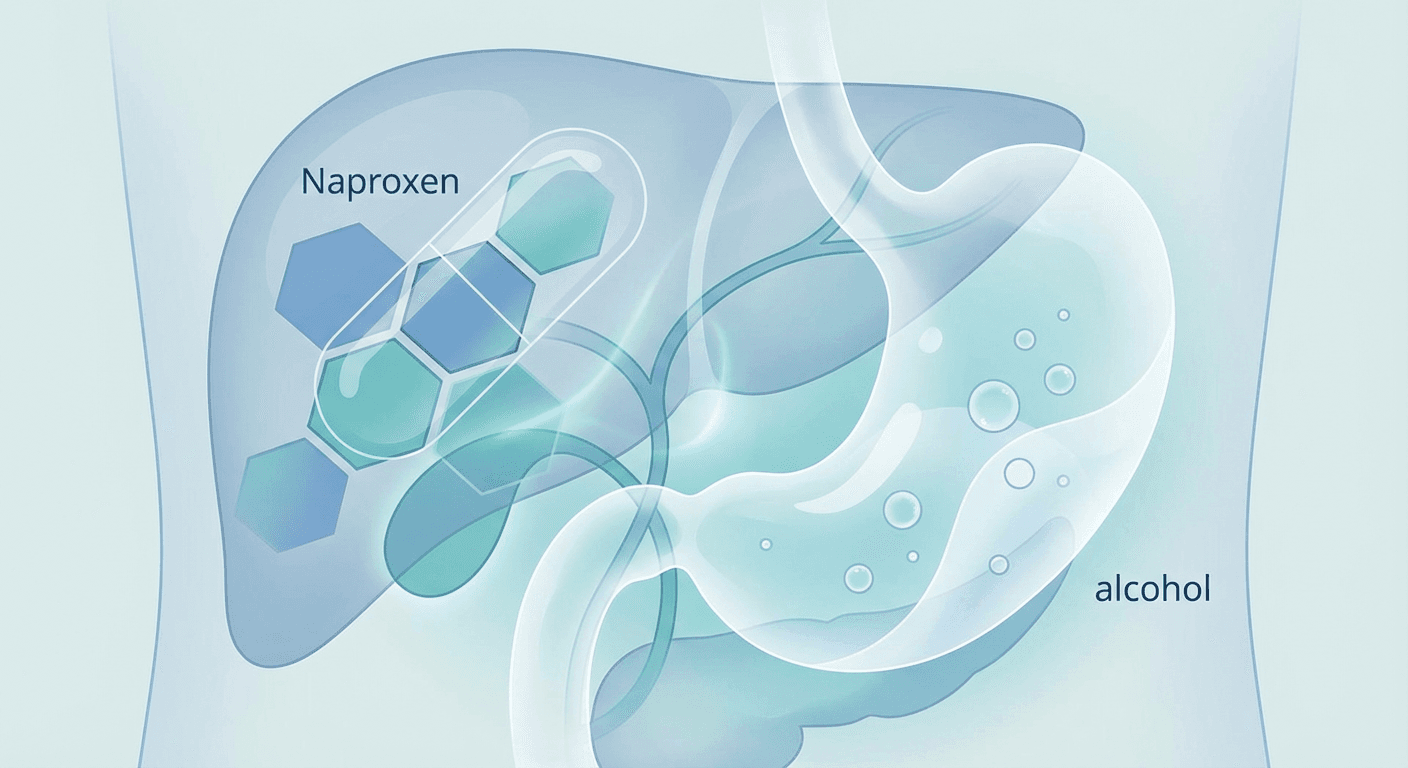
It’s safest to avoid alcohol while taking naproxen because the combination increases the risk of gastrointestinal bleeding, especially with heavy drinking, higher doses, longer use, older age, prior ulcers, or certain medications. If you choose to drink, keep it minimal, avoid alcohol on naproxen days, use the lowest effective dose for the shortest time, and watch for warning signs like black stools or blood in vomit.
Alcohol and Naproxen: What You Need to Know
It’s generally safest to limit or avoid alcohol while taking naproxen because combining alcohol with nonsteroidal anti‑inflammatory drugs (NSAIDs) like naproxen can increase the risk of stomach and intestinal bleeding (gastrointestinal bleeding). This risk rises further with heavier drinking, higher naproxen doses, longer use, and certain personal factors such as older age or prior ulcer history. [1] [2]
Why Alcohol and Naproxen Don’t Mix
-
Gastrointestinal bleeding risk: Naproxen can irritate the stomach lining and reduce protective prostaglandins, which may lead to ulcers and bleeding; alcohol independently irritates the stomach and can add to this effect. Product labeling warns that NSAIDs “may cause severe stomach bleeding,” and the chance is higher if you have three or more alcoholic drinks daily. [1] [2]
-
Dose and duration matter: The risk of GI bleeding with NSAIDs shows a clear relationship with higher doses and prolonged use; drinking alcohol on top of that adds to the risk. [3] [4]
-
Who is at higher risk: The chance of serious GI problems is greater in people age 60 and older, in those with prior ulcers or bleeding, and in those taking anticoagulants, steroids, SSRIs/SNRIs, or multiple NSAIDs; alcohol use is listed among key risk amplifiers. [1] [5]
What Official Guidance Says
-
Over‑the‑counter naproxen labels: Drug facts advise against “three or more alcoholic drinks every day while using this product,” emphasizing the stomach bleeding warning. This means regular or heavy drinking should be avoided with naproxen. [6] [7]
-
Medication guides for NSAIDs: Patient medication guides highlight that the chance of ulcers or bleeding increases with drinking alcohol and recommend using NSAIDs at the lowest effective dose for the shortest time needed. [8] [5]
Practical Recommendations
-
Light, occasional drinking: If you are otherwise low risk (younger adult, no prior ulcers or GI bleeding, not on blood thinners or steroids, and using naproxen short term at recommended doses), a small amount of alcohol may be tolerated, but it’s safer to avoid alcohol on days you take naproxen to minimize stomach irritation and bleeding risk. [1] [2]
-
Avoid heavy drinking: Regularly having three or more drinks per day significantly raises the bleeding risk and should not be combined with naproxen. If you drink heavily, naproxen is generally not a safe choice without medical guidance. [1] [2]
-
Use the lowest dose, shortest duration: To reduce harm, follow label directions carefully and do not exceed recommended dosing or duration; longer or higher‑dose use increases risk, particularly with any alcohol intake. [7] [3]
-
Take with food and avoid stacking NSAIDs: Taking naproxen with food may reduce stomach upset (though it does not eliminate bleeding risk), and you should not combine naproxen with other NSAIDs (like ibuprofen or aspirin for pain) because that compounds GI risk. [4] [1]
Watch for Warning Signs
Seek medical care urgently if you notice:
- Black or tarry stools, blood in vomit, or coffee‑ground vomit (signs of GI bleeding). [1]
- Severe stomach pain, dizziness, fainting, or weakness. [1]
These symptoms can indicate a serious complication and need prompt evaluation. [1]
Special Situations
-
Older adults (≥60 years): More vulnerable to GI complications; avoiding alcohol during naproxen therapy is particularly advisable. [1]
-
History of ulcers or GI bleeding: Consider avoiding naproxen entirely or discuss protective options (such as a proton pump inhibitor) with a clinician; alcohol further heightens risk. [1] [9]
-
Blood thinners, steroids, SSRIs/SNRIs: These medications increase bleeding risk; combining them with naproxen and alcohol is especially risky and should be avoided. [5] [1]
Summary
-
The safest approach is to avoid alcohol when taking naproxen. Even moderate alcohol can add to naproxen’s stomach‑bleeding risk, and heavy drinking makes the combination unsafe. [1] [2]
-
If you choose to drink, keep it minimal, avoid drinking on naproxen days when possible, use the lowest effective dose for the shortest time, and monitor for bleeding symptoms. People with higher‑risk factors should not mix alcohol with naproxen. [7] [4]
Quick Reference Table
| Scenario | Alcohol with Naproxen | Why |
|---|---|---|
| Heavy drinking (≥3 drinks/day) | Strongly avoid | Markedly higher risk of severe stomach bleeding with NSAIDs. [1] [2] |
| Occasional light drinking, low‑risk person | Prefer to avoid; if you drink, keep minimal | Alcohol adds GI irritation; risk rises with dose/duration of naproxen. [1] [3] |
| Age ≥60 or past ulcer/GI bleed | Avoid | Higher baseline GI risk; alcohol further increases it. [1] |
| On anticoagulants, steroids, SSRIs/SNRIs | Avoid | Combined bleeding risk is substantial. [5] |
| Using higher doses or longer courses of naproxen | Avoid | Dose/duration increase GI bleeding odds; alcohol compounds risk. [3] [7] |
Related Questions
Related Articles
Sources
- 1.^abcdefghijklmnopDailyMed - ALEVE- naproxen sodium tablet(dailymed.nlm.nih.gov)
- 2.^abcdefALL DAY RELIEF- naproxen sodium tablet(dailymed.nlm.nih.gov)
- 3.^abcdThe association of nonsteroidal anti-inflammatory drugs with upper gastrointestinal tract bleeding.(pubmed.ncbi.nlm.nih.gov)
- 4.^abcWhich patients taking non-aspirin non-steroidal anti-inflammatory drugs bleed? A case-control study.(pubmed.ncbi.nlm.nih.gov)
- 5.^abcd(dailymed.nlm.nih.gov)
- 6.^↑DailyMed - ALEVE- naproxen sodium tablet(dailymed.nlm.nih.gov)
- 7.^abcdDrug Facts(dailymed.nlm.nih.gov)
- 8.^↑(dailymed.nlm.nih.gov)
- 9.^↑Nonsteroidal anti-inflammatory drugs: add an anti-ulcer drug for patients at high risk only. Always limit the dose and duration of treatment with NSAIDs.(pubmed.ncbi.nlm.nih.gov)
Important Notice: This information is provided for educational purposes only and is not intended to replace professional medical advice, diagnosis, or treatment. Always consult with a qualified healthcare provider before making any medical decisions.