
 Persly Medical Team
Based on NIH | Is it safe to eat bananas after taking losartan, or should I avoid high-potassium foods because of the risk of hyperkalemia?
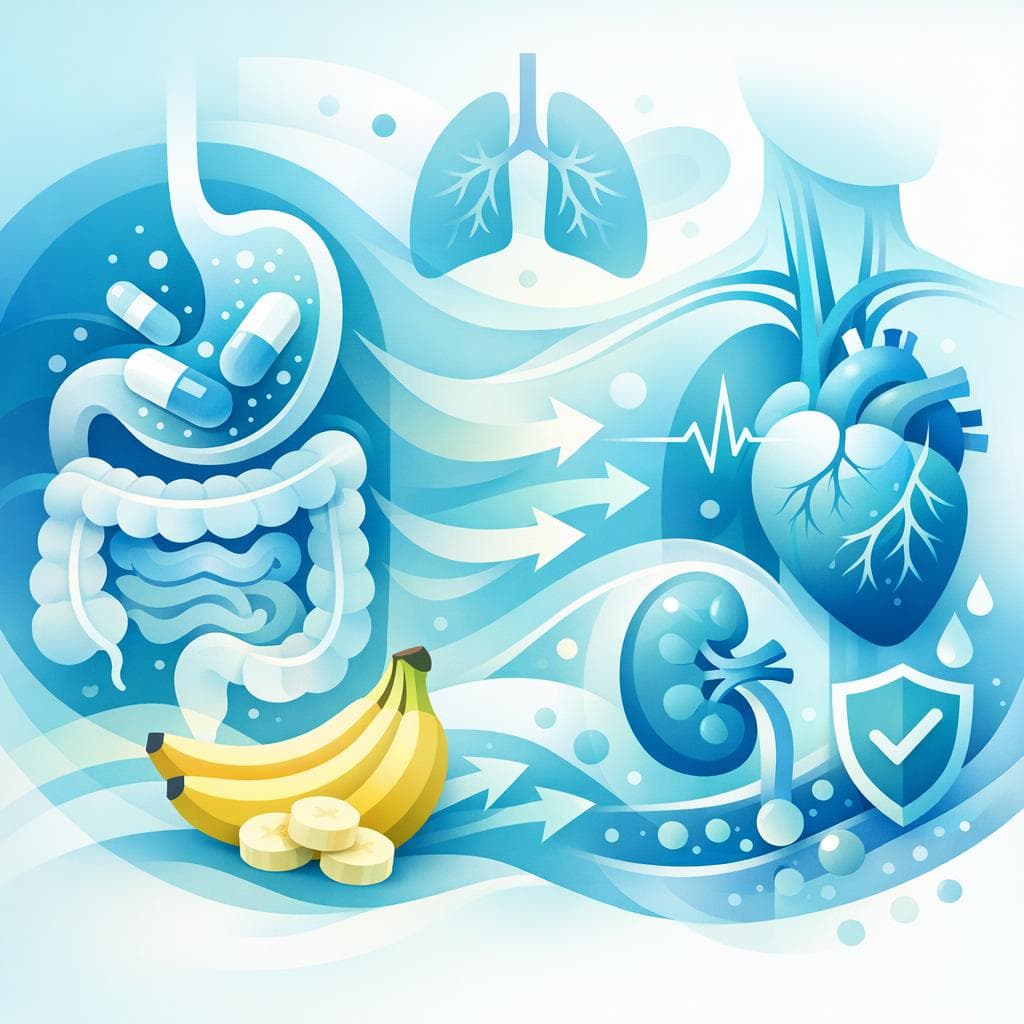
Most people on losartan can eat bananas and other high-potassium foods in moderation if kidney function and blood potassium are normal. Because losartan can raise potassium, avoid potassium supplements and salt substitutes, be cautious with other potassium-raising drugs, and get periodic monitoring.
Can you eat bananas while taking losartan?
It can be reasonable to eat potassium‑containing foods like bananas while taking losartan, but you may want to be mindful of portion sizes and your personal risk factors. Losartan (an angiotensin II receptor blocker, ARB) can raise blood potassium, so some people may need to moderate high‑potassium foods and have periodic blood tests. [1] The official prescribing information advises monitoring serum potassium and being cautious with anything that increases potassium, including potassium supplements or salt substitutes. [2] [3]
Why losartan can raise potassium
Losartan reduces aldosterone activity, which lowers potassium excretion in the kidneys. Because of this mechanism, ARBs like losartan can cause hyperkalemia (high blood potassium), especially in those with chronic kidney disease or other risk factors. [4] Published estimates suggest up to about 10% of people on ACE inhibitors or ARBs may experience at least mild hyperkalemia, with higher risk in kidney impairment. [4]
Official guidance on potassium with losartan
- Monitor potassium periodically during losartan therapy; dose reduction or discontinuation may be needed if potassium rises. [1]
- Avoid combining losartan with other agents that raise potassium, such as potassium supplements, salt substitutes containing potassium, and potassium‑sparing diuretics (spironolactone, triamterene, amiloride) unless closely supervised. [2]
- If you are on losartan with any drug that increases potassium, your healthcare team should monitor your potassium more closely. [3]
What this means for bananas and other high‑potassium foods
Bananas are one example of a high‑potassium food, but many healthy foods are naturally high in potassium (e.g., oranges, tomatoes, potatoes, avocados). Most people on losartan can still enjoy these foods in moderation, provided their blood potassium stays in the normal range and they do not have kidney problems or additional potassium‑raising medications. [4] The key is to avoid “extra” potassium sources like supplements and salt substitutes unless your clinician has advised them. [2]
If your potassium ever trends high, clinicians often recommend temporarily reducing dietary potassium and eliminating potassium‑containing supplements and salt substitutes while rechecking levels. [5] This step is part of standard hyperkalemia management until potassium normalizes. [6]
Who should be more cautious
- Kidney disease or reduced kidney function (eGFR decline): higher risk of hyperkalemia with ARBs. [4]
- Concurrent medications that raise potassium (spironolactone, triamterene, amiloride; certain supplements; NSAIDs in some contexts). [2] Using these with losartan calls for extra vigilance and monitoring. [3]
- Baseline high potassium before starting losartan: clinicians typically check a baseline potassium and kidney function and then recheck shortly after initiation. [4]
Practical tips
- Continue a balanced diet and avoid large, sudden increases in high‑potassium foods if you’re starting or adjusting losartan. [4]
- Do not use potassium supplements or salt substitutes containing potassium unless your clinician specifically recommends them. [2]
- Ask your clinician about timing of blood tests (usually within a few weeks of starting or changing dose) to ensure potassium remains in range. [1] Ongoing periodic monitoring is recommended throughout therapy. [1]
- Know the signs of high potassium (can be subtle): weakness, fatigue, tingling, and in severe cases heart rhythm problems; prompt assessment and management are important if hyperkalemia occurs. [4] Standard management includes stopping extra potassium sources and addressing medications that raise potassium. [5]
Bottom line
You don’t necessarily need to avoid bananas or all high‑potassium foods while taking losartan; moderate portions are often fine for people with normal kidney function and normal potassium. [4] However, because losartan can raise potassium, it’s smart to limit “added” potassium (supplements, salt substitutes), be cautious if you have kidney disease or take other potassium‑raising drugs, and have your potassium checked periodically. [1] [2] [3]
Quick reference: items to avoid or use with caution on losartan
| Item | Why caution | Notes |
|---|---|---|
| Potassium supplements | Directly raise serum potassium | Generally avoid unless prescribed with monitoring. [2] |
| Salt substitutes with potassium (e.g., potassium chloride) | Hidden high potassium | Avoid unless your clinician approves. [2] |
| Potassium‑sparing diuretics (spironolactone, triamterene, amiloride) | Additive hyperkalemia risk with ARBs | If combined, monitor closely. [2] [3] |
| NSAIDs (some scenarios) | Can affect kidney handling of potassium | Discuss with your clinician; monitor if needed. [5] |
| Large, sudden increases in high‑potassium foods | May push potassium high in at‑risk individuals | Prefer steady, moderate intake; monitor labs. [4] |
Would you like me to help you estimate your personal risk based on your kidney function, current medications, and any recent potassium lab results?
Related Questions
Related Articles


Sources
- 1.^abcdeCOZAAR- losartan potassium tablet, film coated(dailymed.nlm.nih.gov)
- 2.^abcdefghiCOZAAR- losartan potassium tablet, film coated(dailymed.nlm.nih.gov)
- 3.^abcdeDailyMed - ARBLI- losartan potassium suspension(dailymed.nlm.nih.gov)
- 4.^abcdefghiHyperkalemia associated with use of angiotensin-converting enzyme inhibitors and angiotensin receptor blockers.(pubmed.ncbi.nlm.nih.gov)
- 5.^abcPOTASSIUM CHLORIDE tablet, extended release(dailymed.nlm.nih.gov)
- 6.^↑Potassium Chloride Extended-Release Tablets, USP Rx Only(dailymed.nlm.nih.gov)
Important Notice: This information is provided for educational purposes only and is not intended to replace professional medical advice, diagnosis, or treatment. Always consult with a qualified healthcare provider before making any medical decisions.