
 Persly Medical Team
Based on NIH | Is it true that tofu can reduce levothyroxine absorption, and if so, how much tofu is safe to eat and how many hours should I separate it from my levothyroxine dose?
Soy foods like tofu can reduce levothyroxine absorption, but the effect is usually modest when you time your dose correctly. Take levothyroxine on an empty stomach and separate soy by at least 4 hours (up to 6 if sensitive); there is no fixed safe tofu amount focus on timing, consistency, and recheck TSH 6–8 weeks after major diet changes.
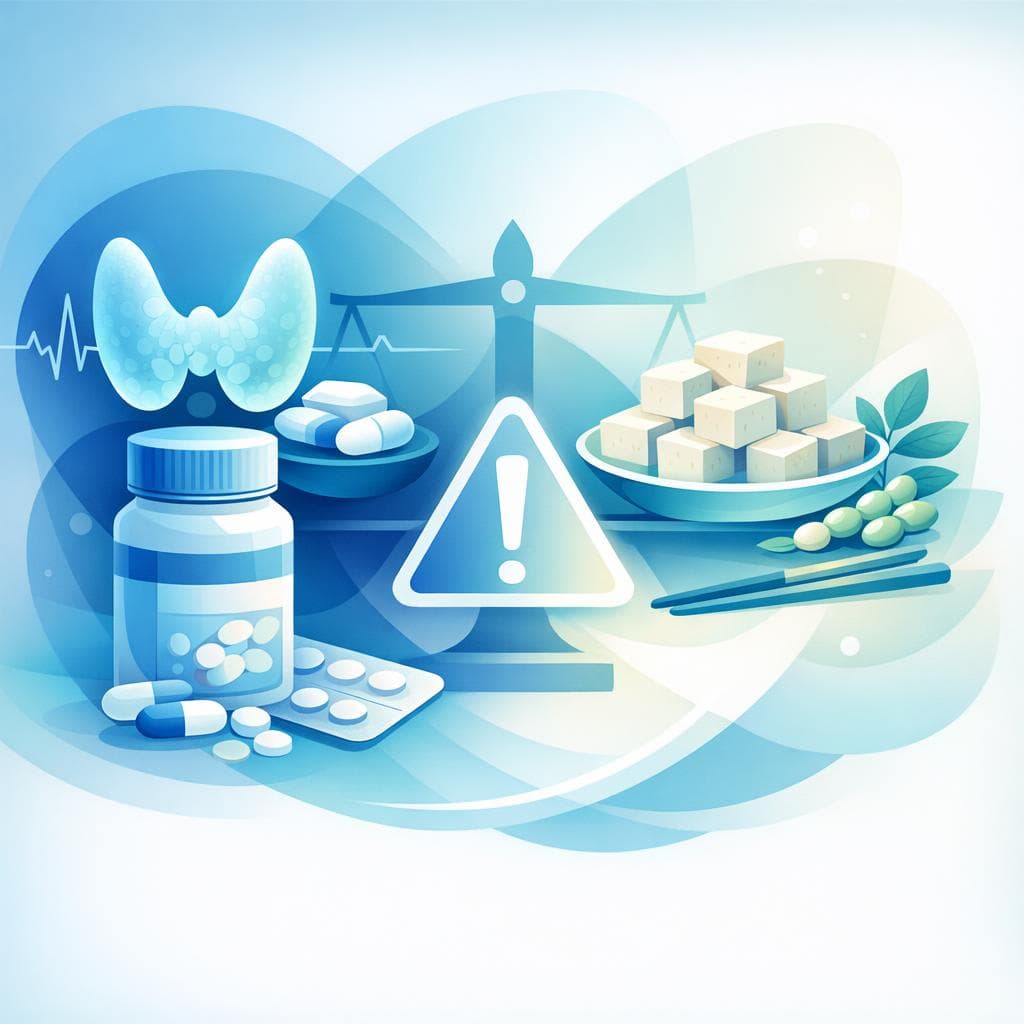
Eating soy foods like tofu can potentially reduce how well levothyroxine is absorbed, but the real‑world impact appears to vary and is often small, especially if you time your dose correctly. The safest approach is to take levothyroxine on an empty stomach and separate soy foods by several hours, aiming for consistency in your diet so your doctor can adjust your dose if needed. [1] [2]
What we know about soy and levothyroxine
- Levothyroxine absorption is best when fasting and can be reduced by certain foods, including soybeans and high‑fiber foods. This is why standard instructions advise taking levothyroxine on an empty stomach. [1] [3]
- Evidence specifically on soy/tofu is mixed: older reports and case series suggest soy products might lower absorption of levothyroxine tablets, while a small randomized study using soy isoflavones did not show a meaningful effect. [4] [2]
- Overall, if there is interference from soy, it likely has limited clinical impact when dosing is timed well, but individual responses differ. [4]
Practical timing guidance
- Take levothyroxine first thing in the morning with water, at least 30–60 minutes before breakfast. Avoid soy foods, coffee, high‑fiber meals, calcium, and iron during this window. [1] [2]
- If you prefer nighttime dosing, take levothyroxine at least 3–4 hours after the last meal. Keep the schedule consistent day to day. [2]
How long to separate tofu or soy
- Because soy and dietary fiber can lower levothyroxine absorption, a conservative and commonly used separation is at least 4 hours between your levothyroxine dose and soy-containing foods (including tofu, soy milk, edamame, tempeh). [1] [2]
- If your thyroid levels (TSH/free T4) are sensitive or still unstable, consider extending separation to 6 hours and discuss with your clinician if adjustments are needed. [2]
How much tofu is “safe” to eat
- There is no precise “safe amount” proven by head‑to‑head trials for tofu intake with levothyroxine. What matters most is timing and consistency rather than total grams of tofu. [4] [2]
- Many people maintain normal thyroid levels while eating typical portions (for example, 100–150 g of tofu per serving) when they reliably separate soy from their levothyroxine and keep their diet stable, allowing dose fine‑tuning if needed. [4] [2]
- If you plan to substantially increase soy intake (e.g., daily large servings or switching to soy-based meal replacements), tell your clinician so your TSH can be rechecked 6–8 weeks later to see if a dose change is appropriate. [2]
Special considerations and alternatives
- Formulation matters: Some data suggest liquid or soft‑gel levothyroxine may be less affected by food and gastric factors than tablets, though evidence specific to soy is limited. If timing is difficult, ask about switching formulations. [4] [2]
- Other common interferers: calcium or iron supplements, antacids, bile acid binders, and high‑fiber cereals can reduce absorption; these should also be separated by at least 4 hours from levothyroxine. [1] [2]
Suggested routine you can follow
- Morning option:
- Evening option:
- Take levothyroxine at bedtime, ≥3–4 hours after dinner.
- Include tofu at breakfast or lunch, well separated from the night dose. [2]
When to check labs
- Any dietary change that adds or removes significant soy or fiber can shift levothyroxine needs. Recheck TSH 6–8 weeks after a consistent change in soy intake or dosing schedule. [2]
Key takeaways
- Yes, soy (including tofu) can decrease levothyroxine absorption, especially with tablet formulations, but the effect is often modest with proper timing. [1] [2]
- Separate soy foods by at least 4 hours from your levothyroxine dose and keep your diet consistent. [2]
- There is no fixed “safe amount” of tofu; focus on timing and consistency and monitor thyroid labs after dietary changes. [4] [2]
Related Questions
Related Articles


Sources
- 1.^abcdefgThese highlights do not include all the information needed to use LEVOTHYROXINE SODIUM TABLETS safely and effectively. See full prescribing information for LEVOTHYROXINE SODIUM TABLETS. LEVOTHYROXINE SODIUM tablets, for oral use Initial U.S. Approval: 2002(dailymed.nlm.nih.gov)
- 2.^abcdefghijklmnopqrMedications and Food Interfering with the Bioavailability of Levothyroxine: A Systematic Review.(pubmed.ncbi.nlm.nih.gov)
- 3.^↑These highlights do not include all the information needed to use LEVOTHYROXINE SODIUM TABLETS safely and effectively. See full prescribing information for LEVOTHYROXINE SODIUM TABLETS. LEVOTHYROXINE SODIUM tablets, for oral use Initial U.S. Approval: 2002(dailymed.nlm.nih.gov)
- 4.^abcdefInterference or Noninterference Between Soy and Levothyroxine: That Is the Question. A Narrative Review of Literature.(pubmed.ncbi.nlm.nih.gov)
Important Notice: This information is provided for educational purposes only and is not intended to replace professional medical advice, diagnosis, or treatment. Always consult with a qualified healthcare provider before making any medical decisions.