
 Persly Medical Team
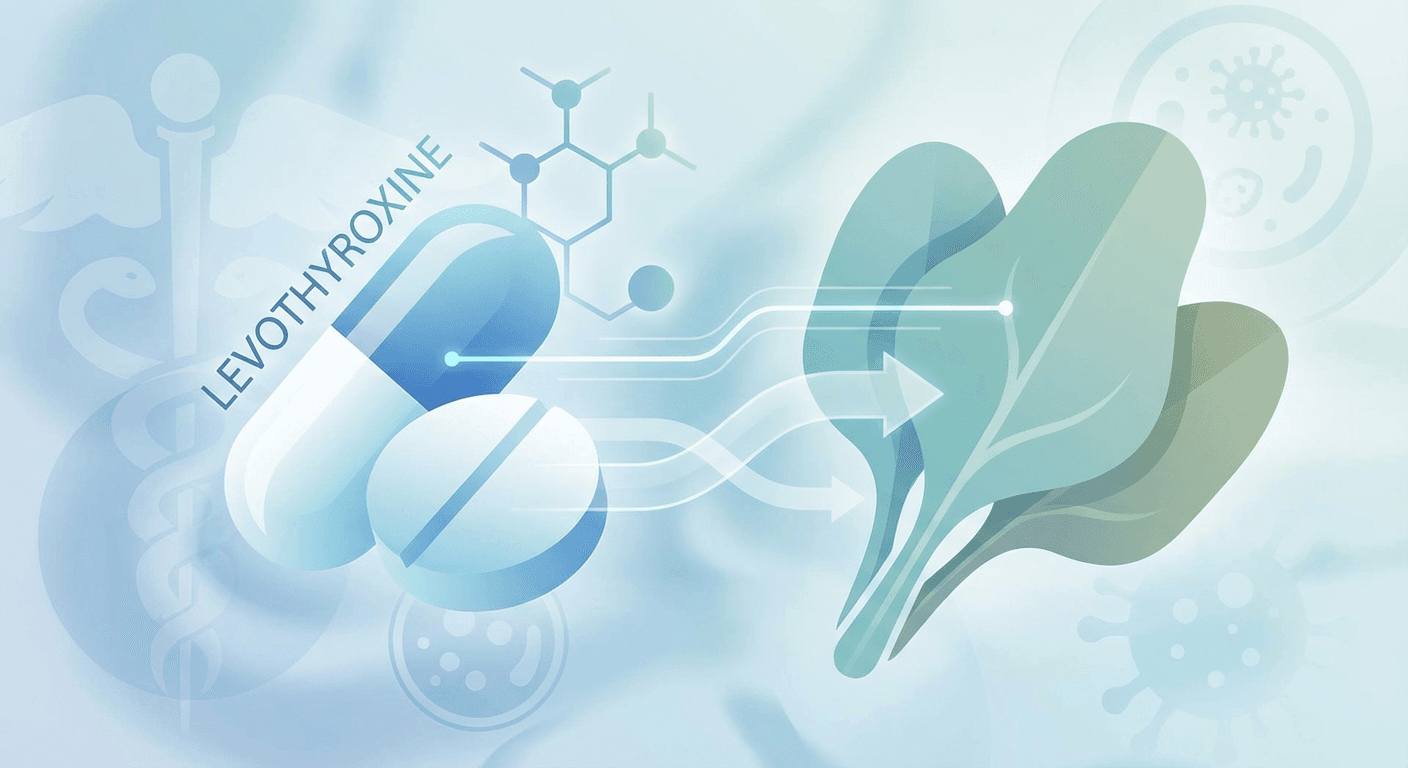
Does eating spinach interfere with levothyroxine absorption, and how long should I wait between taking my dose and eating spinach?
Spinach is not specifically listed as binding levothyroxine, but high dietary fiber and calcium co-ingestion can reduce absorption if eaten near the dose. Take levothyroxine on an empty stomach with water, wait 30–60 minutes before food, and separate calcium/iron/antacids by at least 4 hours to avoid interference.
Quick answer
Spinach itself is not specifically listed as a food that directly binds levothyroxine, but foods high in dietary fiber, soy products, walnuts, and certain juices can reduce levothyroxine absorption and raise TSH if taken close to a dose. [1] [2] Because spinach is a high‑fiber, oxalate‑rich vegetable and may be eaten with calcium‑containing foods, it could plausibly contribute to reduced absorption if consumed near the time you take your medication. [1] [3] To be safe, take levothyroxine on an empty stomach with water and wait at least 30–60 minutes before eating, and keep at least 4 hours between your dose and iron or calcium supplements or antacids; this timing helps avoid food‑related interference. [4] [5]
Why timing matters
Levothyroxine is best absorbed from the small intestine when taken fasting; food generally lowers and makes absorption more variable, leading to higher TSH. [6] The standard guidance is to take it once daily on an empty stomach 30–60 minutes before breakfast. [4] Keeping a consistent routine helps your provider interpret labs and adjust your dose accurately. [4]
What foods are known to interfere
Official prescribing information highlights several foods that can bind or delay levothyroxine absorption:
- Soybean flour and soy products can reduce bioavailability. [1] [3]
- Cottonseed meal and walnuts may bind levothyroxine. [1]
- Dietary fiber decreases bioavailability of T4. [3]
- Grapefruit juice may delay absorption and reduce bioavailability. [2]
These interactions mean you may need dose adjustments if you routinely take levothyroxine close to such foods. [7]
Spinach specifics: fiber and oxalate context
Spinach is not named in official levothyroxine labeling, but two features are relevant:
- High dietary fiber: Fiber can reduce levothyroxine bioavailability, so a fiber‑rich meal near dosing can lower absorption. [3]
- Oxalate and minerals: Spinach is rich in oxalate, which can affect mineral (especially calcium) balance and is often paired with calcium‑containing foods; calcium itself can interfere strongly with levothyroxine if taken within a few hours. [8] [5]
While oxalate itself is not a direct levothyroxine binder in labeling, the combination of fiber and potential calcium co‑ingestion around the dose can be enough to matter clinically. [3] [5]
Practical timing recommendations
- Take levothyroxine first thing in the morning with water, then wait 30–60 minutes before eating anything, including spinach. [4]
- Separate iron or calcium supplements, antacids, or calcium‑rich meals by at least 4 hours from your dose. [5] [4]
- If morning dosing is difficult, a consistent bedtime dose can be used, ideally 3–4 hours after the last meal, though fasting dosing keeps TSH in the tightest range. [6]
Consistency and monitoring
If you regularly eat spinach (or other high‑fiber foods) near your dose, keep the timing consistent day to day so any effect is predictable, and have your TSH checked; non‑fasting intake tends to raise TSH compared with fasting dosing. [6] Your clinician may adjust your dose if your routine includes breakfast soon after dosing. [7]
Key points to remember
- Spinach is not a listed direct binder, but its fiber and common pairing with calcium can reduce levothyroxine absorption if eaten close to dosing. [1] [3]
- Best practice: dose on an empty stomach, wait 30–60 minutes before food, and keep 4 hours from iron/calcium/antacids. [4] [5]
- Stay consistent and monitor TSH if your routine varies from fasting dosing. [6]
Comparison table: foods and timing with levothyroxine
| Item | Known effect on levothyroxine | Recommended separation |
|---|---|---|
| Soy products (soybean flour, infant formula) | Bind/decrease absorption | 30–60 min before breakfast; consider >1 hour from soy foods |
| Walnuts | Bind/decrease absorption | 30–60 min before breakfast; consider >1 hour from walnuts |
| High dietary fiber (including spinach) | Decreases bioavailability | 30–60 min before any meal; maintain consistency |
| Grapefruit juice | Delays absorption, reduces bioavailability | Avoid near dose; >1 hour separation advisable |
| Calcium supplements/antacids | Strongly reduce absorption | At least 4 hours apart |
| Iron supplements | Strongly reduce absorption | At least 4 hours apart |
Taking levothyroxine fasting and spacing out supplements remains the most reliable approach to ensure stable thyroid levels. [4] [6]
Related Questions
Related Articles

Sources
- 1.^abcdefgDailyMed - LEVOTHYROXINE SODIUM tablet(dailymed.nlm.nih.gov)
- 2.^abcLEVOTHYROXINE SODIUM(dailymed.nlm.nih.gov)
- 3.^abcdefghLEVOTHYROXINE SODIUM(dailymed.nlm.nih.gov)
- 4.^abcdefglevothyroxin sodium(dailymed.nlm.nih.gov)
- 5.^abcdefgLEVOTHYROXINE SODIUM(dailymed.nlm.nih.gov)
- 6.^abcdeTiming of levothyroxine administration affects serum thyrotropin concentration.(pubmed.ncbi.nlm.nih.gov)
- 7.^abDailyMed - LEVOTHYROXINE SODIUM tablet(dailymed.nlm.nih.gov)
- 8.^↑Mineral balances of human subjects consuming spinach in a low-fiber diet and in a diet containing fruits and vegetables.(pubmed.ncbi.nlm.nih.gov)
Important Notice: This information is provided for educational purposes only and is not intended to replace professional medical advice, diagnosis, or treatment. Always consult with a qualified healthcare provider before making any medical decisions.