
 Persly Medical Team
Based on NIH | Can eating pasta while taking levothyroxine increase the risk of side effects?
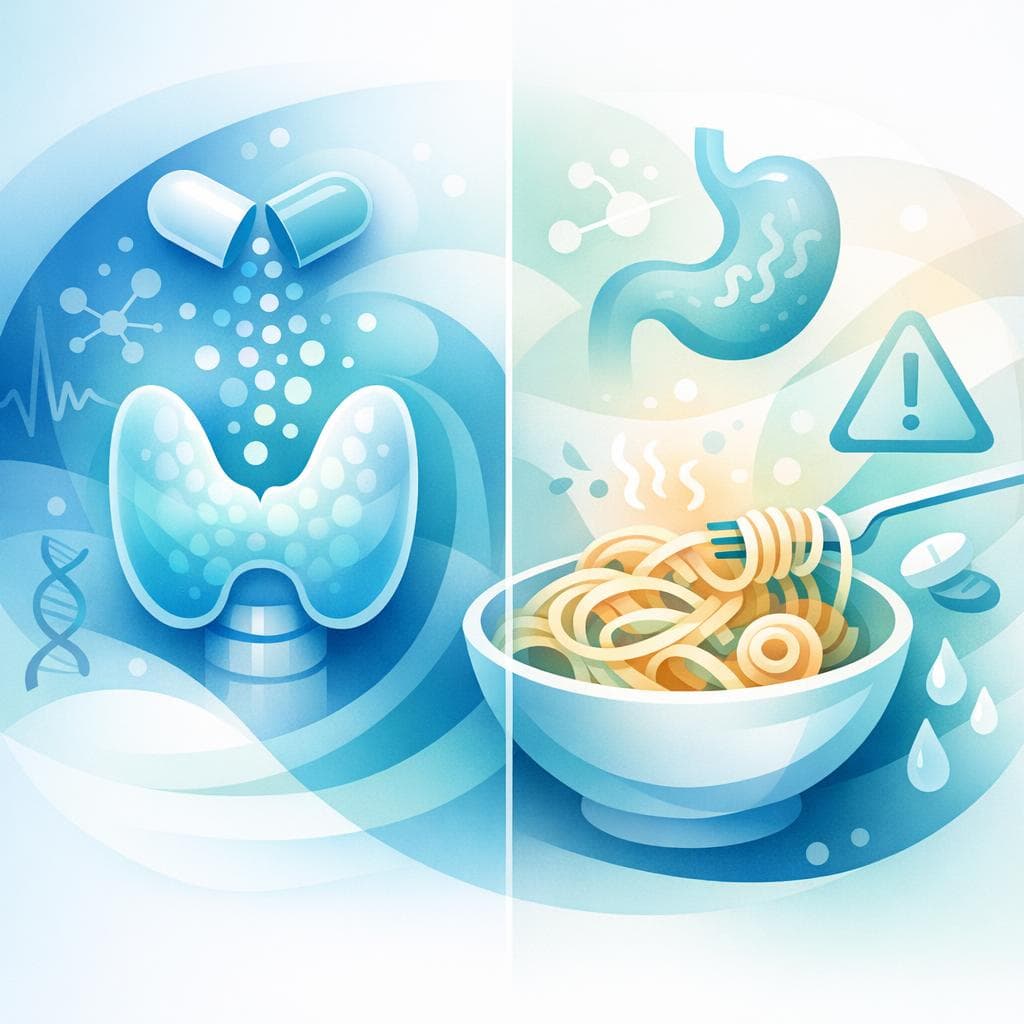
Taking levothyroxine with pasta is unlikely to increase side effects, but it can reduce or delay absorption and make the medicine less effective. For stable thyroid control, take levothyroxine on an empty stomach with water and separate it from meals (especially high-fiber foods) by 30-60 minutes.
Eating pasta at the same time you take levothyroxine is not known to “increase side effects,” but it can reduce or delay the drug’s absorption, which may lower its effectiveness and cause thyroid levels to drift off‑target over time. [1] Levothyroxine is best absorbed on an empty stomach, and certain foods especially those high in fiber or soy can bind the medication and decrease how much gets into your bloodstream. [2] [3] If levothyroxine doesn’t absorb well, you could experience signs of under‑replacement (like fatigue, weight gain, or feeling cold) or require a higher dose to compensate. [4]
How food timing matters
- Levothyroxine absorption increases with fasting and decreases when taken with food. [2] Taking it with meals can delay or reduce bioavailability, meaning less active hormone reaches your system right away. [1]
- High‑fiber foods specifically lower T4 (thyroxine) bioavailability, and many pastas especially whole‑grain or added‑fiber pasta contribute notable dietary fiber. [2] [5]
- Coffee, soy products, and fiber are well‑documented interferers; while “pasta” itself isn’t singled out by name in official documents, its fiber content and the fact that it’s a meal make concurrent intake a potential absorber reducer. [5] [1]
Side effects vs. reduced efficacy
- True levothyroxine side effects (like palpitations, anxiety, or insomnia) are usually linked to taking too much hormone, not to eating with the dose. [4]
- Eating pasta with the dose is more likely to blunt absorption and lead to under‑replacement (hypothyroid symptoms) rather than trigger classic overdose‑type side effects. [2]
- Inconsistent timing (sometimes with food, sometimes without) can cause TSH and thyroid hormone levels to swing, which may make symptoms fluctuate and complicate dose adjustments. [4]
Practical dosing guidance
- Take levothyroxine on an empty stomach with water, ideally 30–60 minutes before breakfast, or at least 3–4 hours after your last meal at night. [4]
- Keep the routine consistent every day to stabilize absorption and lab values. [4]
- Separate levothyroxine from high‑fiber meals, soy products, and grapefruit juice, which may bind or delay absorption and reduce bioavailability. [1] [2]
- If you must eat soon after dosing, choose a small, low‑fiber snack and discuss with your clinician whether a liquid or soft‑gel formulation (which can be less sensitive to gastric conditions) might suit you. [6]
Common food and drink interactions at a glance
| Item | What it can do | Practical tip |
|---|---|---|
| High‑fiber foods (e.g., whole‑grain/added‑fiber pasta, bran, fiber supplements) | Decrease T4 bioavailability | Take levothyroxine well before fiber‑rich meals; keep timing consistent. [2] [5] |
| Soy products (soybeans, soy flour) | Decrease absorption, sometimes requiring dose changes | Avoid around dosing time; monitor TSH if intake increases. [2] [3] |
| Grapefruit juice | May delay absorption and reduce bioavailability | Separate from the dose. [1] |
| Coffee/espresso | Can interfere with absorption when taken soon after dose | Wait at least 60 minutes after taking the pill. [5] |
| Large mixed meals | Generally reduce/slow absorption | Aim for an empty stomach window. [2] |
When to seek advice
- If you have been taking your pill with meals (including pasta) and feel more tired, colder, or are gaining weight, your dose may be under‑absorbed. It would be reasonable to standardize timing for 6–8 weeks and then recheck TSH. [4]
- If you have gastrointestinal conditions (celiac disease, H. pylori gastritis, lactose intolerance, IBD) or take interacting medications (iron, calcium, antacids, bile‑acid binders, PPIs), absorption can be further impaired; spacing and/or alternative formulations could help. [5] [6]
Bottom line
- Eating pasta with levothyroxine is unlikely to directly increase side effects, but it can reduce or delay absorption and make the medication less effective. [1] [2]
- For the most reliable control of thyroid levels, take levothyroxine on an empty stomach with water and separate it from meals pasta included by at least 30–60 minutes. [4]
Related Questions
Related Articles


Sources
- 1.^abcdefLEVOTHYROXINE SODIUM(dailymed.nlm.nih.gov)
- 2.^abcdefghiThese highlights do not include all the information needed to use levothyroxine sodium tablets safely and effectively. See full prescribing information for levothyroxine sodium tablets. LEVOTHYROXINE SODIUM tablets, for oral useInitial U.S. Approval: 2002(dailymed.nlm.nih.gov)
- 3.^abLevothyroxine Sodium Tablets, USP(dailymed.nlm.nih.gov)
- 4.^abcdefgLevotyroxin.(pubmed.ncbi.nlm.nih.gov)
- 5.^abcdeConditions and drugs interfering with thyroxine absorption.(pubmed.ncbi.nlm.nih.gov)
- 6.^abLevothyroxine absorption in health and disease, and new therapeutic perspectives.(pubmed.ncbi.nlm.nih.gov)
Important Notice: This information is provided for educational purposes only and is not intended to replace professional medical advice, diagnosis, or treatment. Always consult with a qualified healthcare provider before making any medical decisions.