
 Persly Medical Team
Based on NIH | Do avocados interact with levothyroxine and increase the risk of side effects or impair its absorption?
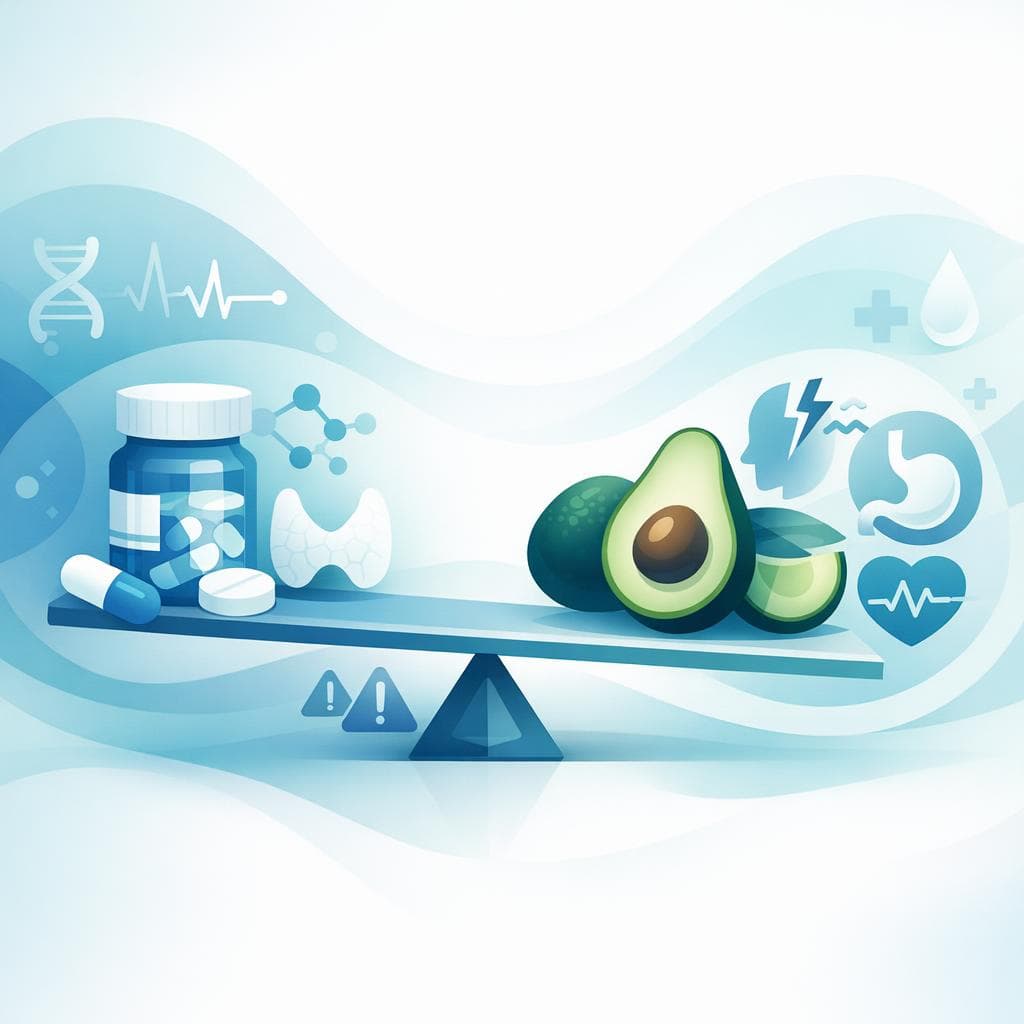
There's no evidence that avocados specifically interact with levothyroxine or increase side effects. Like any meal, avocado eaten near your dose can reduce absorption; take levothyroxine on an empty stomach 30–60 minutes before food and separate iron/calcium by 4 hours.
Avocado and levothyroxine: what we know There is no evidence that avocados specifically interact with levothyroxine or directly increase side effects. However, like many foods, eating avocados too close to your dose could still blunt absorption simply because levothyroxine is best absorbed on an empty stomach and food in general can interfere. The official guidance is to take levothyroxine on an empty stomach 30–60 minutes before breakfast and to separate it from interfering agents (especially minerals) by at least 4 hours. [1] [2]
How food affects levothyroxine
- Levothyroxine absorption is sensitive to what’s in your stomach and intestines. Taking it with meals reduces and slows absorption, which can change your thyroid levels. [2]
- Certain foods are specifically known to impair absorption: soybean flour/soy products, cottonseed meal, walnuts, and dietary fiber; grapefruit juice can delay absorption and reduce bioavailability. [3] [4]
Importantly, avocados are not listed among foods with demonstrated, specific interactions. [3] [4]
Where avocado fits in
- Avocados are rich in healthy fats and contain fiber. While fat itself is not listed as a direct blocker, dietary fiber is recognized as a factor that can bind levothyroxine and lower absorption when taken together. [3] [4]
- Because any meal can reduce absorption if taken too close to the dose, it’s reasonable to treat avocado-containing meals like other foods: keep a consistent separation from your tablet. [2]
Best-practice timing
- Take levothyroxine with water on an empty stomach, ideally 30–60 minutes before breakfast. This practice minimizes food-related interference, whether the meal includes avocado or not. [1] [2]
- Separate from known interfering supplements (iron, calcium, antacids) by at least 4 hours, as these are proven to reduce absorption. [1]
- If you routinely take levothyroxine within an hour of foods known to interfere, your dose may need adjustment based on thyroid tests; consistency is key. [2]
Common food and drink considerations
- Foods with stronger evidence of interference: soy/soybean flour, cottonseed meal, walnuts, high dietary fiber; grapefruit juice can delay and reduce availability. Keeping these away from your dose is wise. [3] [4]
- Coffee and high-fiber diets have been associated with reduced absorption in broader literature; if you consume these close to dosing, discuss whether timing adjustments or alternative formulations (liquid or soft-gel) might help. [5] [6] [7]
Practical tips you can use
- You can keep avocado in your diet; just avoid eating it within the immediate dosing window. Take your tablet first, wait 30–60 minutes, then have breakfast (avocado toast included). [1] [2]
- If mornings are difficult, another approach is consistent bedtime dosing, at least 3–4 hours after your last meal, which some people find stabilizes absorption; talk with your clinician before changing your routine. [2]
- If despite good timing your thyroid-stimulating hormone (TSH) remains unstable, options include checking for hidden interactions (calcium/iron in multivitamins) and considering liquid or soft-gel formulations that are less affected by gastrointestinal factors. [7]
Bottom line
- Avocados themselves are not known to specifically interact with levothyroxine. [3] [4]
- The main risk comes from taking levothyroxine too close to any meal; follow empty‑stomach dosing and maintain consistent timing to protect absorption. Separating the tablet from food by 30–60 minutes and from minerals by 4 hours is the safest approach. [1] [2]
Would you like help adjusting your dosing routine to fit your usual breakfast schedule, including avocado meals?
Related Questions
Related Articles


Sources
- 1.^abcdeLEVOTHYROXINE SODIUM(dailymed.nlm.nih.gov)
- 2.^abcdefghDailyMed - LEVOTHYROXINE SODIUM tablet(dailymed.nlm.nih.gov)
- 3.^abcdeLEVOTHYROXINE SODIUM(dailymed.nlm.nih.gov)
- 4.^abcdeDailyMed - LEVOTHYROXINE SODIUM tablet(dailymed.nlm.nih.gov)
- 5.^↑Conditions and drugs interfering with thyroxine absorption.(pubmed.ncbi.nlm.nih.gov)
- 6.^↑Conditions and drugs interfering with thyroxine absorption.(pubmed.ncbi.nlm.nih.gov)
- 7.^abMedications and Food Interfering with the Bioavailability of Levothyroxine: A Systematic Review.(pubmed.ncbi.nlm.nih.gov)
Important Notice: This information is provided for educational purposes only and is not intended to replace professional medical advice, diagnosis, or treatment. Always consult with a qualified healthcare provider before making any medical decisions.