
 Persly Medical Team
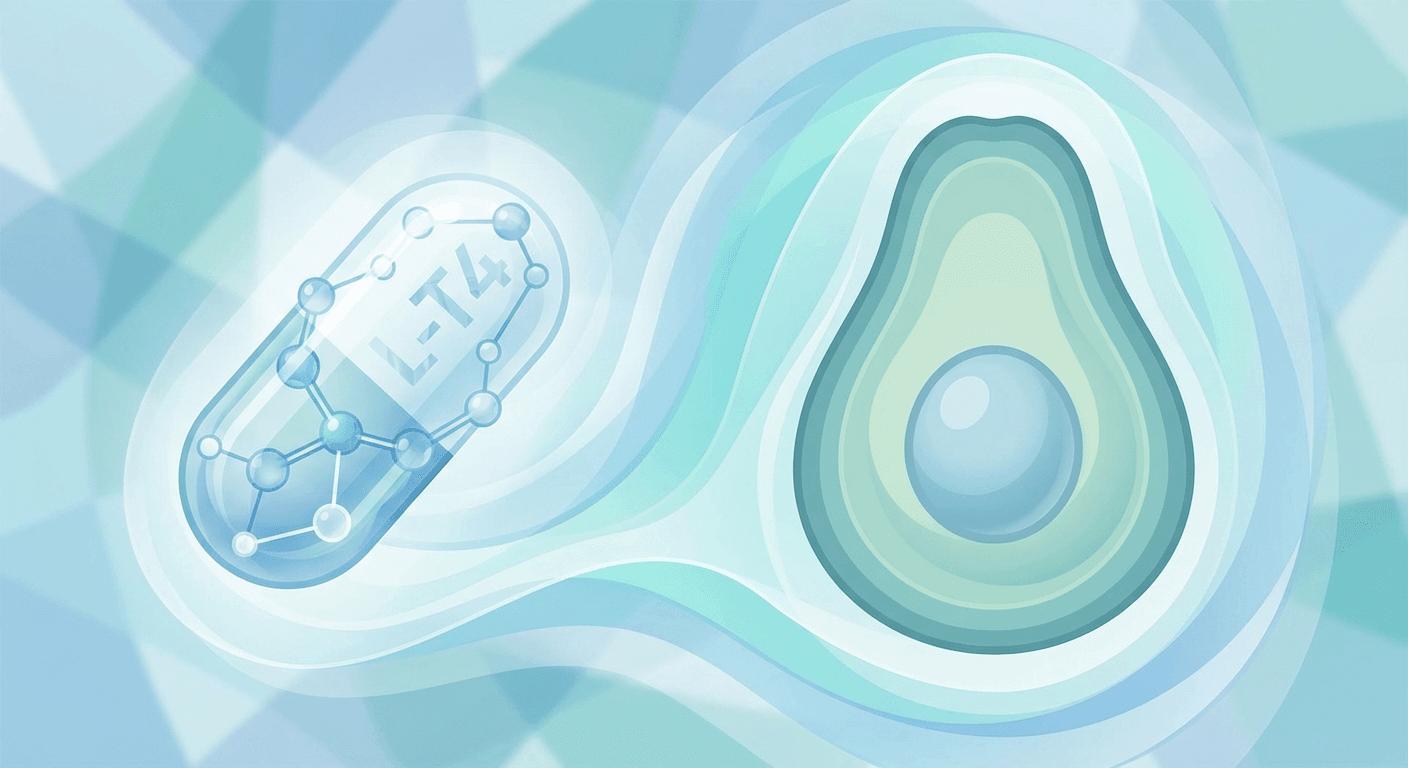
Do avocados interfere with levothyroxine absorption or effectiveness?
Avocados are not specifically known to interfere with levothyroxine absorption. However, taking levothyroxine with any food, including avocado, can reduce and delay absorption; take it on an empty stomach and wait 30–60 minutes before eating. Separate known binders like soy, walnuts, high-fiber foods, and grapefruit juice.
Do Avocados Interfere With Levothyroxine?
Short answer: Avocados themselves are not listed among foods known to specifically bind or block levothyroxine. However, taking levothyroxine with any food can reduce and delay absorption, and certain foods are clearly documented to interfere. Taking your dose on an empty stomach typically first thing in the morning with water, and waiting 30–60 minutes before eating remains the best practice. [1] [2]
What’s Proven to Interfere
- Documented food interactions: Soy products (soybean flour), cottonseed meal, walnuts, and high dietary fiber can bind levothyroxine and decrease absorption from the gut. Grapefruit juice can delay absorption and reduce bioavailability. These interactions are well established in official labeling. [3] [4]
- General food effect: Levothyroxine absorption is higher during fasting and lower when taken with food. This is why standard dosing advice recommends taking it on an empty stomach. [1] [2]
- Coffee and other factors: Beyond food, items like espresso coffee and several medications can interfere with absorption, highlighting the importance of timing and consistency. [5]
Where Do Avocados Fit?
- Not on the binding list: Avocados are not identified in official guidance among foods that specifically bind levothyroxine (like soy, walnuts, or fiber blends). [3] [4]
- Fat-rich meal considerations: A meal rich in fat including avocado still counts as “food,” which can lower and delay levothyroxine uptake when taken together. While fat itself is not singled out as a specific binder, the presence of any meal can diminish absorption compared with fasting. [2]
- Fiber question: Avocados contain fiber; high dietary fiber is known to decrease levothyroxine bioavailability. Though the fiber in a typical avocado serving is moderate, a high‑fiber diet overall can matter, so timing remains key. [1] [3]
Practical Dosing Tips
- Take on an empty stomach: Swallow levothyroxine with water and wait 30–60 minutes before any food or drink (including avocado, coffee, or juice). This approach helps maximize absorption. [2]
- Be consistent: If morning dosing is difficult, some people take levothyroxine at bedtime, at least 3–4 hours after the last meal, aiming for a truly empty stomach discuss with your clinician before changing. [2]
- Separate known binders: If you eat soy, high‑fiber foods, walnuts, or drink grapefruit juice, keep them well separated from your dose (by several hours) to minimize interference. [3] [4]
Signs Your Dose May Be Affected
- Symptoms suggesting under‑absorption: Fatigue, feeling cold, constipation, dry skin, weight gain, or brain fog can suggest your thyroid hormone level may be too low, which can happen if absorption is consistently reduced by food timing. Blood tests (TSH, free T4) guide adjustments. [5]
Bottom Line
- Avocados are not specifically listed as a problem food for levothyroxine; however, taking levothyroxine with any meal including one containing avocado can reduce and delay absorption compared with fasting. For best results, keep your dose separated from food and maintain consistent timing. [1] [2]
- If you enjoy avocados regularly, it’s reasonable to keep them in your diet, as long as you avoid eating them within 30–60 minutes after your levothyroxine dose and maintain consistent routines so your clinician can interpret labs accurately. [2] [1]
Quick Reference Table
| Item | Effect on Levothyroxine | Recommendation |
|---|---|---|
| Any food (meal) | Decreases and delays absorption vs fasting | Take on an empty stomach; wait 30–60 minutes before eating |
| Soybean flour/soy | Binds, decreases absorption | Separate by several hours; monitor TSH |
| Walnuts | Binds, decreases absorption | Separate by several hours |
| Dietary fiber (high) | Decreases bioavailability | Time away from dose; keep routine consistent |
| Grapefruit juice | Delays absorption, reduces bioavailability | Avoid near dosing time |
| Avocado | Not specifically listed; part of “food” and contains fiber | Fine to eat; keep away from dosing window |
If you prefer taking levothyroxine with breakfast, switching to a strict bedtime routine on an empty stomach could be an alternative would you like help choosing a dosing schedule that fits your habits?
Related Questions
Related Articles


Sources
- 1.^abcdefgLEVOTHYROXINE SODIUM(dailymed.nlm.nih.gov)
- 2.^abcdefghiAspects of the absorption of oral L-thyroxine in normal man.(pubmed.ncbi.nlm.nih.gov)
- 3.^abcdefghLEVOTHYROXINE SODIUM(dailymed.nlm.nih.gov)
- 4.^abcdefDailyMed - LEVOTHYROXINE SODIUM tablet(dailymed.nlm.nih.gov)
- 5.^abConditions and drugs interfering with thyroxine absorption.(pubmed.ncbi.nlm.nih.gov)
Important Notice: This information is provided for educational purposes only and is not intended to replace professional medical advice, diagnosis, or treatment. Always consult with a qualified healthcare provider before making any medical decisions.