
 Persly Medical Team
Based on NIH | Is it safe to take gabapentin with garlic supplements, or does garlic increase the risk of side effects?
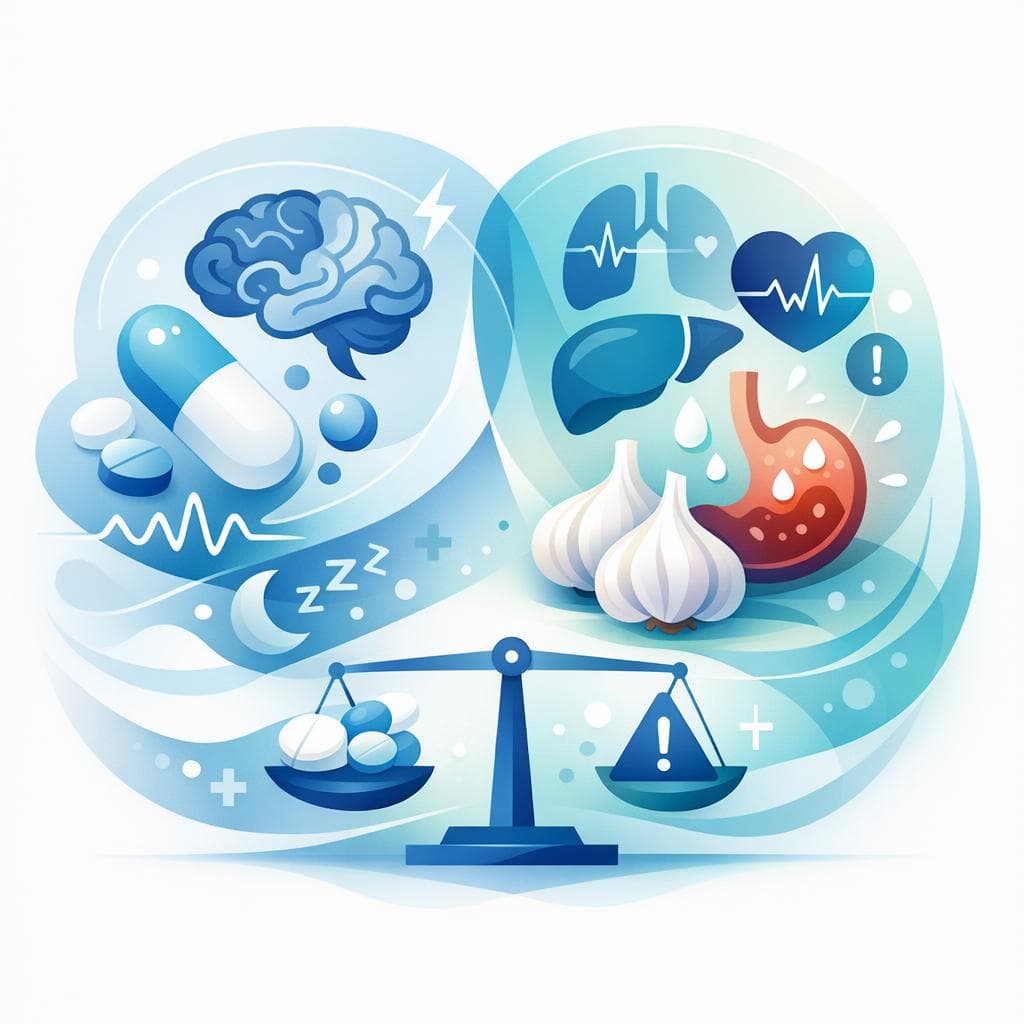
Taking gabapentin with garlic supplements is generally low risk because gabapentin isn’t metabolized by CYP enzymes and is excreted unchanged. Garlic is unlikely to alter gabapentin levels, but you may notice additive dizziness or GI upset. Use caution if you also take blood thinners/antiplatelets or have surgery planned; sedation risk mainly arises when gabapentin is combined with other CNS depressants, not garlic.
Taking gabapentin with garlic supplements is generally considered low risk for direct drug–drug interactions, but some precautions make sense based on how each works in the body. Gabapentin has very few metabolic interactions because it is not metabolized by liver enzymes and is eliminated unchanged by the kidneys, so classic enzyme-related interactions are uncommon. [1] [2] That said, gabapentin can add to sleepiness and dizziness when combined with other sedating agents, and any supplement that also causes drowsiness could theoretically increase these effects, so monitoring is reasonable. [3] [4]
What we know about gabapentin interactions
- Metabolism and clearance: Gabapentin does not use cytochrome P450 (CYP) enzymes, does not induce or inhibit them, and is excreted unchanged in urine, which means it has a low potential for PK (pharmacokinetic) interactions with substances that affect CYP enzymes. [1] [2]
- Additive CNS effects: The main clinically important interactions with gabapentin are pharmacodynamic especially enhanced sedation or breathing problems when combined with central nervous system depressants (for example, opioids, benzodiazepines, or sleep medicines). Labels specifically warn about increased dizziness, sleepiness, and respiratory depression with such combinations. [3] [5]
What we know about garlic supplements
- Variable formulations: Garlic (Allium sativum) products differ (fresh, aged extract, oils), which can change their chemical profile and interaction potential. Some human and lab studies show garlic can affect drug handling by inducing P‑glycoprotein and variably inhibiting certain CYP enzymes (2C9, 2C19; mixed data for 3A4). [6] [6]
- Documented interactions (not with gabapentin): Garlic has reduced blood levels of certain HIV protease inhibitors and has potentiated blood thinner effects in people on warfarin, showing that garlic’s impact is drug‑specific and depends on the medication’s metabolic pathway and the garlic preparation. [6] [7]
- Bleeding and glucose concerns: Garlic may increase bleeding tendency (especially with anticoagulants/antiplatelets) and can lower blood sugar in animals/human reports, which matters if you take blood thinners or diabetes medications. [7] [6]
Putting them together: gabapentin + garlic
- Low likelihood of a classic PK interaction: Because gabapentin is not metabolized by CYP enzymes and is not a known P‑glycoprotein substrate in a clinically meaningful way, garlic’s CYP/P‑gp effects are unlikely to change gabapentin blood levels in a significant way. [1] [2]
- Side‑effect profile: Garlic is not a CNS depressant, so it is unlikely to directly increase gabapentin‑related sedation or breathing risk the way opioids or benzodiazepines do. However, you may still notice additive dizziness or stomach upset from taking two products, and it’s reasonable to start garlic at a low dose and see how you feel. [3] [5]
- Bigger picture risks depend on your other meds: If you also take blood thinners (e.g., warfarin), antiplatelets (e.g., aspirin), or certain HIV medicines, garlic not gabapentin could pose interaction risks, so the combined regimen should be reviewed. [7] [6]
Practical recommendations
- Most people can take gabapentin and garlic together with low interaction risk, especially if they are not on blood thinners, antiplatelets, or protease inhibitors. [1] [2]
- Watch for symptoms: If you add garlic, monitor for increased dizziness, sleepiness, or gastrointestinal upset; adjust timing or dose if needed. Seek help promptly for unusual bruising/bleeding (garlic effect), severe drowsiness, or breathing issues (gabapentin with other sedatives). [3] [5]
- Tell your clinician and pharmacist: Bring a full list of all supplements and medications to check for non‑gabapentin interactions that garlic can cause, particularly if you use anticoagulants/antiplatelets or have surgery planned (garlic may need to be stopped beforehand). [7] [6]
Bottom line
Based on how these agents are handled by the body, garlic supplements do not appear to meaningfully alter gabapentin levels, and a direct interaction is unlikely. [1] [2] Still, it’s wise to use garlic cautiously if you take other drugs that can cause bleeding or strong sedation, and to monitor for additive dizziness or stomach upset when combining supplements with prescription medicines. [7] [3]
Would you like me to review your specific medication and supplement list to spot any garlic‑related risks?
Related Questions
Related Articles


Sources
- 1.^abcdeClinical pharmacokinetics of gabapentin.(pubmed.ncbi.nlm.nih.gov)
- 2.^abcdeDailyMed - GABAPENTIN capsule(dailymed.nlm.nih.gov)
- 3.^abcdeGabapentin Capsules(dailymed.nlm.nih.gov)
- 4.^↑Gabapentin Capsules(dailymed.nlm.nih.gov)
- 5.^abcDailyMed - GABAPENTIN capsule(dailymed.nlm.nih.gov)
- 6.^abcdefGarlic(mskcc.org)
- 7.^abcdeInteractions between herbal medicines and prescribed drugs: an updated systematic review.(pubmed.ncbi.nlm.nih.gov)
Important Notice: This information is provided for educational purposes only and is not intended to replace professional medical advice, diagnosis, or treatment. Always consult with a qualified healthcare provider before making any medical decisions.