
 Persly Medical Team
Based on NIH | Is it safe to drink alcohol while taking gabapentin, and is there a recommended maximum amount based on my gabapentin dose?
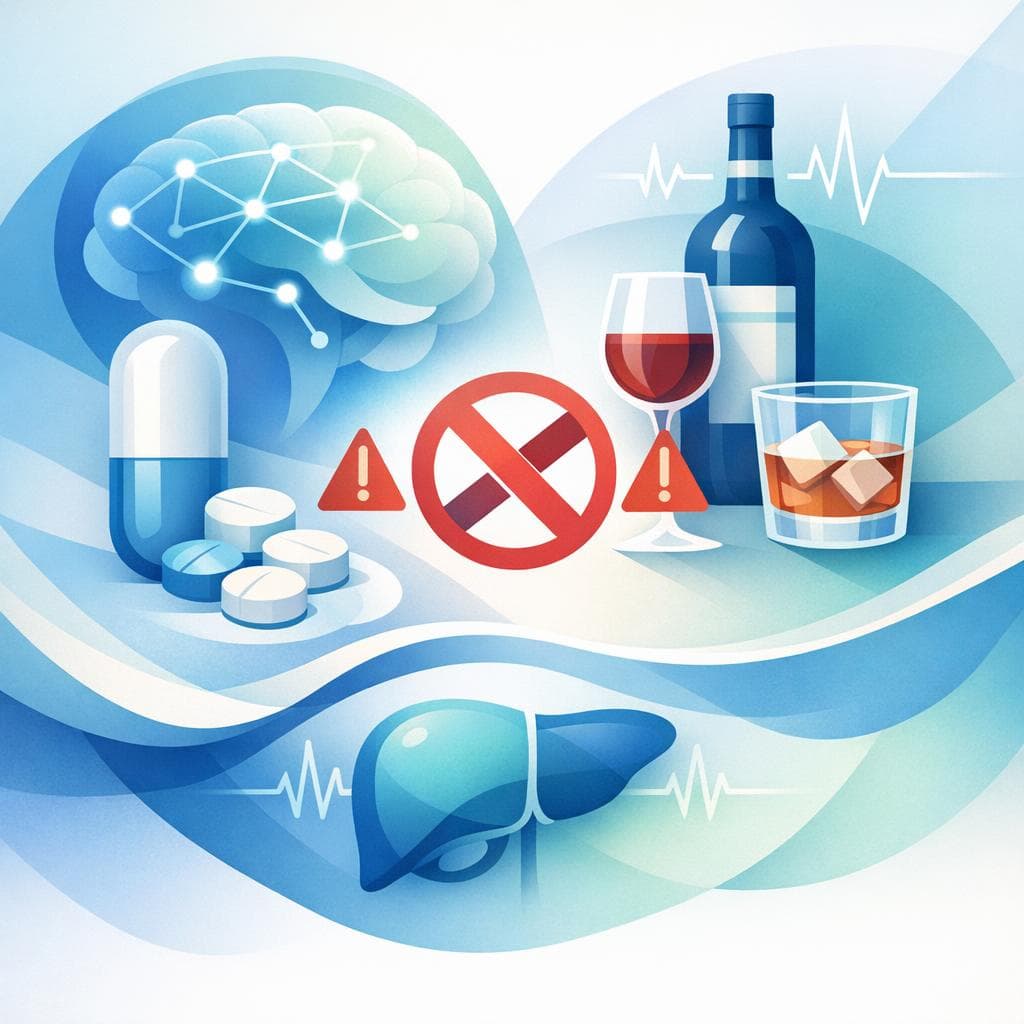
It’s generally not safe to drink alcohol while taking gabapentin because both depress the central nervous system and can increase sedation, dizziness, and accident risk. There is no dose-based ‘safe’ alcohol limit; labels advise avoiding alcohol and, if any is permitted by your clinician, to keep it minimal, infrequent, and separated from doses, especially if using other sedatives.
It’s generally not considered safe to drink alcohol while taking gabapentin. Alcohol and gabapentin both slow down the central nervous system, and using them together can amplify side effects like sleepiness, dizziness, slowed thinking, and reduced coordination, which can raise the risk of falls, accidents, and other harm. Product labels advise avoiding alcohol while on gabapentin unless you’ve specifically discussed it with your clinician. [1] [2] [3]
Why alcohol and gabapentin don’t mix
- Combined sedation and dizziness: Alcohol can intensify gabapentin’s sedating effects, making you more drowsy or dizzy than either substance alone. This can impair driving and other activities that require alertness. [1] [2]
- Slowed thinking and motor skills: Gabapentin can already slow reaction time and cognition; alcohol compounds this effect. Labels specifically advise against driving or using heavy machinery until you know how gabapentin affects you. [1] [2]
- Individual variability: Sensitivity differs based on dose, timing, body size, other medicines (especially those causing drowsiness), and underlying health. Because of this variability, routine alcohol use on gabapentin is not recommended. [1] [2]
Is there a “safe” or maximum alcohol amount by gabapentin dose?
There is no officially recommended “maximum” amount of alcohol that is considered safe to pair with gabapentin at any dose. Official medication guides advise not to drink alcohol while taking gabapentin, rather than offering a dose‑based allowance. [1] [2] [3]
Some research in specific populations has explored interactions between gabapentin and alcohol, but these studies do not establish a safe drinking limit for routine use. For example, in a small inpatient study of adults with both alcohol and opioid use disorders, gabapentin increased the positive subjective effects (“drug liking”) of alcohol, which could raise misuse risks, even though it did not significantly depress breathing in that research setting. These findings reinforce caution and do not translate into a general, safe alcohol amount for people taking gabapentin. [4]
Practical guidance if you choose to drink
If you and your clinician decide occasional alcohol might be acceptable for you, consider these harm‑reduction steps:
- Keep it minimal: Because there’s no proven safe threshold, limiting to the smallest possible amount (e.g., a single standard drink on an infrequent basis) is a more cautious approach than routine drinking.
- Separate in time: Taking gabapentin and alcohol close together increases overlap of peak effects. Spacing them farther apart may reduce but does not remove risk.
- Avoid high‑risk situations: Do not drive, operate machinery, climb ladders, or engage in activities where a fall or slowed reaction could cause injury if you’ve consumed alcohol while on gabapentin. [1] [2] [3]
- Watch for warning signs: Excessive sleepiness, unsteadiness, confusion, nausea/vomiting, or slow/shallow breathing are red flags. If severe symptoms occur, seek medical help.
- Be extra careful with other sedatives: Combining alcohol, gabapentin, and other drugs that cause drowsiness (e.g., opioids, benzodiazepines, sleep aids, antihistamines) can markedly increase risk. [1] [2] [3]
Special situations
- History of falls, dizziness, sleep apnea, lung disease, or liver disease: Even small amounts of alcohol may pose higher risks in these settings.
- Substance use concerns: In people with alcohol or opioid use disorders, gabapentin may increase alcohol’s rewarding effects in some contexts, suggesting added caution. [4]
- Using gabapentin for alcohol‑related care: In certain clinical programs, gabapentin can be part of treatment for alcohol withdrawal or relapse prevention, but this is managed by a clinician and does not imply that drinking while on gabapentin is safe. [5]
Bottom line
- Avoid alcohol while taking gabapentin unless you’ve discussed it with your clinician. This is the clear direction on medication guides and labels. [1] [2] [3]
- There is no validated maximum alcohol amount tied to a specific gabapentin dose. If any alcohol is permitted in your situation, it should be minimal, infrequent, and separated in time from gabapentin doses, with extra caution for activities requiring alertness. [1] [2] [3]
Quick reference: Key label cautions
- “Do not drink alcohol or take other medicines that make you sleepy or dizzy while taking gabapentin without first talking with your healthcare provider.” [1] [2] [3]
- “Do not drive, operate heavy machinery, or do other dangerous activities until you know how gabapentin affects you. Gabapentin can slow your thinking and motor skills.” [1] [2] [3]
Would you like to tell me your current gabapentin dose and how often you typically drink so I can help tailor this guidance?
Related Questions
Related Articles


Sources
- 1.^abcdefghijkGabapentin Capsules(dailymed.nlm.nih.gov)
- 2.^abcdefghijkDailyMed - GABAPENTIN capsule(dailymed.nlm.nih.gov)
- 3.^abcdefghThese highlights do not include all the information needed to use GABAPENTIN safely and effectively. See full prescribing information for GABAPENTIN. GABAPENTIN capsules, for oral use Initial U.S. Approval: 1993(dailymed.nlm.nih.gov)
- 4.^abGabapentin increases the abuse liability of alcohol alone and in combination with oxycodone in participants with co-occurring opioid and alcohol use disorder.(pubmed.ncbi.nlm.nih.gov)
- 5.^↑Psychiatric Uses of Gabapentin.(pubmed.ncbi.nlm.nih.gov)
Important Notice: This information is provided for educational purposes only and is not intended to replace professional medical advice, diagnosis, or treatment. Always consult with a qualified healthcare provider before making any medical decisions.