
 Persly Medical Team
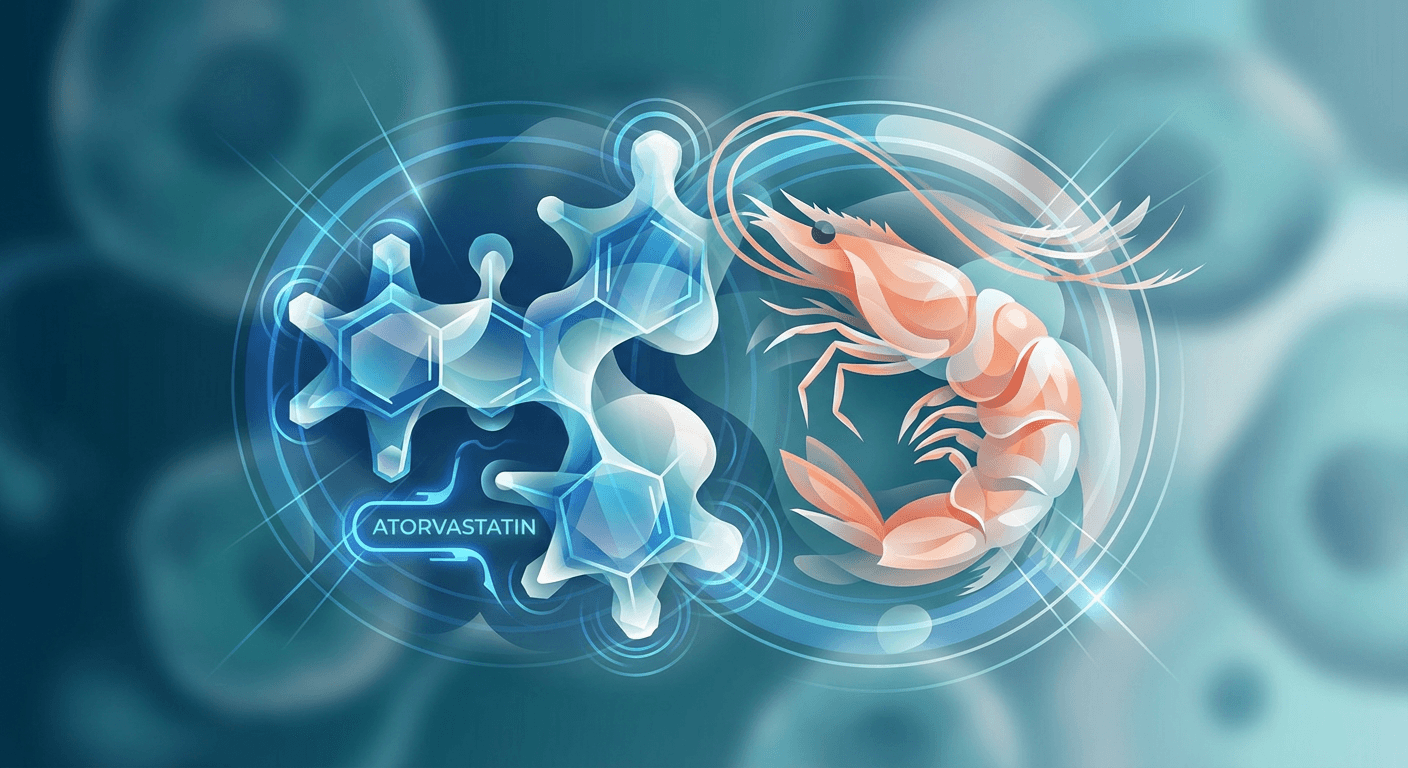
Is it safe to eat shrimp while taking atorvastatin, or could it interact with the medication or undermine its cholesterol-lowering effect?
Shrimp is safe to eat while taking atorvastatin and does not interact with the medication or reduce its cholesterol-lowering effect. The primary food interaction to avoid is excessive grapefruit juice, which can raise atorvastatin levels and increase muscle side-effect risk. Enjoy shrimp in moderation as part of a heart-healthy diet.
Short answer
Yes, eating shrimp is generally safe while taking atorvastatin, and it does not interact with the medication. Shrimp does not affect how atorvastatin works or its level in your body, and it will not directly undermine the drug’s cholesterol‑lowering effect. [1] [2] The main well‑known food interaction with atorvastatin is large amounts of grapefruit juice, not shrimp. Avoid excessive grapefruit juice (more than about 1.2 liters per day), as it can raise atorvastatin levels and increase muscle‑related side effects. [1] [2] [3]
Atorvastatin and food interactions
- Documented interaction: Grapefruit juice. Drinking large quantities (≥ 1.2 liters/day) can increase atorvastatin levels and raise the risk of muscle problems such as myopathy or rhabdomyolysis. [1] [2] [3]
- No documented interaction: Shrimp or shellfish. There is no evidence that shrimp interferes with atorvastatin absorption or metabolism. Standard guidance focuses on grapefruit, certain antibiotics, antifungals, HIV protease inhibitors, and some heart rhythm or immunosuppressant drugs not shellfish. [4] [5]
Dietary cholesterol in shrimp: what it means
Shrimp contains dietary cholesterol, but its impact on blood LDL (“bad”) cholesterol is limited and varies by person.
- Controlled trials in healthy adults have found that regular prawn (shrimp) intake did not raise total or LDL cholesterol, nor alter LDL particle characteristics, compared with control foods. [6]
- Older feeding studies suggest large quantities of shrimp, lobster, and crab produced only mild cholesterol increases in healthy subjects, and some shellfish (like clams, oysters, scallops) did not raise cholesterol in normals. [7]
These findings suggest moderate shrimp consumption typically does not meaningfully worsen LDL cholesterol in most people, especially when part of a heart‑healthy diet that is lower in saturated fat and higher in fiber and omega‑3–rich foods. [6] Many heart‑health resources still advise moderating high‑cholesterol foods (including shrimp) mainly to keep overall dietary cholesterol reasonable, alongside other measures like soluble fiber. [8]
Practical guidance while on atorvastatin
- Enjoy shrimp in moderation. Typical servings a few times per week are reasonable for most people on atorvastatin, especially if prepared healthfully (grilled, baked, steamed rather than deep‑fried). [6]
- Focus on the whole diet. Emphasize vegetables, fruits, whole grains, legumes, nuts, and fish; limit saturated and trans fats to improve LDL response to statins. Soluble fiber (10–25 g/day) can further lower LDL. [8]
- Avoid excessive grapefruit juice. Keep grapefruit intake modest and avoid large amounts; this is the key food interaction for atorvastatin. Large quantities can raise drug levels and increase side‑effect risk. [1] [2] [3]
- Be mindful of other interacting medicines. Certain antibiotics/antifungals, HIV protease inhibitors, and some heart rhythm or immunosuppressant drugs can raise statin levels; always review new prescriptions with your clinician. [4] [5]
Safety tips
- Watch for muscle symptoms. If you notice new muscle pain, weakness, or dark urine particularly after a dose change or if you accidentally consume a lot of grapefruit juice contact your clinician. These can be signs of statin‑related muscle issues. [1] [2]
- Keep regular lipid checks. Atorvastatin’s effect is best tracked with periodic blood tests; dietary adjustments (including how often you eat shrimp) can be tailored based on your LDL response. Most users can include shrimp without compromising statin efficacy. [6]
Bottom line
Shrimp does not interact with atorvastatin and, in typical portions, is unlikely to undermine the medication’s cholesterol‑lowering effect. [1] [2] Maintain a heart‑healthy eating pattern and avoid large amounts of grapefruit juice, which is the primary food that can raise atorvastatin levels. [1] [2] [3] For most people on atorvastatin, shrimp can be part of a balanced diet without negatively impacting LDL cholesterol. [6] [7]
Related Questions
Related Articles

Sources
- 1.^abcdefgAtorvastatin Calcium(dailymed.nlm.nih.gov)
- 2.^abcdefgATORVASTATIN CALCIUM- atorvastatin film coated tablet(dailymed.nlm.nih.gov)
- 3.^abcdATORVASTATIN(dailymed.nlm.nih.gov)
- 4.^abStatin side effects: Weigh the benefits and risks(mayoclinic.org)
- 5.^abStatin side effects: Weigh the benefits and risks(mayoclinic.org)
- 6.^abcdeLack of effect of cold water prawns on plasma cholesterol and lipoproteins in normo-lipidaemic men.(pubmed.ncbi.nlm.nih.gov)
- 7.^abThe effect of shellfish in the diet upon the plasma lipid levels in humans.(pubmed.ncbi.nlm.nih.gov)
- 8.^abHow to Lower Cholesterol with Diet(medlineplus.gov)
Important Notice: This information is provided for educational purposes only and is not intended to replace professional medical advice, diagnosis, or treatment. Always consult with a qualified healthcare provider before making any medical decisions.