
 Persly Medical Team
Based on NIH | Is it safe to take aspirin with energy drinks that contain caffeine, or does this combination increase health risks?
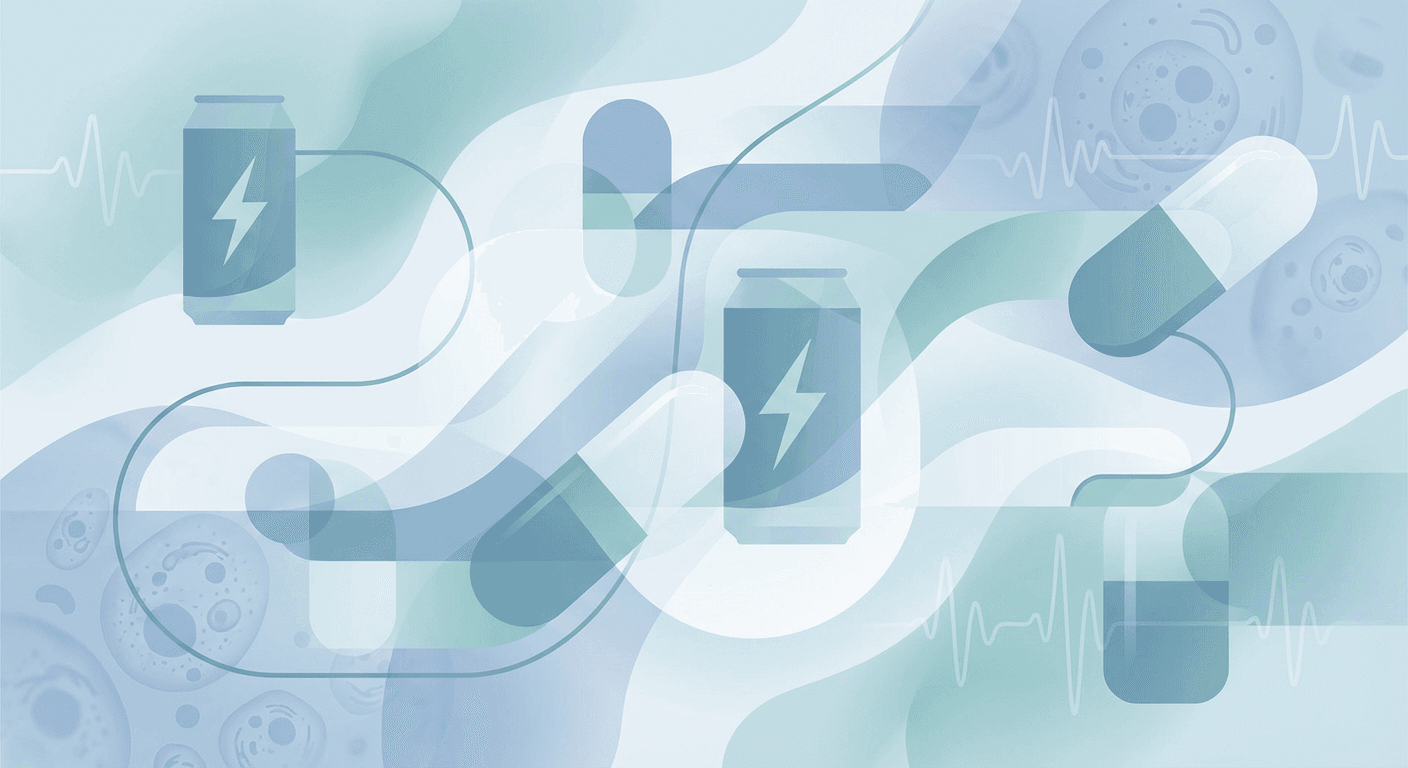
Combining aspirin with caffeine-heavy energy drinks is generally not recommended. Caffeine can increase aspirin absorption and amplify side effects, raising risks of palpitations, insomnia, stomach irritation, and bleeding especially in at-risk individuals.
Taking aspirin together with caffeine from energy drinks is generally not recommended because caffeine can enhance some effects of aspirin and increase the chance of side effects in certain people. [1] [2]
Key takeaways
- Caffeine can increase how quickly and how much aspirin (salicylate) gets into your bloodstream, which may make aspirin’s effects stronger. [1] [3]
- Energy drinks add significant caffeine on top of any caffeine you may already consume, which can raise the risk of jitteriness, fast heartbeat, and sleep problems. [4] [2]
- Aspirin already carries a risk of stomach irritation and bleeding, and combining it with other risk factors (age, ulcers, alcohol, blood thinners, steroids, or other NSAIDs) can raise that risk further. [5] [6]
What happens when aspirin and caffeine are combined?
Research in healthy adults shows that adding caffeine to aspirin increases the rate at which salicylate appears in the blood and raises its peak level by roughly 15–25%, and overall exposure is higher compared with aspirin alone. [1] [3] This means the combination may relieve pain faster but can also amplify aspirin-related side effects for some users. [1] [3]
Energy drinks add more caffeine
Over‑the‑counter combination tablets that already include aspirin and caffeine warn that their standard dose contains roughly the caffeine of a cup of coffee and advise limiting other caffeine from drinks and foods to avoid nervousness, irritability, sleeplessness, and rapid heartbeat. [4] [2] Energy drinks often deliver higher caffeine per serving than coffee and sometimes come in large cans, so stacking them with aspirin can push total caffeine to levels that cause palpitations, anxiety, and insomnia. [4] [2]
Bleeding and stomach risks
Aspirin can irritate the stomach lining and increase bleeding risk, and this risk is higher in people age 60 or older, those with a history of ulcers or bleeding, those who use alcohol daily, or those taking anticoagulants, steroids, or other NSAIDs. [5] [6] While caffeine itself is not a blood thinner, it can increase aspirin absorption and may contribute to stomach discomfort, which matters if you already have sensitive digestion or ulcer history. [3] [5]
Heart and blood pressure considerations
Caffeine can temporarily raise blood pressure and heart rate and stimulate the body’s stress response, which can feel like pounding or racing heart effects that are more noticeable at higher doses typical of energy drinks. [7] [4] Because caffeine can alter platelet function and metabolism transiently, it is sensible to be cautious when using it alongside a platelet‑active drug like aspirin, especially if you’re managing cardiovascular risks. [8] [9]
Who should be especially careful?
- People taking any blood thinners (for example, warfarin, heparins, or antiplatelets like clopidogrel) should be monitored closely if aspirin is used, since aspirin enhances bleeding risk when combined with these drugs. [10]
- Adults with prior stomach ulcers, GI bleeding, or chronic gastritis may be more likely to experience harm from aspirin, and adding caffeine from energy drinks may worsen tolerance. [6]
- Individuals who drink three or more alcoholic drinks daily have higher bleeding risk with aspirin and should avoid stacking in more stimulants. [5]
Practical guidance
- If you need an occasional aspirin for pain or headache, it would be safer to avoid energy drinks around the same time to limit total caffeine and reduce the chance of palpitations, anxiety, and stomach issues. [4] [2]
- If you regularly use aspirin (daily low‑dose or repeated doses for pain), consider keeping total daily caffeine to moderate levels and skip energy drinks on aspirin days. [4] [2]
- If you take blood thinners, steroids, or other NSAIDs, or have a history of ulcers or GI bleeding, you should avoid combining aspirin with energy drinks and discuss safer options with your clinician. [5] [6]
- Watch for warning signs such as black or tarry stools, vomiting blood, unusual bruising, persistent stomach pain, pounding heartbeat, severe jitteriness, or insomnia, and seek medical help if these occur. [5] [4]
Bottom line
It may be safer for many people to avoid taking aspirin together with caffeine‑heavy energy drinks because caffeine can boost aspirin’s absorption and side effects, and the combination can increase the chance of nervousness, rapid heartbeat, and bleeding in at‑risk groups. [1] [5] If pain relief with caffeine is desired, products that combine aspirin and controlled amounts of caffeine already carry clear limits and warnings, and additional caffeinated drinks should be minimized. [4] [2]
Related Questions
Related Articles
Sources
- 1.^abcdeInfluence of caffeine on aspirin pharmacokinetics.(pubmed.ncbi.nlm.nih.gov)
- 2.^abcdefgACETAMINOPHEN, ASPIRIN, CAFFEINE tablet, film coated(dailymed.nlm.nih.gov)
- 3.^abcdEffect of caffeine on the bioavailability and pharmacokinetics of aspirin.(pubmed.ncbi.nlm.nih.gov)
- 4.^abcdefghACETAMINOPHEN, ASPIRIN AND CAFFEINE tablet(dailymed.nlm.nih.gov)
- 5.^abcdefgACETAMINOPHEN, ASPIRIN AND CAFFEINE tablet(dailymed.nlm.nih.gov)
- 6.^abcdACHE AND PAIN RELIEF TO GO- aspirin and caffeine powder(dailymed.nlm.nih.gov)
- 7.^↑Caffeine stimulates in vivo overall cell metabolism. Microcalorimetric measurement of heat production in human platelets.(pubmed.ncbi.nlm.nih.gov)
- 8.^↑Acute effects of ethanol, caffeine, or both on platelet aggregation, thromboxane formation, and plasma-free fatty acids in normal subjects.(pubmed.ncbi.nlm.nih.gov)
- 9.^↑Coffee, caffeine and hemostasis: a review.(pubmed.ncbi.nlm.nih.gov)
- 10.^↑These highlights do not include all the information needed to use BUTALBITAL, ASPIRIN, CAFFEINE and CODEINE PHOSPHATE capsules safely and effectively. See full prescribing information for BUTALBITAL, ASPIRIN, CAFFEINE and CODEINE PHOSPHATE. BUTALBITAL, ASPIRIN, CAFFEINE and CODEINE PHOSPHATE capsules, USP, for oral use Initial U.S. Approval: 1990(dailymed.nlm.nih.gov)
Important Notice: This information is provided for educational purposes only and is not intended to replace professional medical advice, diagnosis, or treatment. Always consult with a qualified healthcare provider before making any medical decisions.