
 Persly Medical Team
Based on PubMed | Does polycystic ovary syndrome cause poor egg quality?
PCOS most consistently disrupts ovulation and egg maturation, reducing natural conception opportunities, but it does not universally cause poor egg quality. Research shows mixed effects on oocyte and embryo quality; with optimized stimulation and metabolic management, IVF embryo and live birth rates can be similar to non-PCOS.
PCOS and Egg Quality: What the Evidence Shows
Polycystic ovary syndrome (PCOS) primarily affects how often and how well ovulation happens, but its impact on egg quality is more nuanced. PCOS commonly disrupts normal ovulation, meaning eggs may not mature or be released regularly, which can reduce natural fertility opportunities. [1] [2] However, when eggs are obtained during fertility treatments like IVF, studies show mixed results: some research suggests eggs and embryos can be of lower quality in certain individuals with PCOS, while other studies find similar embryo quality and live birth rates compared with people without PCOS, especially when treatments are well-managed. [3] [4]
How PCOS Affects Ovulation
- PCOS involves hormonal imbalances (often excess androgens) that interfere with normal egg development and release. [1]
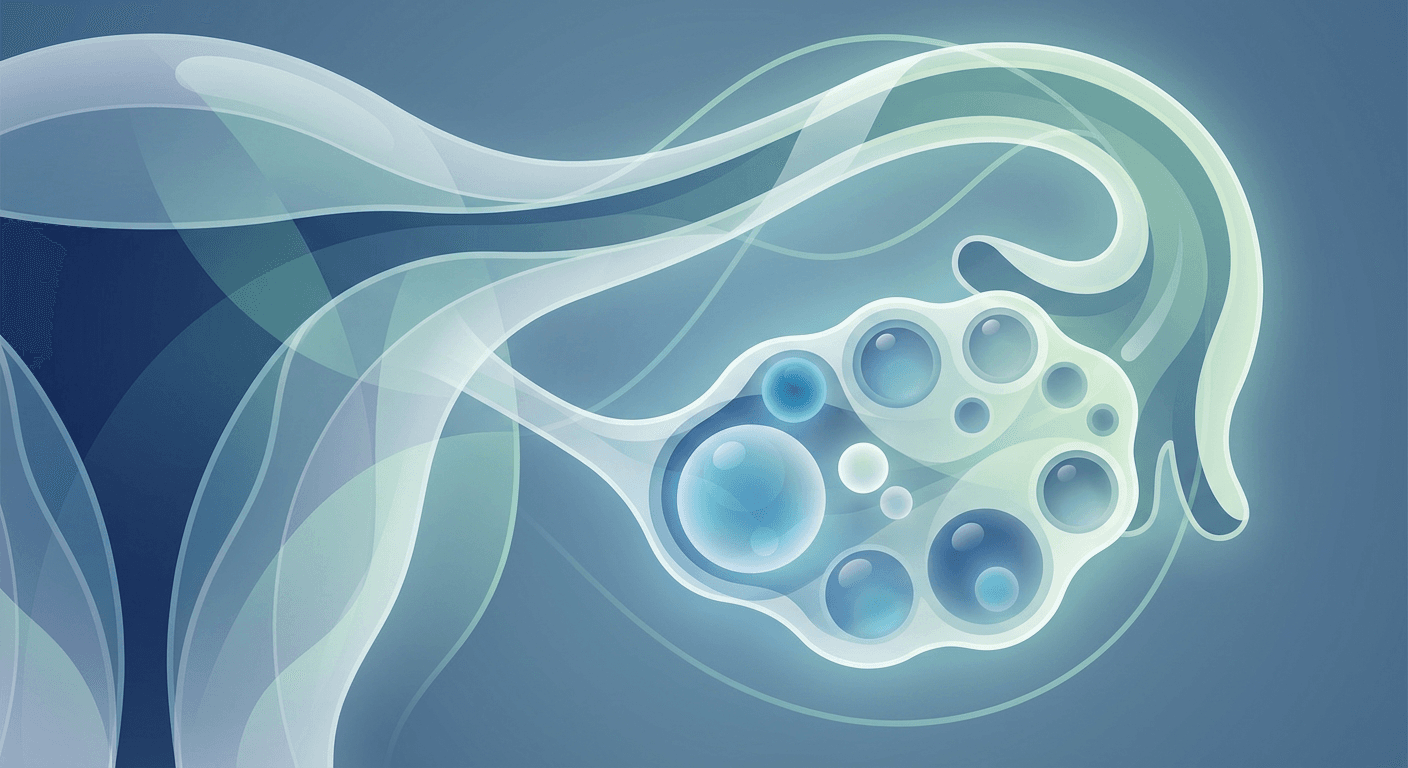
- Many small follicles may accumulate in the ovaries and contain immature eggs, reflecting interrupted maturation rather than inherently “bad” eggs. [5]
- Because eggs may not develop or be released on schedule, periods can be irregular or absent, making conception more challenging without assistance. [2] [6]
Key idea: PCOS most consistently causes problems with ovulation timing and egg maturation, not universally low egg quality in every individual. [1] [2]
What Research Says About Egg and Embryo Quality
- Some reviews report that, despite retrieving more eggs in IVF, individuals with PCOS may have a higher proportion of immature eggs and, in some cases, lower fertilization and implantation rates, suggesting compromised egg competence in subsets of PCOS. [3]
- Other analyses comparing PCOS and non‑PCOS groups in IVF/ICSI cycles find no significant differences in high‑grade embryos, pregnancy rates, miscarriage, or live births, indicating that overall outcomes can be comparable when care is optimized. [4]
- A broader review notes that while endocrine and intra‑ovarian changes in PCOS could impair egg and embryo quality, many publications report similar biological and clinical IVF results to non‑PCOS populations, with potential subgroups who have poorer outcomes. Obesity clearly worsens outcomes. [7]
Possible Biological Mechanisms
- Oxidative stress in the follicular environment (notably in granulosa cells that support the egg) appears elevated in some with PCOS and has been linked to reduced fertilization and embryo quality in IVF cohorts. [8]
- Insulin resistance and hyperinsulinemia common in PCOS can drive oxidative stress and mitochondrial dysfunction in oocytes in animal models, which may impair maturation and developmental competence. [9]
- Lower expression of certain antioxidant proteins (such as PRDX4) has been observed in granulosa cells from people with PCOS, suggesting vulnerability to oxidative damage during follicle development. [10]
Takeaway: PCOS can create a follicular environment that may impair egg maturation and quality in some, especially when insulin resistance and oxidative stress are present. [8] [9] [10]
IVF Outcomes: Not Always Worse
- In clinical practice, PCOS often yields more eggs during ovarian stimulation, but not all are mature; despite this, overall embryo quality and live birth rates can be similar to non‑PCOS when protocols are tailored and metabolic factors are addressed. [4] [7]
- Differences likely reflect the heterogeneity of PCOS phenotypes vary in androgen levels, insulin resistance, weight, and inflammation so egg quality outcomes are not uniform across all individuals. [7]
Practical Strategies to Support Egg Quality in PCOS
- Lifestyle and weight management: A healthy weight, regular physical activity, and balanced nutrition can improve insulin sensitivity, support ovulation, and may indirectly support egg competence. [11]
- Insulin-sensitizing therapy: Metformin can improve insulin resistance, help regulate cycles, and may assist with weight loss, which can enhance overall reproductive outcomes. [12]
- Ovulation induction and ART: Medications (like letrozole or gonadotropins) and procedures such as IVF help achieve ovulation and pregnancy when natural cycles are irregular. [12]
- Adjuncts under study: Myo‑inositol has been associated in small trials with improved oocyte maturation and embryo quality in PCOS undergoing stimulation, though it remains a supplement with varying evidence and should be discussed with a clinician. [13] [14]
Quick Comparison: PCOS and Egg Quality Findings
| Topic | What PCOS Often Does | What This Means for Egg Quality/Outcomes |
|---|---|---|
| Ovulation | Irregular or absent ovulation; eggs may not mature/release regularly [1] [2] | Fewer natural opportunities to conceive; more immature oocytes at retrieval in some cycles |
| IVF Egg Numbers | Frequently higher oocyte yield [4] | Not all are mature; quality can vary |
| Embryo/Live Birth Rates | Mixed evidence; many studies show similar outcomes to non‑PCOS with optimized care [7] [4] | Not universally worse; individualized protocols matter |
| Metabolic Factors | Insulin resistance, oxidative stress, mitochondrial dysfunction implicated [8] [9] [10] | May reduce egg competence in subsets; targeting metabolism may help |
| Obesity | Clearly detrimental to reproductive outcomes [7] | Weight management can improve chances |
Bottom Line
- PCOS does not universally “cause poor egg quality,” but it often disrupts normal egg maturation and ovulation, and in some individuals, metabolic and hormonal factors can impair egg competence. [1] [2]
- With tailored treatment addressing weight, insulin resistance, and careful ovarian stimulation many people with PCOS achieve embryo quality and live birth rates comparable to those without PCOS. [7] [4]
If you’re considering pregnancy or fertility treatment, discussing a personalized plan that targets ovulation, metabolic health, and optimized stimulation can make a meaningful difference. [12] [11]
Related Questions
Related Articles

Sources
- 1.^abcdePolycystic ovary syndrome (PCOS) - Symptoms and causes(mayoclinic.org)
- 2.^abcdePolycystic Ovary Syndrome(medlineplus.gov)
- 3.^abExtra- and intra-ovarian factors in polycystic ovary syndrome: impact on oocyte maturation and embryo developmental competence.(pubmed.ncbi.nlm.nih.gov)
- 4.^abcdefImpact of polycystic ovary syndrome on selected indicators of in vitro fertilization and intracytoplasmic sperm injection treatment success.(pubmed.ncbi.nlm.nih.gov)
- 5.^↑Polycystic ovary syndrome (PCOS) - Symptoms and causes(mayoclinic.org)
- 6.^↑Polycystic ovary syndrome: MedlinePlus Medical Encyclopedia(medlineplus.gov)
- 7.^abcdef[Impact of polycystic ovary syndrome on oocyte and embryo quality].(pubmed.ncbi.nlm.nih.gov)
- 8.^abcOxidative status in granulosa cells of infertile women undergoing IVF.(pubmed.ncbi.nlm.nih.gov)
- 9.^abcMaternal insulin resistance causes oxidative stress and mitochondrial dysfunction in mouse oocytes.(pubmed.ncbi.nlm.nih.gov)
- 10.^abcDownregulated expression of peroxiredoxin 4 in granulosa cells from polycystic ovary syndrome.(pubmed.ncbi.nlm.nih.gov)
- 11.^abPolycystic Ovary Syndrome(medlineplus.gov)
- 12.^abcPolycystic ovary syndrome (PCOS) - Diagnosis and treatment(mayoclinic.org)
- 13.^↑Effects of myo-inositol supplementation on oocyte's quality in PCOS patients: a double blind trial.(pubmed.ncbi.nlm.nih.gov)
- 14.^↑Myo-inositol rather than D-chiro-inositol is able to improve oocyte quality in intracytoplasmic sperm injection cycles. A prospective, controlled, randomized trial.(pubmed.ncbi.nlm.nih.gov)
Important Notice: This information is provided for educational purposes only and is not intended to replace professional medical advice, diagnosis, or treatment. Always consult with a qualified healthcare provider before making any medical decisions.