
 Persly Medical Team
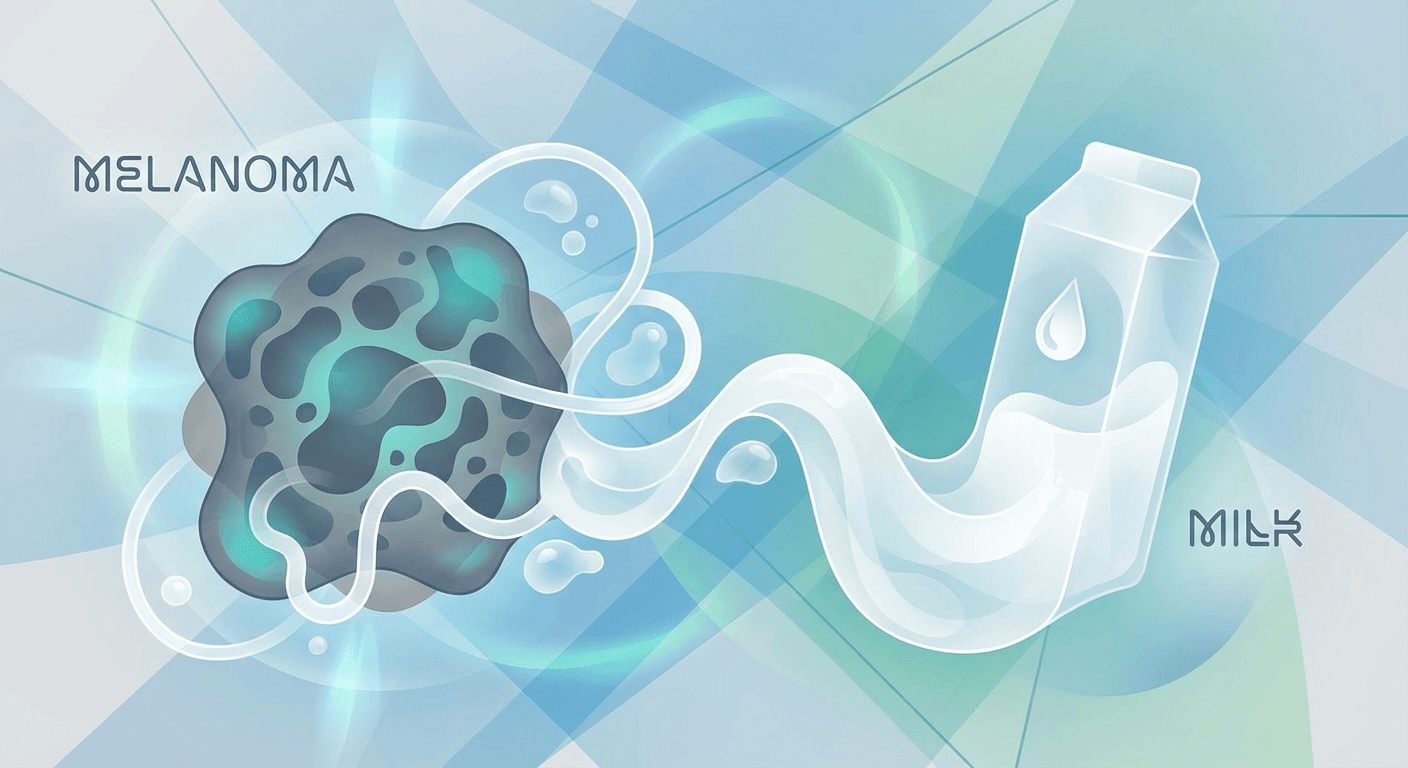
Based on PubMed | Does drinking milk increase the risk of melanoma?
Current evidence does not link milk consumption to increased melanoma risk. Melanoma risk is mainly driven by UV exposure, skin type, family history, and genetics. Focus on sun protection and skin monitoring rather than changing milk intake.
Does Drinking Milk Increase the Risk of Melanoma?
Based on current evidence, drinking milk does not appear to increase the risk of melanoma, and major melanoma risk factors remain tied to ultraviolet (UV) exposure, skin type, family history, and certain genetic variants rather than dairy intake. [1] [2] UV radiation from sunlight and tanning devices is the most established environmental driver of melanoma, while diet including milk has not been identified as a primary risk factor. [1] [2]
What Drives Melanoma Risk
- Ultraviolet exposure: Repeated UV exposure (sun or tanning beds) damages the DNA in pigment‑producing skin cells, increasing melanoma risk. [1] [3]
- Phenotype and genetics: Fair skin, light eyes/hair, many or atypical moles, older age, and certain inherited mutations (e.g., CDKN2A) are linked with higher risk. [2] [4]
- Sunburns: More sunburns across life stages are associated with higher melanoma risk, not just in childhood. [5]
These well‑characterized factors explain most melanoma burden; dietary links, including milk, have not shown consistent or strong associations with melanoma in reputable resources. [1] [2]
What Research Says About Milk and Cancer Generally
Large reviews of dairy and cancer risk report mixed findings across different cancers, with no clear signal implicating milk in melanoma:
- Potential benefits/neutrality: Evidence supports a lower risk for colorectal and bladder cancers with higher milk intake, while high calcium diets may raise prostate cancer risk; for most other cancers, evidence is inconsistent or lacking. [6]
- Safety at common intakes: Broad reviews suggest that typical recommended dairy intake (about three servings per day) is safe and does not seem to increase overall cancer risk. [7] [8]
Importantly, these evaluations do not identify a reliable link between milk consumption and melanoma specifically. [6] [7] [8]
Vitamin D, Dairy, and Melanoma: What’s Known
Vitamin D biology has been explored in melanoma, but separating its effects from UV exposure is difficult:
- Vitamin D receptors exist in melanocytes and melanoma cells, hinting at biological relevance. [9]
- Some observational work has suggested an inverse association between greater dietary/ dairy sources of vitamin D and melanoma outcomes, but confounding by sun exposure limits firm conclusions. [9]
Overall, there is no established recommendation to change milk intake to influence melanoma risk or outcomes. [9]
Mechanistic Concerns (IGF‑1) and Context
Dairy can modestly raise circulating insulin‑like growth factor‑1 (IGF‑1), which has been investigated in relation to certain cancers; however, this mechanism has not been tied convincingly to melanoma risk in humans. [10] Current clinical and epidemiologic evidence does not support avoiding milk to prevent melanoma. [7]
Practical Guidance for Reducing Melanoma Risk
If you’re focused on melanoma prevention, the most effective steps target UV exposure and personal risk factors:
- Sun protection: Use broad‑spectrum sunscreen (SPF 30+), wear protective clothing, and reapply sunscreen every 2 hours; avoid tanning beds. [11] [1]
- Skin awareness: Monitor for new or changing moles and seek professional evaluation of suspicious lesions. [1]
- Know your risk: People with fair skin, many moles, or family history should be particularly vigilant. [2] [4]
These actions have strong evidence for reducing melanoma risk, while modifying milk intake does not. [1] [2]
Bottom Line
- Current authoritative sources do not identify milk intake as a melanoma risk factor. [1] [2]
- UV exposure, phenotype, and genetics are the key drivers of melanoma risk. [1] [2] [4]
- Maintaining sensible sun safety habits offers the most reliable protection. [11] [1]
Summary Table: Factors Linked to Melanoma Risk vs. Milk
| Topic | Evidence for Melanoma Risk | Notes |
|---|---|---|
| UV exposure (sun, tanning beds) | Strongly increases risk | Primary environmental driver of melanoma. [1] [3] |
| Fair skin, many/atypical moles, family history | Increases risk | Includes genetic variants like CDKN2A. [2] [4] |
| Sunburns (childhood through adulthood) | Dose‑response increase in risk | More sunburns → higher risk across life stages. [5] |
| Milk/dairy intake | No consistent association | Large reviews do not implicate milk in melanoma; overall cancer risk not increased by typical intake. [6] [7] [8] |
| Vitamin D from diet/dairy | Unclear/possibly beneficial for outcomes | Confounded by sun exposure; no firm preventive recommendation. [9] |
| IGF‑1 from dairy | Mechanistic interest, no melanoma signal | Investigated in other cancers; melanoma link not supported. [10] |
If you have specific concerns about your skin type, sun exposure history, or family background, a dermatologist can help tailor a prevention and screening plan.
Related Questions
Related Articles
Sources
- 1.^abcdefghijkMelanoma Skin Cancer(stanfordhealthcare.org)
- 2.^abcdefghiMelanoma: MedlinePlus Medical Encyclopedia(medlineplus.gov)
- 3.^abMelanoma(mskcc.org)
- 4.^abcdMelanoma Risk Factors, Causes & Prevention(mskcc.org)
- 5.^abSunburns and risk of cutaneous melanoma: does age matter? A comprehensive meta-analysis.(pubmed.ncbi.nlm.nih.gov)
- 6.^abcDairy products and cancer.(pubmed.ncbi.nlm.nih.gov)
- 7.^abcdEvaluating the links between intake of milk/dairy products and cancer.(pubmed.ncbi.nlm.nih.gov)
- 8.^abcEvaluating the links between intake of milk/dairy products and cancer.(pubmed.ncbi.nlm.nih.gov)
- 9.^abcdVitamin D and melanoma.(pubmed.ncbi.nlm.nih.gov)
- 10.^abDiet, insulin-like growth factor-1 and cancer risk.(pubmed.ncbi.nlm.nih.gov)
- 11.^abMelanoma Risk Factors, Causes & Prevention(mskcc.org)
Important Notice: This information is provided for educational purposes only and is not intended to replace professional medical advice, diagnosis, or treatment. Always consult with a qualified healthcare provider before making any medical decisions.