
 Persly Medical Team
Based on PubMed | Does eating spicy food increase the risk of heart disease?
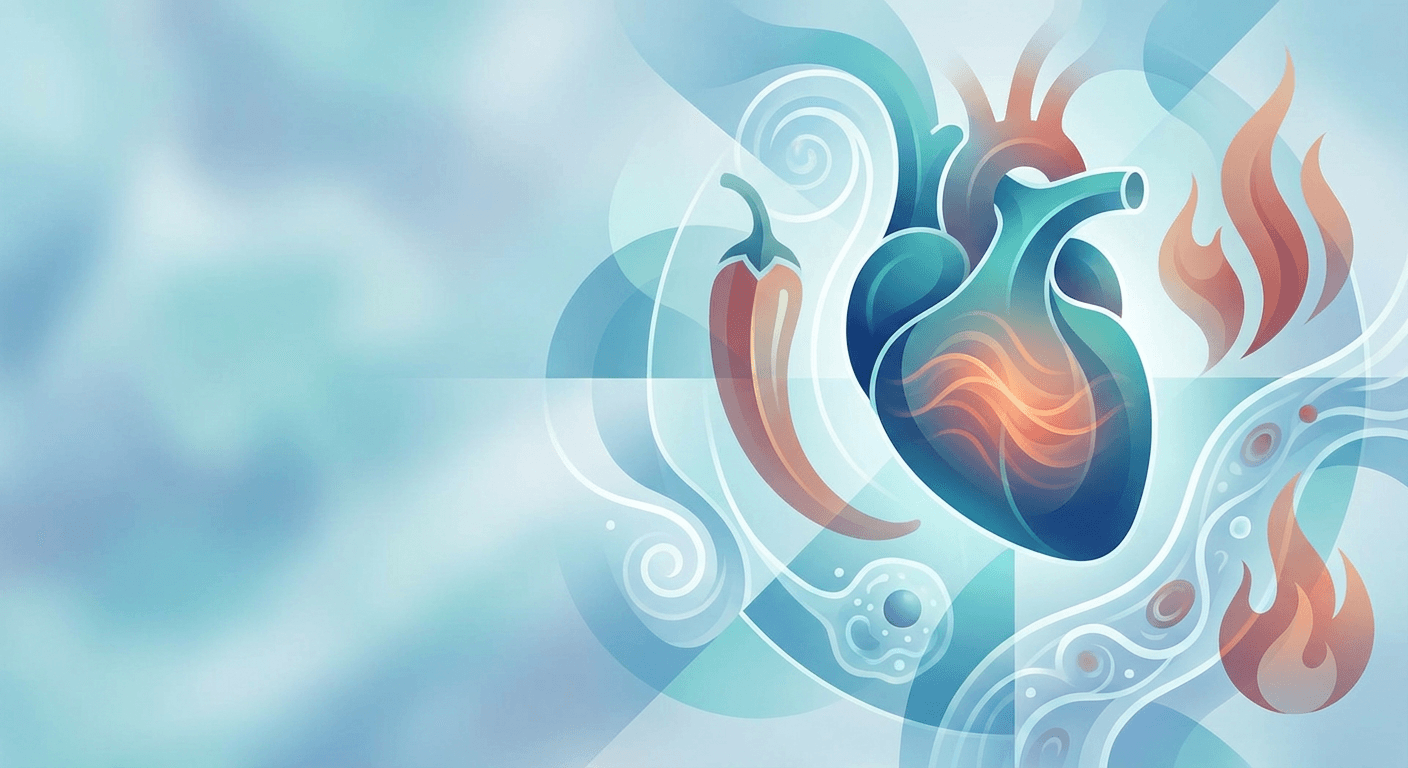
Current evidence does not show that eating spicy food increases heart disease risk; effects appear neutral or potentially beneficial. Using spices to replace salt can aid blood pressure and heart health, while overall diet quality matters more than spice level.
Eating spicy food does not appear to increase the risk of heart disease on its own, and it may even have neutral or potentially favorable effects when part of an overall heart‑healthy diet. Evidence in humans directly linking spicy food to higher rates of heart attacks or strokes is lacking, while broader heart‑health guidance emphasizes overall diet quality (like limiting sodium and unhealthy fats) rather than avoiding spices. [1] Spicy condiments that are low in sodium can sometimes help people use less salt, which is beneficial for blood pressure and heart health. [2] [3]
What the science suggests
- Animal and early mechanistic data: Studies in hamsters have found that capsaicinoids (the active compounds in chili peppers) reduced total cholesterol, improved artery relaxation, and decreased atherosclerotic plaque formation, alongside increased excretion of cholesterol breakdown products. [4] In another hamster study, capsaicinoids improved lipid profiles and vascular function, while similar compounds (capsinoids) did not show the same benefits. [5]
- Human physiology insights: Research suggests capsaicin can activate vascular pathways that promote nitric oxide release and vasodilation, which can help lower blood pressure, although these findings are largely mechanistic and not definitive outcomes trials. [6]
- Small human observations: A small observational study reported reductions in blood pressure among hypertensive individuals after combined capsaicin and isoflavone supplementation, while normotensive individuals did not see changes, which hints at a possible benefit but requires larger confirmation. [7]
Taken together, these findings are encouraging but preliminary, and they do not show that spicy foods raise heart disease risk; instead, they suggest possible neutral or modestly beneficial effects in certain contexts. [4] [5] [6] [7]
Diet patterns matter more than spice
- Big‑picture guidance: Heart‑healthy dietary patterns (like DASH or Mediterranean) are proven to reduce cardiovascular risk by emphasizing vegetables, fruits, whole grains, legumes, nuts, lean proteins, and healthy fats while keeping sodium, added sugars, and saturated fats low. [1] Regular physical activity, weight management, and not smoking are also key pillars. [8]
- Sodium vs. spice: High sodium intake raises blood pressure and cardiovascular risk; using spices, including chili, to flavor food can help people rely less on salt, supporting better blood pressure control. [1] Choosing chili sauce instead of high‑sodium soy sauce with foods like dumplings is one way to reduce sodium without sacrificing flavor. [2] [3]
When can spicy foods be a concern?
Spicy foods can trigger gastrointestinal discomfort (heartburn, reflux, or gastritis) in some people, and severe discomfort might indirectly affect food choices or medication adherence; however, this is not the same as increasing cardiovascular risk. If spicy meals lead you to consume high‑sodium sauces, deep‑fried dishes, or heavy portions of refined carbs, the associated items not the spice itself could raise risk over time. Prioritize low‑sodium, minimally processed, and balanced meals to maintain heart health. [1]
Practical tips for a heart‑smart spicy diet
- Use spice to replace salt: Season with chili, pepper, garlic, citrus, herbs, and aromatic vegetables to keep sodium down. [1] [2] [3]
- Pick heart‑healthy bases: Pair spices with vegetables, legumes, fish, skinless poultry, tofu, or whole grains instead of processed meats or deep‑fried foods. [1]
- Watch condiments: Many commercial hot sauces are low in calories but can vary in sodium check labels and favor low‑sodium options or make your own. [1]
- Balance the plate: Aim for half the plate as vegetables, one quarter lean protein, and one quarter whole grains, regardless of spice level. [1]
- Mind your symptoms: If you have reflux or gastritis, adjust spice level to comfort while focusing on the overall heart‑healthy pattern. [1]
Bottom line
There is no strong evidence that eating spicy food increases heart disease risk, and spice can be part of a heart‑healthy diet especially if it helps you cook at home and cut back on sodium. [1] Using spices to flavor nutrient‑dense foods while limiting salt, saturated fat, and ultra‑processed items aligns with the best‑supported strategies for cardiovascular prevention. [1] [8]
Related Questions
Related Articles

Sources
- 1.^abcdefghijkHeart disease and diet: MedlinePlus Medical Encyclopedia(medlineplus.gov)
- 2.^abcHeart Disease is Preventable(stanfordhealthcare.org)
- 3.^abcHeart Disease is Preventable(stanfordhealthcare.org)
- 4.^abCapsaicinoids lower plasma cholesterol and improve endothelial function in hamsters.(pubmed.ncbi.nlm.nih.gov)
- 5.^abCapsaicinoids but not their analogue capsinoids lower plasma cholesterol and possess beneficial vascular activity.(pubmed.ncbi.nlm.nih.gov)
- 6.^abA new way to lower blood pressure: pass the chili peppers please!(pubmed.ncbi.nlm.nih.gov)
- 7.^abEffects of capsaicin and isoflavone on blood pressure and serum levels of insulin-like growth factor-I in normotensive and hypertensive volunteers with alopecia.(pubmed.ncbi.nlm.nih.gov)
- 8.^abPreventing Heart Disease Q&A(stanfordhealthcare.org)
Important Notice: This information is provided for educational purposes only and is not intended to replace professional medical advice, diagnosis, or treatment. Always consult with a qualified healthcare provider before making any medical decisions.