
 Persly Medical Team
Based on NIH | Does eating spicy food increase the risk or progression of fatty liver disease?
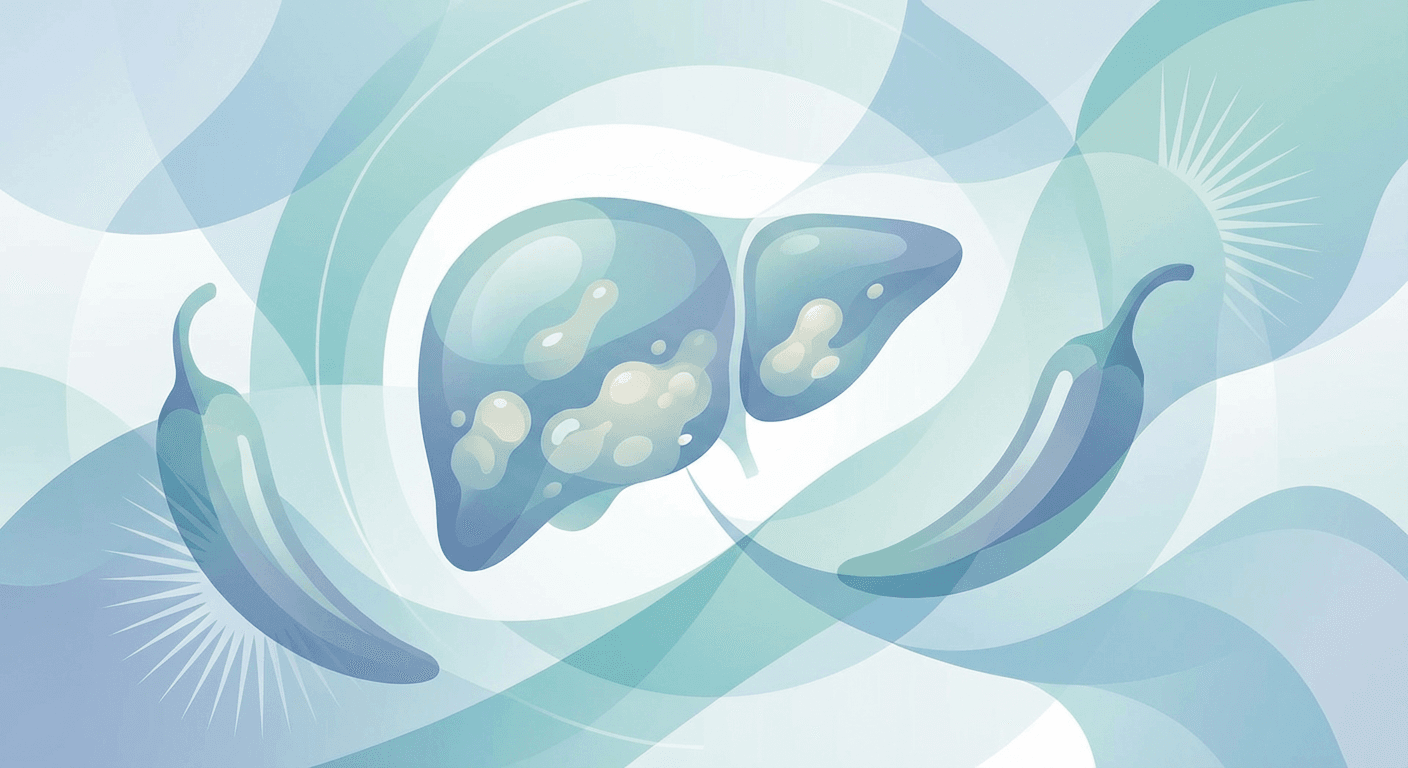
There is no clear evidence that spicy foods increase the risk or progression of fatty liver disease, and guidelines do not advise avoiding spice. Management should focus on weight control, regular exercise, limiting alcohol, and controlling metabolic risks; capsaicin shows promising animal data but no proven human NAFLD benefit.
Spicy Food and Fatty Liver: What We Know and Don’t Know
Short answer: There isn’t good evidence that spicy food itself increases the risk of fatty liver disease, and no major guidelines list spicy foods as a cause or driver of progression. Current clinical advice for fatty liver focuses on weight control, exercise, limiting alcohol, managing diabetes and cholesterol, and following an overall healthy diet rather than avoiding spice. [1] [2]
Understanding Fatty Liver Disease
- Fatty liver disease means excess fat builds up in the liver and can be due to heavy alcohol use (alcoholic fatty liver) or occur without heavy alcohol use (nonalcoholic fatty liver disease, NAFLD). [3]
- NAFLD is more common in people with obesity, type 2 diabetes or prediabetes, and is seen more in midlife and in some ethnic groups. These metabolic factors are the main drivers, not spicy foods. [4]
Do Guidelines Warn Against Spicy Foods?
- Major clinical resources emphasize lifestyle changes like a healthy, calorie‑appropriate diet, regular exercise, vaccination as appropriate, and caution with supplements or alcohol. They do not single out spicy food as a risk for NAFLD or as a factor that worsens disease. [1] [2]
What Research Says About Capsaicin
Capsaicin is the compound that makes chili peppers “hot.” Human and animal research has explored whether it can influence metabolism and liver fat:
- In animal and cell studies, chronic dietary capsaicin activated the TRPV1 pathway, increased fat burning signals, enhanced autophagy (cellular cleanup), and prevented fatty liver in mice, while lowering liver inflammation markers in wild‑type animals. These benefits were not seen in mice lacking TRPV1, suggesting a specific mechanism. [5]
- In a small human randomized trial, non‑pungent “capsinoids” (related to capsaicin) taken for 12 weeks were well tolerated and linked to a small reduction in abdominal fat and a trend toward higher fat oxidation, though overall weight loss was not different from placebo. This study did not test liver fat or liver outcomes directly. [6]
Taken together, early research suggests capsaicin might support fat metabolism, at least in animals, but there is no clinical proof that spicy foods prevent or treat NAFLD in humans, and no recommendation to use chili or capsaicin as a therapy.
Practical Nutrition Guidance for NAFLD
- The strongest, guideline‑consistent steps are: achieve and maintain a healthy weight, be physically active, limit or avoid alcohol, and manage metabolic risks (blood sugar, blood pressure, lipids). A generally healthy eating pattern (Mediterranean‑style, high in vegetables, fiber, lean proteins, and healthy fats) is favored. [1]
- Coffee with caffeine has been associated with lower risk of liver disease and scarring in some studies, though the mechanism is not fully understood. Coffee is sometimes discussed as possibly beneficial for liver health. [7]
Safety and Individual Tolerance
- Spicy foods can irritate the stomach or worsen reflux in some people, but there is no established link between spice and liver damage or fatty liver progression in otherwise appropriate diets. [1]
- If you have cirrhosis or advanced liver disease, you should be cautious with herbal supplements and nonprescription products and discuss them with your care team, because some can harm the liver. This caution is about supplements, not culinary spices used in normal amounts. [8]
Key Takeaways
- No clear evidence shows that spicy foods increase the risk or progression of fatty liver disease. [1]
- Guideline‑backed changes prioritize weight loss (if needed), exercise, and overall healthy eating, not avoidance of spice. [1] [2]
- Capsaicin shows liver‑protective signals in animal studies, but human evidence for NAFLD outcomes is insufficient, so it isn’t a recommended treatment. [5] [6]
Table: What Matters Most for NAFLD vs. Spicy Food
-
Factor: Excess calorie intake/weight gain
- Role: Increases risk and progression
- Action: Calorie control, weight loss target individualized (often 7–10%)
- Evidence/Guidance: Emphasized in lifestyle recommendations [1]
-
Factor: Physical inactivity
- Role: Worsens metabolic health
- Action: Regular exercise (aerobic + resistance)
- Evidence/Guidance: Recommended to reduce liver fat and improve insulin sensitivity [2]
-
Factor: Alcohol (heavy use)
-
Factor: Spicy foods (capsaicin)
If you enjoy spicy food and it doesn’t cause stomach or reflux symptoms, it can generally fit into a healthy eating plan for fatty liver, with the main focus on overall calories, nutrient quality, and metabolic health. [1]
Related Questions
Related Articles
Sources
- 1.^abcdefghiFatty Liver Disease(medlineplus.gov)
- 2.^abcdFatty Liver Disease(medlineplus.gov)
- 3.^↑Fatty Liver Disease(medlineplus.gov)
- 4.^↑Fatty Liver Disease(medlineplus.gov)
- 5.^abcDietary capsaicin prevents nonalcoholic fatty liver disease through transient receptor potential vanilloid 1-mediated peroxisome proliferator-activated receptor δ activation.(pubmed.ncbi.nlm.nih.gov)
- 6.^abcEffects of novel capsinoid treatment on fatness and energy metabolism in humans: possible pharmacogenetic implications.(pubmed.ncbi.nlm.nih.gov)
- 7.^↑Nonalcoholic fatty liver disease - Diagnosis and treatment(mayoclinic.org)
- 8.^↑Nonalcoholic fatty liver disease - Diagnosis and treatment(mayoclinic.org)
- 9.^↑Fatty Liver Disease(medlineplus.gov)
- 10.^↑Fatty Liver Disease(medlineplus.gov)
Important Notice: This information is provided for educational purposes only and is not intended to replace professional medical advice, diagnosis, or treatment. Always consult with a qualified healthcare provider before making any medical decisions.