
 Persly Medical Team
Based on PubMed | Is it true that eating eggs can cause or worsen fatty liver disease?
Eggs alone do not cause fatty liver, and moderate intake can fit into a healthy diet without worsening liver fat. Overall calorie balance, added sugars, saturated/trans fats, and physical activity drive NAFLD risk more than any single food. If you have high LDL or diabetes, consider limiting egg yolks and focus on weight loss and Mediterranean-style eating.
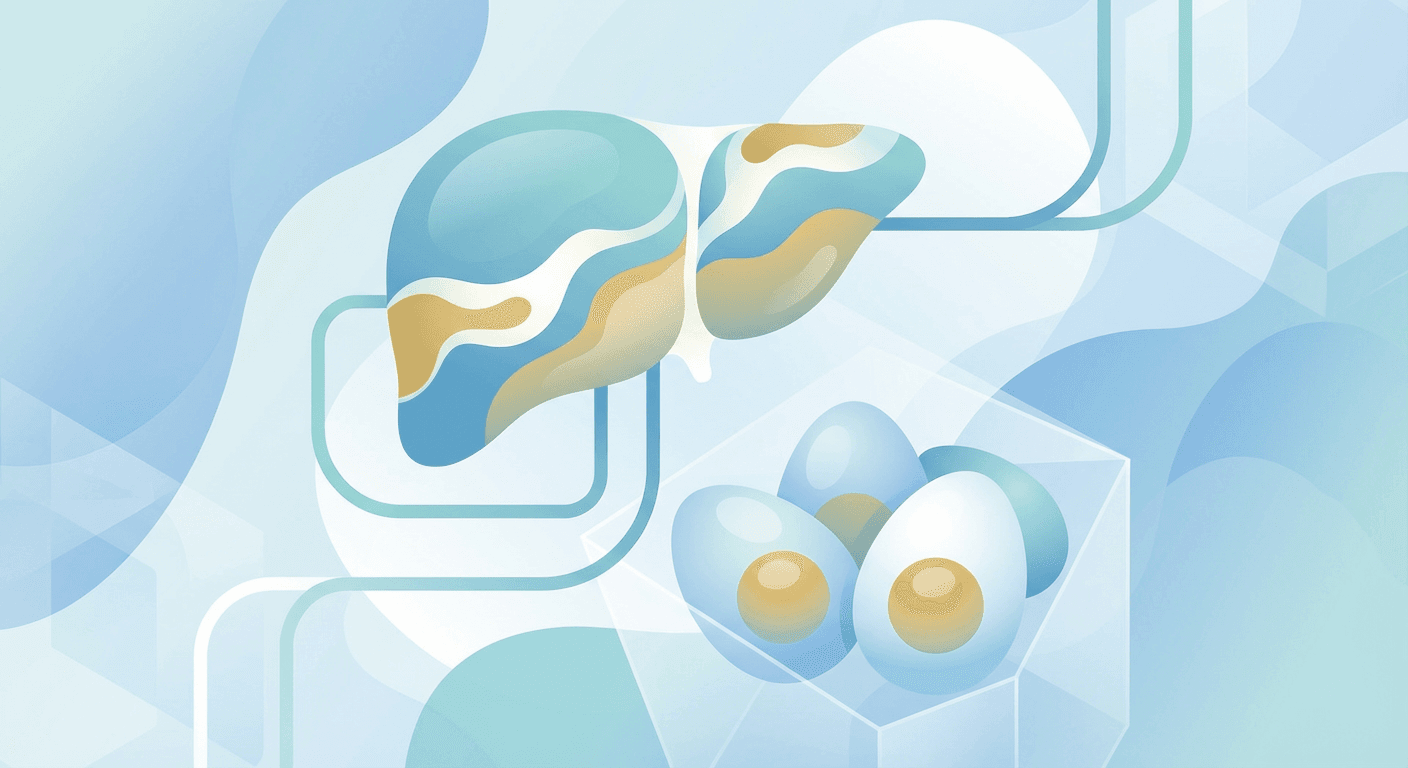
Eating eggs alone does not directly cause fatty liver disease, and for most people, moderate egg intake can fit into a healthy diet without worsening liver fat. What matters more is your overall calorie balance, body weight, and the pattern of your diet especially excess calories, saturated/trans fats, added sugars (notably fructose), and low physical activity. In other words, eggs by themselves are unlikely to be the main driver of fatty liver; the broader diet and lifestyle usually play a bigger role. [1] [2]
What the science says
-
Calorie balance and macronutrients: Short‑term overfeeding reliably increases liver fat, while calorie reduction decreases it, regardless of whether the diet is lower in fat or lower in carbs. Certain nutrients fructose, trans fat, and saturated fat appear to raise liver fat beyond calories alone, whereas mono‑ and omega‑3 fats may be protective. [1]
-
Dietary patterns in NAFLD: Diets high in trans/saturated fats, cholesterol, and sugary beverages tend to increase liver fat and inflammation, while hypocaloric diets with healthier fats and proteins reduce liver fat; sustained adherence is key. A weight loss of 3–5% can reduce steatosis, and about 10% may be needed to improve liver inflammation. [2]
-
Cholesterol’s role: Disordered cholesterol metabolism is implicated in NAFLD, and some data link higher dietary cholesterol to steatosis and progression in certain settings; however, the exact impact in humans remains debated and likely varies by individual risk factors. Managing dietary cholesterol may be reasonable for some people, but it is not the sole focus of NAFLD care. [3]
Where eggs fit in
-
Eggs provide high‑quality protein and choline, a nutrient that supports liver fat transport. Higher choline intake of which eggs are a major source has been associated with a lower likelihood of fatty liver in some populations, particularly normal‑weight women. [4]
-
Egg cholesterol and blood lipids: Adding an egg a day can modestly raise LDL cholesterol in some individuals, especially women, though effects vary and often do not worsen liver function markers. How eggs are cooked and what you eat with them (e.g., bacon, butter) can influence overall risk more than the egg itself. [5]
-
Context matters: In animal models, combining high cholesterol with high fat acts synergistically to worsen steatohepatitis; this supports the idea that eggs eaten within an overall high‑fat, high‑calorie diet could contribute to problems, whereas eggs in a balanced, calorie‑appropriate diet are unlikely to independently drive NAFLD. Thus, the overall dietary pattern, not a single food, determines risk. [6]
Practical guidance if you have fatty liver
-
Focus on the big levers:
- Aim for gradual weight loss if you carry excess weight; even 3–5% loss reduces liver fat, and ~10% may improve inflammation. [2]
- Cut back on added sugars (especially sugary drinks), trans fats, and saturated fats, and prioritize whole foods, vegetables, whole grains, legumes, nuts, fish, and olive oil. [1] [2]
- Stay active with both aerobic and resistance exercise, which helps liver and metabolic health. [2]
-
Eggs in moderation:
- For many people with or without fatty liver, up to about one egg per day can fit into a balanced plan, especially if the rest of your diet is heart‑healthy and calorie‑appropriate. [5]
- If you have high LDL cholesterol, diabetes, or a strong family history of heart disease, consider limiting egg yolks and emphasizing egg whites, and reassess with your clinician based on your lipid profile and overall diet. [5]
-
Cooking and pairings:
-
Choline matters:
- Because choline deficiency can promote liver fat, keeping some choline‑rich foods like eggs, fish, soy, or legumes in a balanced diet may be beneficial, especially if you limit overall calories and unhealthy fats. [4]
Quick comparison: Eggs within different eating patterns
| Pattern | Likely impact on liver fat | Notes |
|---|---|---|
| Egg in a calorie‑controlled, Mediterranean‑style diet | May be neutral or supportive | Quality protein and choline; overall pattern reduces liver fat. [1] [2] |
| Egg paired with vegetables/whole grains, minimal saturated fat | Likely neutral | Cooking method and sides matter. [1] [2] |
| Multiple eggs within a high‑fat, high‑calorie, processed diet | Possible worsening | Synergy of high fat + cholesterol in animal models; total calories key. [6] |
| Egg‑heavy intake with elevated LDL or diabetes | Individualized | Consider limiting yolks and monitoring lipids. [5] |
Bottom line
- Eggs do not inherently cause fatty liver disease, and moderate egg intake can be part of a liver‑friendly diet when calories, saturated/trans fats, and added sugars are kept in check and physical activity is maintained. [1] [2]
- Some individuals especially those with high LDL cholesterol or diabetes may benefit from limiting egg yolks and focusing on egg whites, while prioritizing overall dietary quality and weight management. Discuss personal targets with your clinician based on your labs and risk factors. [5]
If you are adjusting your diet for fatty liver, emphasizing total calorie control, healthier fats, fiber‑rich foods, and regular exercise will likely help more than avoiding any single food, including eggs. [1] [2]
Related Questions
Related Articles

Sources
- 1.^abcdefghImplications of diet on nonalcoholic fatty liver disease.(pubmed.ncbi.nlm.nih.gov)
- 2.^abcdefghijRole of diet and nutritional management in non-alcoholic fatty liver disease.(pubmed.ncbi.nlm.nih.gov)
- 3.^↑Nutrition and nonalcoholic Fatty liver disease: the significance of cholesterol.(pubmed.ncbi.nlm.nih.gov)
- 4.^abHigher dietary choline intake is associated with lower risk of nonalcoholic fatty liver in normal-weight Chinese women.(pubmed.ncbi.nlm.nih.gov)
- 5.^abcdeThe influence of consuming an egg or an egg-yolk buttermilk drink for 12 wk on serum lipids, inflammation, and liver function markers in human volunteers.(pubmed.ncbi.nlm.nih.gov)
- 6.^abSynergistic interaction of dietary cholesterol and dietary fat in inducing experimental steatohepatitis.(pubmed.ncbi.nlm.nih.gov)
Important Notice: This information is provided for educational purposes only and is not intended to replace professional medical advice, diagnosis, or treatment. Always consult with a qualified healthcare provider before making any medical decisions.