
 Persly Medical Team
Based on NIH | Is it true that people with chronic kidney disease should avoid turmeric or curcumin supplements, and is turmeric included on CKD avoid lists?
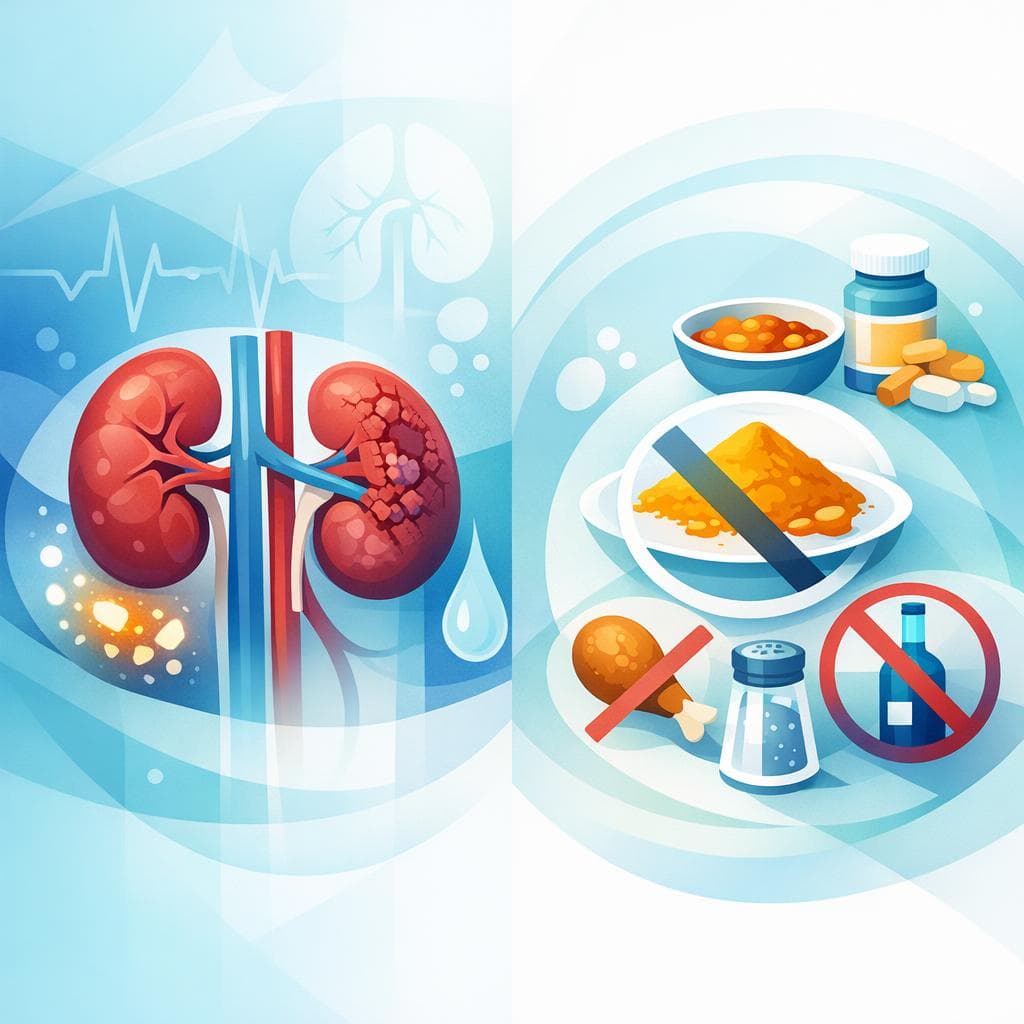
Turmeric is not typically listed as a food to avoid in CKD, and small culinary amounts are generally acceptable. However, turmeric/curcumin supplements should be avoided or used only with clinician approval due to potential kidney risks, interactions, and variable product quality; evidence of benefit remains preliminary.
Turmeric and Curcumin in Chronic Kidney Disease (CKD): What You Should Know
People living with chronic kidney disease are often advised to be cautious with vitamins, herbs, and supplements because some can harm the kidneys or interfere with medicines. In general guidance for CKD self‑care, users are told to talk with their clinician before taking any over‑the‑counter products, including herbs and supplements. [1] Public health guidance for those with kidney disease also recommends avoiding herbal supplements unless a clinician approves them, because some can worsen kidney problems. [2] [3] Because turmeric and curcumin are popular herbal products, they fall under this precautionary umbrella. [1]
Is turmeric on “CKD avoid lists”?
Most official CKD nutrition pages focus on minerals like sodium, potassium, and phosphorus and do not routinely list turmeric as a specific food to avoid. They do emphasize using herbs to flavor food instead of salt, while warning against potassium‑containing salt substitutes. [4] [5] In those general diet resources, turmeric is not singled out as a prohibited spice for culinary use. [4] [5] However, separate CKD self‑management advice consistently says to consult a clinician before using any herbal supplements, without naming turmeric specifically. [1] [2] [3]
Culinary turmeric vs. supplements
- Culinary turmeric: Small amounts of turmeric used in cooking are generally considered reasonable for many people with CKD, as diet guidance encourages herbs and spices to season food when potassium‑containing salt substitutes are avoided. [4] [5]
- Supplements: Concentrated turmeric or curcumin pills and powders are treated like other herbal supplements and should not be started without medical advice in CKD. [1] [2] [3]
Why caution is advised with turmeric/curcumin supplements in CKD
- General supplement risk in CKD: Kidney disease changes how the body handles drugs and supplements, and some herbal products have been linked to kidney injury or can interact with prescription medicines. Therefore, broad guidance advises against taking herbal supplements without clinician oversight. [1] [2] [3]
- Kidney stones and oxalate: Calcium oxalate stones are the most common kidney stones and are tied to oxalate load from diet. [6] Oxalate‑rich foods (for stone‑formers) include items like beets, nuts, chocolate, and spinach. [7] While standard lists don’t routinely name turmeric among top oxalate foods, the general principle is that extra oxalate intake can raise stone risk in susceptible people, so any concentrated plant‑derived supplement should be considered carefully if you have a history of calcium oxalate stones. [6] [7]
- Product variability and contamination: Herbal products are not regulated like prescription medicines, and quality can vary, which adds uncertainty for those with CKD who are more vulnerable to adverse effects. This is a key reason officials advise against unsupervised herbal supplement use in kidney disease. [1] [2] [3]
What the evidence suggests about potential benefits
Early research and reviews suggest curcumin’s anti‑inflammatory actions may help certain CKD‑related pathways and may reduce protein in the urine (proteinuria) in some studies, but these findings are preliminary and not yet part of standard CKD treatment. [8] Some randomized trial summaries report a reduction in proteinuria with turmeric/curcumin supplementation, though more rigorous, larger trials are needed to confirm long‑term safety and efficacy in CKD. [9]
Practical takeaways
- Turmeric as a spice: Using normal culinary amounts to flavor food is generally compatible with CKD diet advice that favors herbs and spices over salt, provided you follow your dietitian’s individual guidance on potassium and other minerals. [4] [5]
- Curcumin/turmeric supplements: Because they are concentrated herbal products, they fall into the “avoid unless your clinician approves” category for people with CKD. Always discuss dose, formulation, possible drug interactions, and your stage of CKD with your care team before starting a supplement. [1] [2] [3]
- Stone‑formers: If you have a history of calcium oxalate stones, be especially careful with any high‑oxalate foods or concentrated plant supplements that could add to oxalate load. Individualized advice from your clinician or dietitian is best. [6] [7]
Bottom line
- Turmeric is not typically listed as a banned spice in CKD diet guides, and small culinary amounts are usually acceptable within individualized meal plans. [4] [5]
- Turmeric/curcumin supplements are herbal products and should be avoided or used only with medical approval in CKD due to potential kidney risks, interactions, and product variability. [1] [2] [3]
Related Questions
Related Articles

Sources
- 1.^abcdefghChronic kidney disease: MedlinePlus Medical Encyclopedia(medlineplus.gov)
- 2.^abcdefgDiabetes and Kidney Disease: What to Eat?(cdc.gov)
- 3.^abcdefgDiabetes and Kidney Disease: What to Eat?(cdc.gov)
- 4.^abcdeDiet - chronic kidney disease: MedlinePlus Medical Encyclopedia(medlineplus.gov)
- 5.^abcdeDiet - chronic kidney disease: MedlinePlus Medical Encyclopedia(medlineplus.gov)
- 6.^abcKidney stones - Symptoms and causes(mayoclinic.org)
- 7.^abcKidney stones - self-care: MedlinePlus Medical Encyclopedia(medlineplus.gov)
- 8.^↑Curcumin and chronic kidney disease (CKD): major mode of action through stimulating endogenous intestinal alkaline phosphatase.(pubmed.ncbi.nlm.nih.gov)
- 9.^↑Efficacy and Safety of Turmeric Dietary Supplementation on Proteinuria in CKD: A Systematic Review and Meta-analysis of RCT.(pubmed.ncbi.nlm.nih.gov)
Important Notice: This information is provided for educational purposes only and is not intended to replace professional medical advice, diagnosis, or treatment. Always consult with a qualified healthcare provider before making any medical decisions.