
 Persly Medical Team
Based on PubMed | Does regularly eating spicy food increase the risk of developing chronic kidney disease or accelerate its progression?
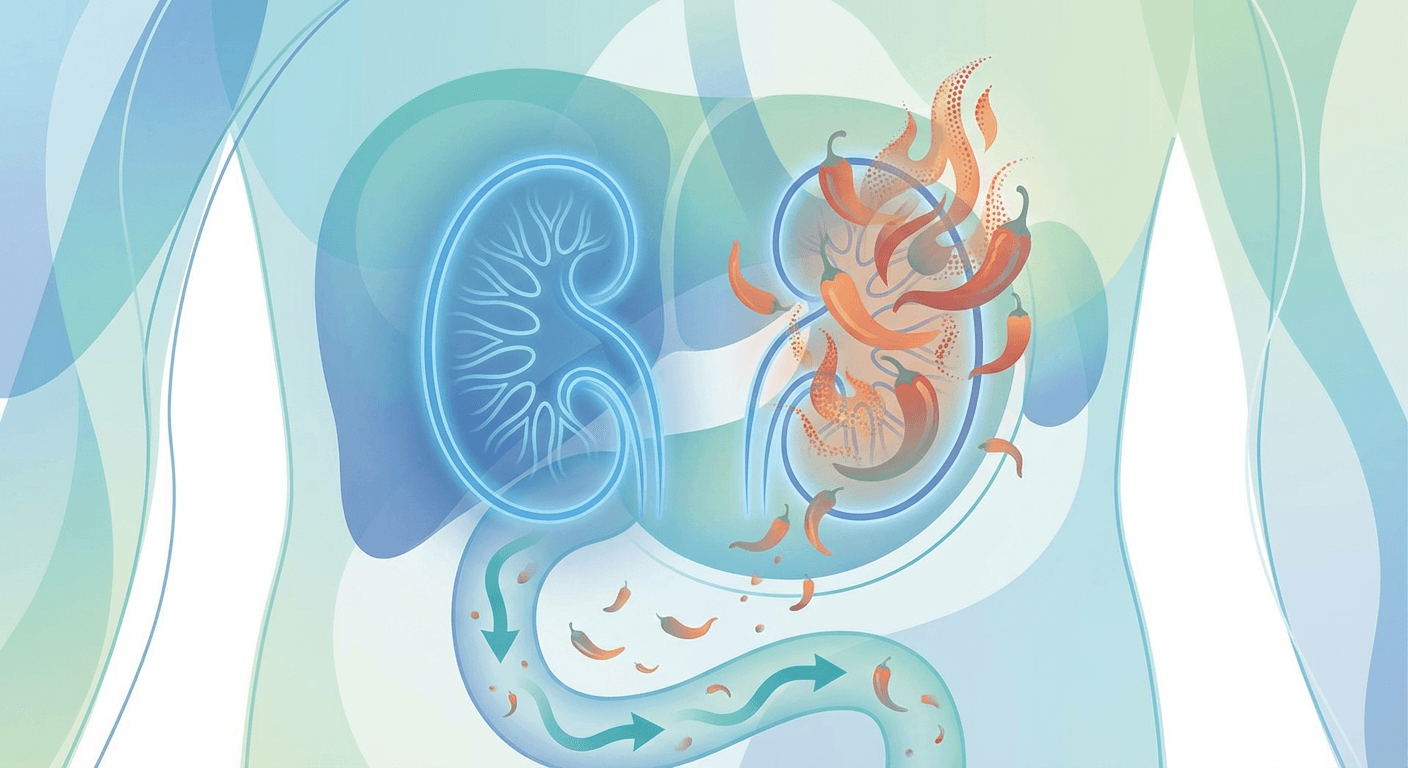
Current human evidence does not show that regularly eating spicy foods increases the risk of chronic kidney disease (CKD) or accelerates its progression. Kidney risk is driven more by sodium intake, overall diet quality, protein load, and metabolic factors; spices and chilies can fit into a kidney-friendly, low-sodium, plant-forward pattern.
Regularly eating spicy food is not known to increase the risk of developing chronic kidney disease (CKD) or to speed its progression based on current human evidence. Most high‑quality data on CKD and diet point to overall dietary patterns (salt, protein load, processed foods, plant emphasis) rather than spiciness itself as key drivers of kidney risk, and none of the major kidney prevention or CKD diet guidance lists spicy foods as a risk factor. [1] [2]
What authoritative guidance says
- Public health and clinical nutrition guidance for kidney health emphasize limiting sodium (salt), moderating protein, choosing plant‑forward patterns, and managing blood pressure and diabetes. Spicy foods are not singled out as harmful. [1] [2]
- In CKD, diet advice focuses on sodium, protein, phosphorus, potassium, and saturated fat because these directly affect blood pressure, kidney workload, and mineral balance. Again, spiciness per se is not a target. [2]
What the research shows about diet and CKD
- Large cohort studies link “Western” eating patterns (high in processed meats, saturated fats, and sweets) to faster kidney function decline and more albumin in the urine, while DASH‑style or plant‑rich patterns appear protective. These findings are about overall diet quality, not spiciness. [3] [4] [5]
- In people with established CKD, a plant‑forward pattern is associated with lower mortality risk, whereas diets high in fried/processed foods are associated with higher risk; no signal implicates spicy foods specifically. Quality and composition matter more than heat level. [4]
Capsaicin and the kidney: what we know (mostly animal data)
- Capsaicin (the compound that makes chili peppers hot) activates a receptor called TRPV1. In animal models of acute kidney injury, stimulating TRPV1 with capsaicin reduced kidney damage after ischemia/reperfusion. These protective effects are experimental and in animals, not proof for humans with CKD. [6]
Practical implications for spicy foods
- For most people, including those with CKD, spices and chili peppers can fit into a kidney‑friendly diet when the overall pattern is right low in sodium, balanced in protein, plant‑forward, and low in saturated fat. [2]
- The main dietary lever for kidney risk linked to many spicy dishes is often the sodium added through sauces, pastes, and processed components, not the spice itself. Keeping salt low is one of the most supported ways to protect kidney health. [2]
Evidence‑based kidney diet priorities
- Limit sodium to help control blood pressure and fluid balance. High blood pressure is a leading cause and accelerator of CKD. [1] [2]
- Choose a plant‑forward pattern (fruits, vegetables, whole grains, legumes) tailored to your kidney stage and mineral needs. Plant‑based patterns are associated with better outcomes in CKD. [2]
- Moderate total protein to avoid excess kidney workload, with individual targets set by your care team. Protein needs vary by CKD stage. [2]
- Reduce saturated fats and ultra‑processed foods that cluster in “Western” diet patterns associated with worse kidney outcomes. This pattern, not spiciness, tracks with faster decline. [3]
How to enjoy spicy food while protecting kidneys
- Use fresh spices and chilies to season instead of high‑sodium sauces and pastes. This preserves flavor without the kidney risk from salt. [2]
- If you buy premade spicy products, choose low‑sodium options and check labels for sodium per serving. Sodium control is a top priority. [2]
- Pair spicy dishes with plant‑forward sides (vegetables, whole grains, legumes) and lean proteins to align with protective patterns. Overall diet quality matters most. [2] [3]
Bottom line
- There is no strong human evidence that regularly eating spicy food increases CKD risk or accelerates progression. Kidney risk is driven far more by blood pressure, diabetes, and overall dietary pattern especially sodium, protein load, saturated fat, and degree of processing than by spiciness. [1] [2] [3] [4]
- If you like spicy foods, you can generally keep them in your diet while focusing on kidney‑protective fundamentals, especially keeping sodium low and choosing a plant‑forward, minimally processed pattern. Work with your care team or a dietitian to tailor advice to your kidney function and lab values. [2]
Quick reference: diet factors with known CKD impact
| Factor | Impact on CKD risk/progression | Key notes |
|---|---|---|
| Sodium (salt) | Increases blood pressure and fluid burden; higher risk of CKD and faster progression | Prioritize low‑sodium cooking and products. [1] [2] |
| Overall pattern (Western vs. DASH/plant‑rich) | Western linked to albuminuria and faster eGFR decline; DASH/plant‑rich linked to slower decline | Focus on whole foods; limit processed/fried foods. [3] [4] |
| Protein amount | Excess can increase kidney workload; moderation may slow progression | Targets vary by CKD stage; individualize. [2] |
| Saturated fat/processed foods | Associated with worse outcomes and cardiovascular risk | Replace with unsaturated fats and whole foods. [3] [2] |
| Spiciness/capsaicin | No clear human evidence of harm to CKD risk or progression | Watch sodium in spicy sauces; spice itself is not a listed risk. [2] |
If you’d like, I can help review a favorite spicy dish and show simple swaps to keep it kidney‑friendly.
Related Questions
Related Articles

Sources
- 1.^abcdePreventing Chronic Kidney Disease(cdc.gov)
- 2.^abcdefghijklmnopqEating right for chronic kidney disease(mayoclinic.org)
- 3.^abcdefAssociation of dietary patterns with albuminuria and kidney function decline in older white women: a subgroup analysis from the Nurses' Health Study.(pubmed.ncbi.nlm.nih.gov)
- 4.^abcdDietary patterns and risk of death and progression to ESRD in individuals with CKD: a cohort study.(pubmed.ncbi.nlm.nih.gov)
- 5.^↑A better diet quality is associated with a reduced likelihood of CKD in older adults.(pubmed.ncbi.nlm.nih.gov)
- 6.^↑Role of TRPV1 channels in ischemia/reperfusion-induced acute kidney injury.(pubmed.ncbi.nlm.nih.gov)
Important Notice: This information is provided for educational purposes only and is not intended to replace professional medical advice, diagnosis, or treatment. Always consult with a qualified healthcare provider before making any medical decisions.