
 Persly Medical Team
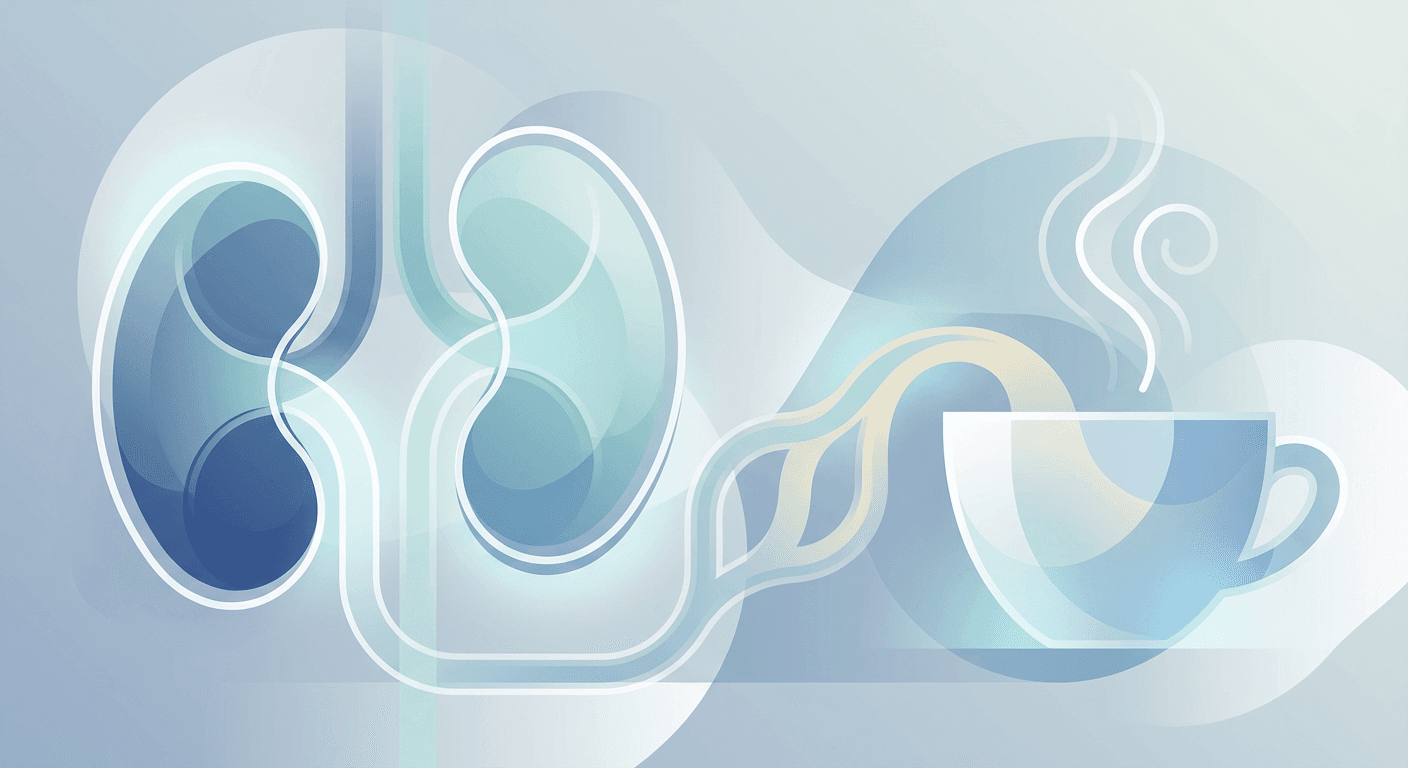
Based on PubMed | Does drinking coffee worsen chronic kidney disease progression, or is moderate coffee intake generally safe for people with CKD?
Most evidence suggests moderate coffee intake (about 1–3 cups/day) is generally safe for people with CKD and does not appear to accelerate progression when blood pressure and overall diet are well controlled. Because caffeine can raise blood pressure in some people, monitor your BP response, follow your clinician’s targets, and consider decaf or lower doses if you’re sensitive; focus on proven drivers like hypertension, diabetes, sodium/protein intake, and albuminuria.
Moderate coffee and CKD: what we know Most evidence suggests that moderate coffee intake is generally safe for people with chronic kidney disease (CKD), and it does not appear to accelerate CKD progression when blood pressure, protein intake, and overall diet are well managed. [1] That said, recommendations can vary because caffeine may raise blood pressure in some individuals and caffeine is sometimes advised to be limited in CKD care plans. [2] [3]
Why guidance can sound mixed
- Some kidney education materials advise limiting alcohol and caffeine because they can place extra demand on the kidneys or raise blood pressure, which is a key driver of CKD progression. [3] [2]
- Broader clinical guidance for CKD focuses on controlling blood pressure, diabetes, and dietary sodium and protein, rather than specifically banning coffee. [1] [4]
In practice, many clinicians allow moderate coffee (for example, up to about 1–3 cups/day, which keeps most adults below 400 mg/day of caffeine) if blood pressure is well controlled and there are no symptoms like palpitations or sleep disruption. [5] Controlling the underlying causes and risk factors has a larger proven impact on CKD outcomes than avoiding coffee alone. [4] [2]
What research shows about coffee and kidney function
- Short clinical trials in healthy adults show coffee can transiently increase cystatin‑C–based estimated GFR, with neutral effects on creatinine-based eGFR over a couple of weeks; these short studies are small and not in CKD. [6] Evidence from healthy cohorts also links habitual coffee drinking with slightly higher eGFR and no increase in protein in urine, though this is observational. [7]
- For CKD progression, the strongest risk factors are albuminuria (protein in urine), lower baseline eGFR, hypertension, and diabetes; endpoints like eGFR decline and progression to kidney failure are driven mainly by these factors, not by coffee per se. [8] [9]
Overall, human data do not show that moderate coffee accelerates CKD progression, and some observational data in non‑CKD populations suggest neutral or even favorable associations; however, direct randomized trials in CKD are lacking, so personalized advice matters. [6] [7]
Blood pressure matters
Caffeine can raise blood pressure for several hours in people who are sensitive, and high blood pressure is a major driver of CKD progression. [5] Keeping blood pressure controlled is one of the most important ways to slow CKD progression, often with ACE inhibitors or ARBs when appropriate. [4] [2] If coffee elevates your readings or causes symptoms, reducing dose, spacing intake earlier in the day, or switching to half‑caf/decaf can be reasonable. [5]
Practical guidance for people with CKD
- Dose and timing: Many adults can stay within 1–3 cups/day of brewed coffee and remain under the commonly cited 400 mg/day caffeine limit; individual tolerance varies. [5] If your clinician set a lower limit due to blood pressure or sleep issues, that advice takes priority. [4]
- Monitor blood pressure: Check home BP within 1–2 hours after coffee to see if caffeine meaningfully raises your readings; aim to keep BP within your care team’s targets. [4] [2]
- Watch the add‑ins: Excess sugar and high‑phosphorus creamers or “phos”-containing additives are best avoided in CKD; simple brewed coffee itself is low in phosphorus and potassium compared with many bottled teas or colas with phosphate additives. [10] [11]
- Hydration and fluid limits: Follow your individualized fluid plan; some with advanced CKD require fluid restriction, so coffee volume counts toward your daily total. [3]
- Overall kidney‑protective habits: Limiting sodium and, in many cases, moderating protein helps slow CKD progression; these have stronger impacts than tweaking coffee alone. [12] [13] Managing the underlying cause (for example, diabetes, hypertension) is central to slowing progression. [4] [2]
When to be more cautious
Consider stricter limits or switching to decaf if:
- Your blood pressure spikes with caffeine or is hard to control despite medication. [5] [4]
- You have troubling palpitations, anxiety, or insomnia after coffee. [5]
- Your clinician advised specific restrictions due to advanced CKD, heart rhythm issues, or pregnancy. [4] [2]
Key takeaways
- Moderate coffee intake is generally compatible with CKD care and is unlikely to worsen progression when blood pressure and other risk factors are well controlled. [1] [4]
- The main CKD progression drivers are hypertension, albuminuria, diabetes, and declining eGFR; focusing on these yields the greatest benefit. [8] [9] [2]
- Personalize your approach: track your blood pressure response to coffee, limit sugary/phosphate‑additive creamers, and stay within your care team’s nutrition and fluid plans. [10] [11] [3]
Would you like help translating this into a simple day‑to‑day plan for your usual coffee routine and blood pressure targets?
Related Questions
Related Articles
Sources
- 1.^abcChronic Kidney Disease(medlineplus.gov)
- 2.^abcdefghChronic Kidney Disease Basics(cdc.gov)
- 3.^abcd만성신부전 [Chronic renal failure] | 건강정보(health.severance.healthcare)
- 4.^abcdefghiChronic kidney disease - Diagnosis and treatment(mayoclinic.org)
- 5.^abcdefThe myth about caffeine and dehydration(mayoclinic.org)
- 6.^abCoffee consumption and cystatin-C-based estimated glomerular filtration rates in healthy young adults: results of a clinical trial.(pubmed.ncbi.nlm.nih.gov)
- 7.^abAssociation between habitual coffee consumption and normal or increased estimated glomerular filtration rate in apparently healthy adults.(pubmed.ncbi.nlm.nih.gov)
- 8.^abAssociation of kidney disease outcomes with risk factors for CKD: findings from the Chronic Renal Insufficiency Cohort (CRIC) study.(pubmed.ncbi.nlm.nih.gov)
- 9.^abDecline in estimated glomerular filtration rate and subsequent risk of end-stage renal disease and mortality.(pubmed.ncbi.nlm.nih.gov)
- 10.^abLow-phosphorus diet: Helpful for kidney disease?(mayoclinic.org)
- 11.^abLow-phosphorus diet: Helpful for kidney disease?(mayoclinic.org)
- 12.^↑Eating right for chronic kidney disease(mayoclinic.org)
- 13.^↑Eating right for chronic kidney disease(mayoclinic.org)
Important Notice: This information is provided for educational purposes only and is not intended to replace professional medical advice, diagnosis, or treatment. Always consult with a qualified healthcare provider before making any medical decisions.